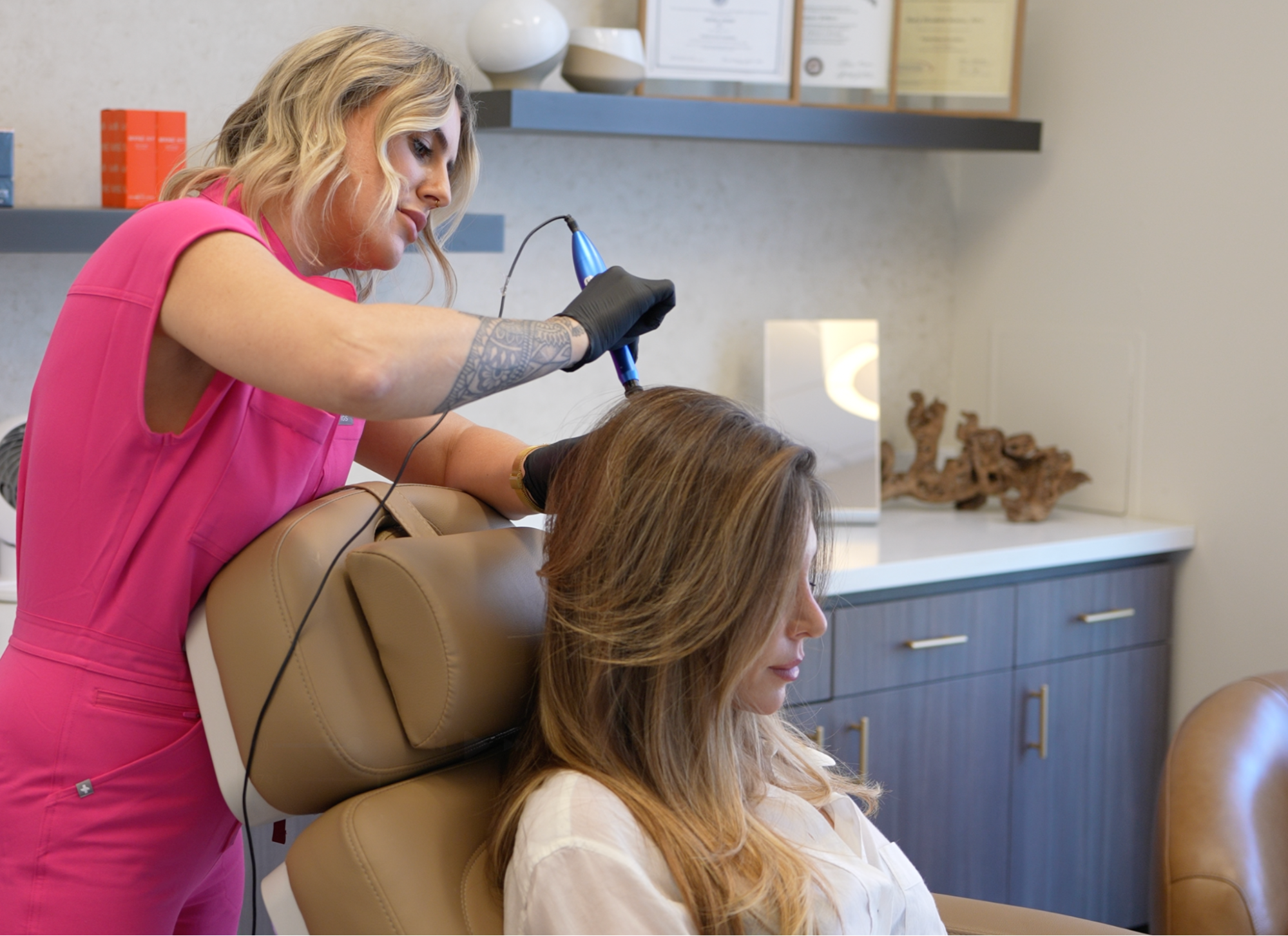
If you have been Googling “hair loss treatment Scottsdale” at midnight, you are already further along than you think. Asking the question is the first step, and getting the right answer is where we come in. Hair loss affects more than your hairline: it affects your confidence, your mornings, and the way you show up in the world. At NHLMA, we have watched thousands of patients walk through our Scottsdale doors carrying that weight, and we have watched them leave lighter, fuller, and more themselves. The right treatment plan makes all the difference, and it starts with understanding what your options actually are. Here is a breakdown of the most effective hair loss treatments available in Scottsdale right now, and the guidance you need to figure out which one belongs in your plan. Why Hair Loss Deserves a Real Treatment Plan Hair loss is one of those conditions that gets minimized far too often. The reality is that research confirms that more than 80% of men and nearly 50% of women will experience significant hair loss in their lifetime. That is a majority of us, and yet so many people spend years cycling through drugstore products and hoping for the best. A personalized, clinically guided treatment plan changes everything. The right combination of therapies can slow shedding, stimulate regrowth, and restore what feels like a piece of yourself. The key is working with a qualified hair loss specialist in Scottsdale who takes the time to find the root cause first. The Most Effective Non-Surgical Hair Loss Treatments in Scottsdale PRP (Platelet-Rich Plasma) Therapy PRP, otherwise known as Platelet-Rich Plasma, is one of the most researched and widely recommended non-surgical hair restoration treatments available today. The process uses your own blood, drawing a small sample and spinning it in a centrifuge to isolate the platelet-rich plasma. That concentrated plasma, packed with growth factors, is then injected directly into the scalp to stimulate dormant hair follicles. Multiple peer-reviewed studies support PRP as an effective treatment for androgenetic alopecia (the most common form of hair loss in both men and women) as well as other forms of pattern hair loss. Patients typically see meaningful results after a series of three to four sessions, with ongoing maintenance treatments to sustain growth. Source link

Qstem: Producing Hair Follicles via hiPSCs and DPCs
Yet again, a new company in South Korea has announced its intention of curing hair loss. Qstem (also called Q-Stem) is a biotech company that was formed in late 2024 and specializes in treating hair loss using stem cell technology. The startup was originally founded by faculty from the prestigious City University of Hong Kong. Qstem has developed a proprietary technology that differentiates dermal papilla cells (DPCs) from human induced pluripotent stem cells (hiPSCs) for use in treating hair loss. In February 2026, the company secured 2.2 billion won ($1.5 million) in seed investment funding. The company’s South Korean founder and CEO Ban Ki-won is a professor at City University of Hong Kong. His h-index score is a high 29 according to Scopus (and 23 according to Google Scholar). The h-index measures the productivity (number of papers) and citation impact of a researcher’s published work. Professor Ban Ki-won’s specialties include stem cell biology, regenerative medicine and cardiovascular regeneration. Qstem: Differentiating human induced pluripotent stem cells (hiPSCs) derived from a patient’s blood into dermal papilla cells and epithelial cells. Then creating new hair follicles. Qstem (Q-Stem): New Hair Creation from hiPSCs and Dermal Papilla Cells Qstem plans to create brand new hair follicles for implantation. According the information here and here and on their Naver blog and in this newspaper article, they describe their technology in the below manner. “Q-Stem’s core technology involves differentiating induced pluripotent stem cells (iPSCs) derived from a patient’s blood into dermal papilla cells (DPCs) and epithelial cells, and then forming hair follicle-like structures in vitro to induce actual hair growth.” According to CEO Ban, while dermal papilla cells are key cells that direct hair growth, their function deteriorates easily during in vitro culture. During the research team’s progress so far, maintaining the ability to actually produce hair was a much more difficult challenge than simply increasing the hair count number. Per CEO Ban: “Q-Stem secured dermal papilla cells that retain hair-inducing ability through iPSC-based differentiation technology and established conditions for stable culture. Furthermore, by implementing three-dimensional interactions with epithelial cells, they created a microenvironment similar to an actual hair follicle. The core of the technology was reproducing these interactions in vitro.” Yet another description states that the company is developing technology to secure dermal papilla cells differentiated from human induced pluripotent stem cells, extract growth factors secreted by these cells, and commercialize them. In animal models, the research team from Q-Stem has already managed to create in vitro hair with repeated normal growth, regression, and resting cycles. Per CEO Ban, the fact that the growth cycle was maintained implies that it is closer to a functional hair follicle (versus just a one-time structure). The company seems confident that their in vitro hair manufacturing technology has reached biological maturity from the perspective of tissue regeneration. Q-Stem’s Three Platforms for Tackling Hair Loss Based on this technology, Q-Stem is expanding its platform in three directions: Dermal papilla cell culture medium. In vitro hair manufacturing. Dermal papilla cell-based therapy. This is a bit confusing, perhaps due to translation. CEO Ban has emphasized that these are not separate businesses, but rather a single regenerative medicine technology platform. It seems like different technologies will be used depending on your stage of hair loss. According to reader “Theo” who e-mailed me about this company, the three stages are as follows per his interpretation from other sources: Dermal papilla liquor (cosmetic shampoo per the photos on their blog). Dermal papilla cells (similar to Epibiotech). In vitro production of hair follicles using hiPSCs (Stemson or Yunce approach). South Korean laws are very strict when someone wants to use stem cells/hiPSCs. Per “Theo”, every company must build or have a partnership with someone that has a proper CMO facility for producing stem cells. Qstem is currently establishing a mass production process for dermal papilla cell culture medium. In addition to the earlier mentioned blog, the company has a basic Instagram page with limited information at present. Source link

Can Stress Cause Hair Loss? Telogen Effluvium
We hear this all the time in the clinic. Someone comes in, visibly shaken, holding a clump of hair they found in the shower drain. “I’ve been under so much stress lately,” they say. “Could that actually be doing this?” The answer is yes. And the explanation is both more specific and more reassuring than most people expect. Let’s talk about what’s really happening. The Condition Has a Name: Telogen Effluvium Telogen effluvium (TE) is one of the most common forms of hair loss, and also one of the most misunderstood. It shows up as widespread shedding across your entire scalp rather than in patches or along a specific hairline. The part that catches most people off guard is the timing. It typically begins two to three months after whatever triggered it. So by the time your hair starts falling out, the stressful event may already feel like old news. According to NIH StatPearls, telogen effluvium happens when your body experiences significant stress and responds by pushing a large number of hair follicles out of the active growing phase and into a resting phase early. After sitting in that resting phase for about three months, those hairs shed all at once. That’s the sudden wave of shedding that brings so many people through our doors. Your Hair Has a Growth Cycle Here’s something most people never learn: every single hair on your head is on its own schedule, cycling through three phases continuously. The growing phase lasts two to seven years. The transitional phase lasts a couple of weeks. The resting phase lasts about three months, after which the hair naturally sheds and the follicle starts fresh. Under normal conditions, about 85 to 90 percent of your hair is actively growing at any point in time. When stress intervenes and throws a large group of follicles into the resting phase at the same time, you end up with far more shedding than usual all at once. That’s the shift from everyday hair loss to something that feels alarming. Source link
Hair Transplant Surgeons who also had Hair Transplants
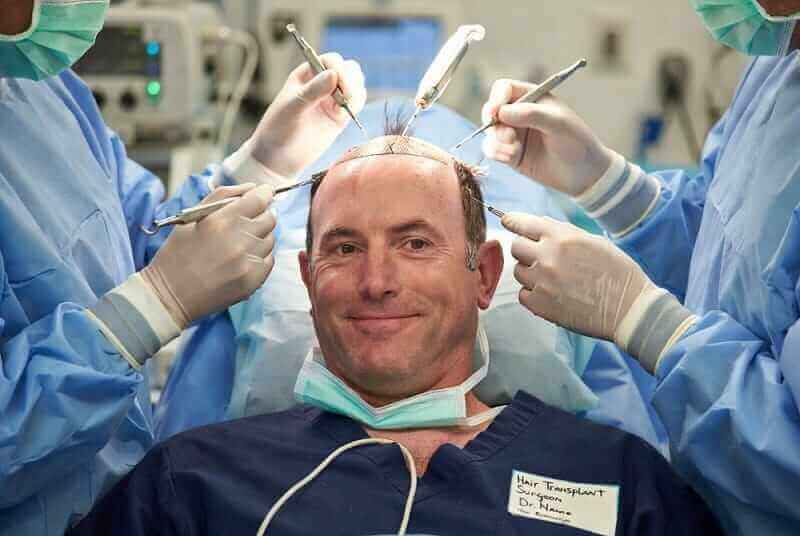
A hair transplant surgeon getting a hair transplant. Far more common than you would expect. Around 25 years ago, I started bookmarking hair transplant surgeon websites if it was mentioned that the surgeon had also undergone a hair transplant himself. Later on, I wrote this post in 2014 and am now republishing it in case anyone has any updates. I only include names of relatively well known hair transplant focused surgeons who mention their own surgery on their website. I find it reassuring that there are so many hair transplant surgeons who have also had hair transplants themselves. Especially when they get the procedure at their own clinic, often at the hands of a partner. It shows that they have confidence in the process, the final results and in their own staff’s skills. Some of them also mention their own traumatic hair loss at a very young age being the reason for their passion in this field. A select few of these surgeons have before and after photos on their sites as evidence. Some only briefly point out the fact in their webpage text. Some used to mention their own hair transplant experiences, but later on removed the information during site updates. As is the case with hair restoration surgery patients, many surgeons likely prefer not posting personal before and after photos online. Or they might add but later remove such photos if they have had continuing major hair loss in the years after surgery. I would not be surprised if at least one-half of balding hair transplant surgeons in the world had not tested at least a small-scale procedure on their own scalp. Hair Transplant Surgeons who had Hair Transplants Themselves Dr. Edward Ball — On his site, it says that Dr. Ball underwent an FUE hair restoration procedure using the ARTAS® Robotic System. Dr. David Perez-Meza — Confirmed to me on Twitter. He had four strip (FUT) hair transplant surgeries between 1998 and 2007. Dr. Ken Williams — Per his website, he is the recipient of five FUE surgeries since 2009. He had over 10,000 grafts transplanted into his Norwood 5-6 hair loss pattern. Dr. Michael Beehner — There used to be some great before and after pictures on his site, but he might have retired now. Dr. Christopher Pawlinga — On his old site, it mentioned that his partner at the time (Dr. Beehner) did his hair transplant in 1994. Dr. Bradley Wolf — Was operated upon by the well known and highly respected surgeon Dr. Ron Shapiro. Dr. Wolf told me this when I met him once. Unfortunately, his website no longer has the before and after photos that it used to have. Dr. John Satino — He mentioned this to me over the phone and you can read more about this interesting personality in my post on PRP and hair darkening. He had a number of scalp reductions and hair transplants decades ago from the famous Dr. Constantine Chambers. Prior to his demise at the age of 80 in 2025, Dr. Satino still had great hair. Dr. Robert Jones — One of the case studies on his old homepage entailed his own hair transplant. He also wrote some interesting blog posts related to his own hair restoration procedures. This well known Toronto-based surgeon now seems to be retired. Dr. Gary Hitzig — His old site used to have that information. It seems like he no longer has a website and might have retired. Dr. Matt Leavitt — Founder of MHR (now merged with Bosley). His old site used to have his before and after photos. Dr. John Gillespie — This Calgary-based surgeon used to mention it on his old site, but he is now retired. Dr. Richard Rogers — Used to mention it. Dr. Alan Feller — His old site used to have that information. Dr. Robert Haber — I met him once and he told me that he had a hair transplant in the past. Dr. Robert Dorin — His partner Dr. Robert True performed his hair transplant. Dr. William Rassman — On his now defunct blog, he wrote a post describing his own crown hair transplant. Dr. Jerry Cooley — I think his old site used to have that info based on my bookmark. Dr. Brian Goertz — I met him in person once to get a Proscar prescription and he showed me his before and after photos. Now retired. Dr. Dan McGrath — Mentions it on his site. Dr. William Yates — His own hair transplant made a big difference in his confidence and life per his old site. A rare testimonial from an African American who hated his hair loss. He also got some beard hair to head transplants from Dr. John Cole. Dr. William Reed — Mentions that he got two hair transplantation procedures in 1994. Dr. Marc Dauer — I think his old site used to have that info based on my bookmark. Dr. Raghu Reddy — Has an excellent write-up with photos of his own experience with hair loss: a bad first hair transplant (including shock loss); and later on a good second FUE hair transplant by his own technician. Dr. Ken Washenik — Mentioned in the linked wired.com article. He is among the five most cited hair loss spokespersons in the world. Dr. Bessam Farjo — Scroll down the page for his thoughts on his unsuccessful hair transplants with old technology. Dr. Alan Bauman’s Father — Dr. Bauman might never need a hair transplant himself, but he did operate on his father with great results. Link no longer works so I remove it. Dr. Paul Spano — Mentioned it on an older site. Dr. Bernard Arocha — Mentioned on his site. Dr. Robert Leonard — In August 2014, after I wrote this post, Dr. Leonard posted photos on Twitter of his hair transplant. His partner Dr. Matthew Lopresti performed an FUE hair transplant on him using the ARTAS robot. Dr. Michael Vories — Mentions that he was a hair transplant patient prior to becoming a surgeon. Dr. Paul

Propecia for Women: Does It Work and Is It Safe?
Who Is and Is Not a Candidate This is the most important part of the conversation, and it is why finasteride for women should always involve a thorough consultation rather than a quick prescription. Women who cannot take finasteride include anyone who is pregnant, trying to become pregnant, or not using reliable contraception. Finasteride can cause serious birth defects in male fetuses, and even skin contact with broken or crushed tablets carries a risk. This is a firm contraindication, not a preference. Premenopausal women who are prescribed finasteride off-label must be using reliable birth control and must be counseled clearly on this risk. Women who may be appropriate candidates include postmenopausal women with female pattern hair loss, premenopausal women who are not and do not intend to become pregnant and who are using reliable contraception, and women who have not responded adequately to first-line treatments like minoxidil. Even for appropriate candidates, finasteride is not the right choice for everyone. Hormonal context matters, the underlying cause of the hair loss matters, and whether other factors like thyroid function or iron levels have been addressed first matters. This is why we do not prescribe it in isolation at NHLMA. What Are the Alternatives? Whether finasteride is right for you or not, there are several other treatments with strong evidence for female pattern hair loss worth knowing about. Topical minoxidilis the most established FDA-approved treatment for women with pattern hair loss. It works differently from finasteride, stimulating follicle activity rather than addressing DHT, and it is appropriate for a much broader range of patients including premenopausal women. Low-level laser therapy (LLLT)uses specific wavelengths of light to stimulate follicle metabolism and is a well-tolerated, non-hormonal option that works well as part of a combined protocol. PRP (platelet-rich plasma)and exosome therapy both work by delivering concentrated growth signals directly to the scalp, supporting follicle health and encouraging the transition from resting to active growth phases. These are particularly effective when hair loss is in the earlier stages. Nutritional and hormonal optimization through comprehensive labs is often the missing piece. Addressing iron deficiency, thyroid dysfunction, or hormonal imbalances that are driving the hair loss in the first place can make everything else work better and sometimes resolves shedding on its own. Spironolactone is another off-label option for premenopausal women with androgen-driven hair loss, often considered before finasteride given its longer track record of use in women. What We Actually See in Practice At NHLMA, finasteride is one tool among many, and whether it belongs in a patient’s plan depends on a thorough evaluation first. We look at the type and pattern of hair loss, hormonal and nutritional labs, medical history, and reproductive considerations before discussing it as an option. For postmenopausal women with confirmed androgenetic alopecia who have not responded to first-line treatments, it can be genuinely effective. For younger women, we typically explore other options first and have a detailed conversation about the risks before considering it. What we do not do is treat female hair loss the way male hair loss is treated with a simple prescription and no deeper investigation. The two are fundamentally different problems that require different approaches. Source link

Dissecting Cellulitis and Cardiovascular Risk — Donovan Hair Clinic
BACKGROUND & PURPOSE Dissecting cellulitis of the scalp (DCS) is a chronic, scarring inflammatory hair disease. It can be painful, disfiguring, and emotionally distressing. Similar inflammatory skin conditions such as hidradenitis suppurativa and psoriasis are linked to higher cardiovascular (CV) disease risk. The purpose of this study was to determine whether patients with DCS experience more cardiovascular problems than similar individuals without DCS. METHODS Researchers used the TriNetX global electronic-health-record database. They identified over 113,000 adults with DCS and matched them 1:1 to individuals without DCS based on age, sex, race, and key medical risk factors. They then compared how often major CV events occurred over time. RESULTS Patients with DCS had significantly higher rates of serious cardiovascular outcomes including myocardial infarction, stroke, pulmonary embolism, venous thromboembolism, atrial fibrillation, and heart failure. VTE showed the largest increased risk—about 64% higher in DCS compared to controls. Source link
Stopping JAK Inhibitors for Pregnancy: What Happens to Hair in AA? — Donovan Hair Clinic
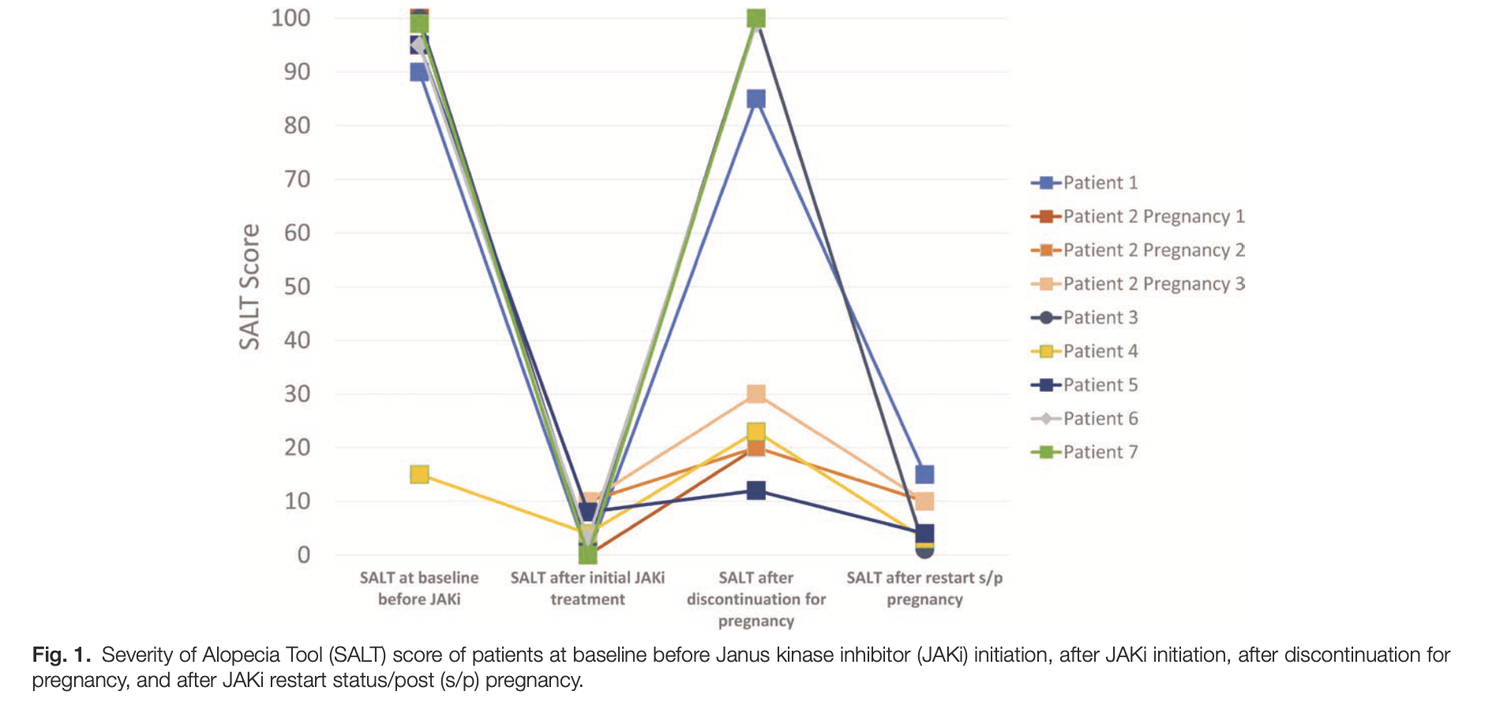
February 15, 2026 BACKGROUND & PURPOSEJanus kinase inhibitors (JAK inhibitors) can help severe alopecia areata (AA) regrow hair. But because safety in pregnancy isn’t fully known, and recommendations are now for women stop treatment when trying to conceive. This often leads to fear of hair loss returning. The purpose of this study was to describe what happens to scalp hair when JAK inhibitors are stopped for pregnancy — and what happens after restarting them postpartum. METHODSDoctors followed 9 women with severe AA through 14 pregnancies. All stopped oral JAK inhibitors before or early in pregnancy. Hair loss severity was measured using the SALT score before treatment, after stopping treatment, and after restarting postpartum. RESULTSEvery woman experienced significant hair loss after stopping treatment. However, once JAK inhibitors were restarted — usually within 4 months after delivery — patients regrew their hair, often back to or better than before. FIGURE 1 FROM Ogbutor C, Chen L-C, Kalil LL, et al. Discontinuation and restart of Janus kinase inhibitors due to pregnancy in alopecia areata: a case series. Int J Womens Dermatol. 2025;11:e218. used with creative commons license. CONCLUSIONSWomen with AA who must stop JAK inhibitors during pregnancy should be counseled that hair shedding is highly likely. The encouraging news is that restarting treatment after delivery (and after breastfeeding is done) led to meaningful regrowth in all cases. This study highlights the emotional burden these women face and the need for clearer pregnancy-related treatment guidelines in AA. REFERENCEOgbutor C, Chen L-C, Kalil LL, et al. Discontinuation and restart of Janus kinase inhibitors due to pregnancy in alopecia areata: a case series. Int J Womens Dermatol. 2025;11:e218. This article was written by Dr. Jeff Donovan, a Canadian and US board certified dermatologist specializing exclusively in hair loss. Source link
The Gut Microbiome in Alopecia Areata: Is it Really a Mainline Therapy? — Donovan Hair Clinic
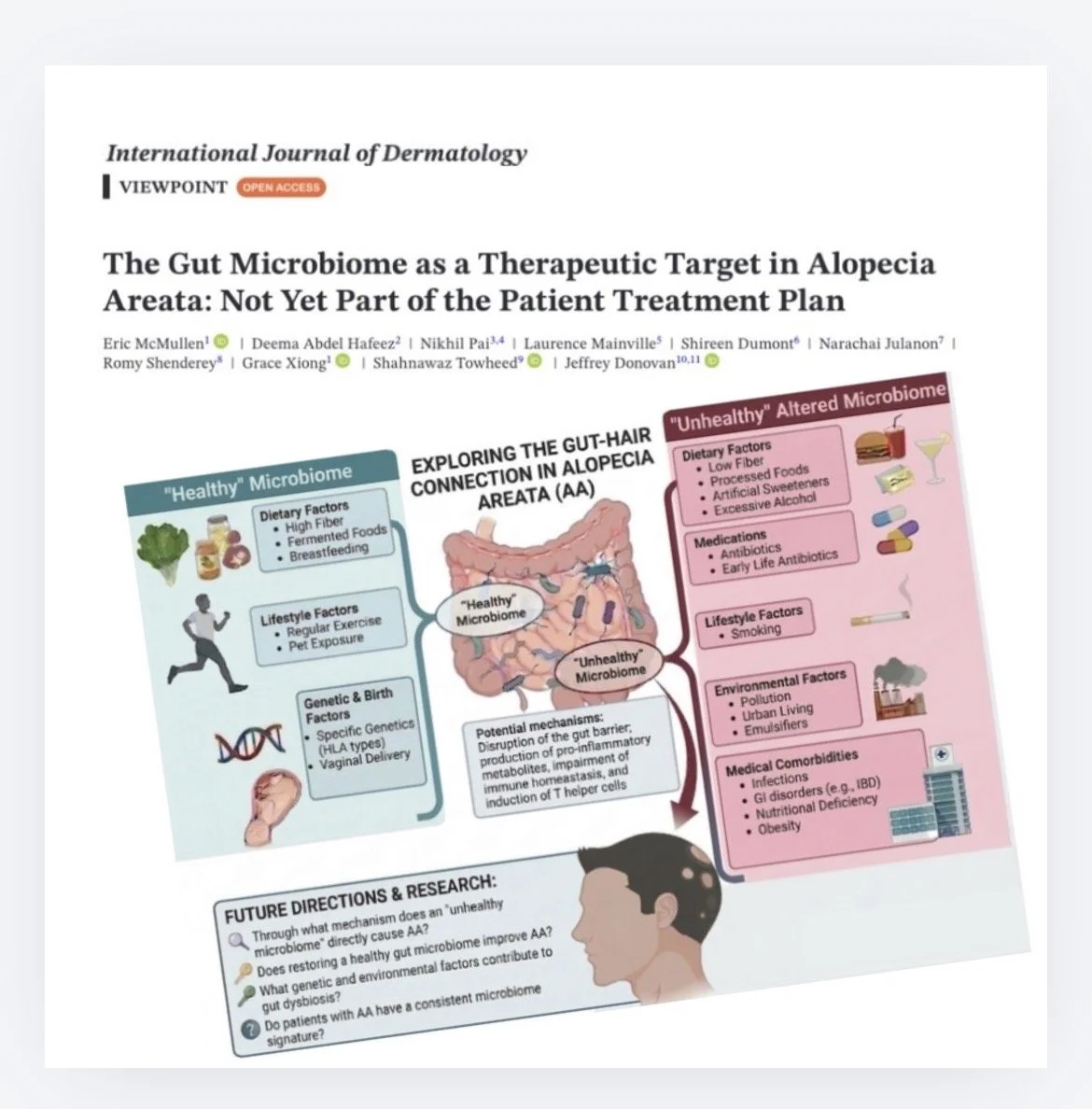
Our Microbiome Paper is Now Published It’s a great joy to share our new paper exploring the gut microbiome and whether it should currently be considered part of an evidence-based treatment plan for patients with alopecia areata. The paper is available Open Access in the International Journal of Dermatology. There has been growing interest in the “gut–skin axis” and whether gut dysbiosis may contribute to alopecia areata by influencing immune regulation, inflammation, and T-regulatory cell function. Patients are increasingly asking about probiotics, gut microbiome testing, dietary changes, and even fecal microbiota transplantation (FMT) as possible treatment strategies. Is it worth adding these evaluations and treatments? In this paper, we examined the available evidence surrounding microbiome-directed therapies in alopecia areata. While some small studies have identified potential bacterial biomarkers and very isolated reports have described hair regrowth following FMT, the overall evidence remains limited and inconsistent. A recent randomized trial of probiotics didn’t show a significant benefit. We are grateful to Wiley and the International Journal of Dermatology for publishing this Viewpoint paper. At present, the science is simply not strong enough to support routine microbiome testing or microbiome-targeted therapies as standard care for alopecia areata. Probiotics, dietary interventions, and FMT remain interesting areas of investigation—but not yet part of the evidence-based treatment plan. More rigorous longitudinal studies and stronger clinical trials are needed before these approaches can move from exciting theory to everyday clinical practice. Someday, we’ll better understand the link – and be able to better target therapies! I’ve enjoyed working with our group on this subject. Congratulations to first author Dr Eric McMullen from the University of Toronto for leading the way and for all our great discussions on this topic. And thanks to all our colleagues for their wonderful insights and hard work! Reference McMullen E, Abdel Hafeez D, Pai N, et al. The gut microbiome as a therapeutic target in alopecia areata: not yet part of the patient treatment plan. Int J Dermatol. Source link
Lipedematous Alopecia: Topical and Intralesional Steroids Still First Line — Donovan Hair Clinic
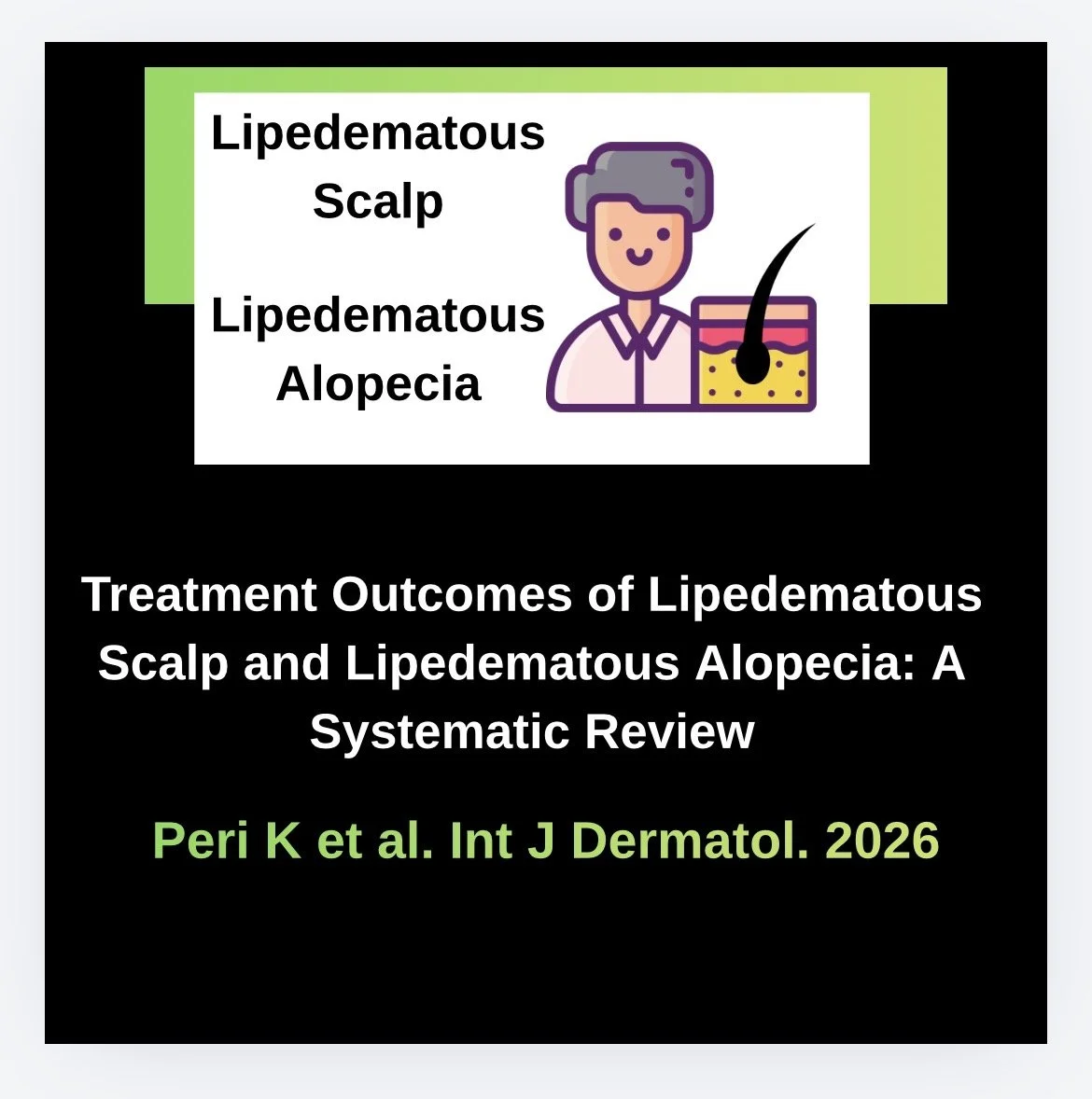
Lipedematous scalp is a rare cutaneous condition characterized by a boggy, thick, and spongy consistency of the scalp due to thickening of the subcutaneous adipose tissue. In these conditions, the overlying skin usually appears normal, though patients often report symptoms of pain, paresthesia, or a localized “pressure” sensation. When this structural thickening is accompanied by hair loss—the condition is termed lipedematous alopecia. The exact pathogenesis remains unclear, but it is hypothesized that the expanded fat layer may mechanically compress hair follicles or disrupt the dermal microenvironment necessary for healthy hair growth. Our New Study of Lipedematous Alopecia Highlights Areas of Treatment Success Our research team performed a systematic review of this challenging condition. We uncovered 33 patients in 23 studies. There were 19 patients with with lipedematous alopecia and 14 with lipedematous scalp. These studies highlight the limited but evolving treatment landscape. Most diagnoses relied on scalp biopsy. This study was led by the great work of the first author, Katya Peri, from McGill University medical school. Topical and intralesional steroids were among the most effective treatments for lipedematous alopecia, leading to complete responses in about 50 % of patients. The most effective systemic therapies were mycophenolate mofetil with more limited data for other treatments such as hydroxychloroquine and doxycycline. The full study is published in the International Journal of Dermatology. I congratulate all of our coauthors for their efforts to better understand this fascinating and very much underrecognized condition. Reference Peri K et al. Int J Dermatol 2026 Source link

“Serendipity” in Hair Loss Research — Donovan Hair Clinic
“Serendipity” refers to the unexpected discovery of something valuable while searching for something entirely different. Throughout the history of medicine, chance observations have played a surprisingly powerful role in shaping some of our most important treatments. Even in an era increasingly dominated by so called “rational drug design”, serendipity continues to influence medical discovery. Minoxidil provides a classic example. The oral version of the drug was originally developed as a treatment for high blood pressure. However, physicians began noticing that most patients taking the medication developed increased hair growth. This unexpected observation ultimately led to its development as a treatment for androgenetic alopecia. Low-level laser therapy also emerged through unexpected observation. Early research exploring the effects of low-energy lasers in cancer studies found these technologies did not cause cancer but rather promoted wound healing and promoted hair growth! Perhaps the most famous example of serendipity in medicine is the discovery of penicillin. In 1928, Alexander Fleming observed that a mold contaminating one of his culture plates had killed the surrounding bacteria. This chance observation ultimately launched the antibiotic era. Today, many therapies are developed through careful molecular design and targeted drug development. Nevertheless, serendipity still plays an important role in medicine, reminding us that unexpected observations can still lead to transformative discoveries. An important lesson about serendipity is that chance discoveries rarely occur without a prepared and attentive mind. Unexpected observations appear in laboratories and clinics all the time, but they are often dismissed or overlooked. What makes serendipity powerful is the ability to recognize that something unusual is happening and to pause long enough to explore it. Serendipity, therefore, is not just luck—it requires curiosity, attentiveness, and a preparedness of mind. Will the next big breakthroughs in hair loss be by rationale design or will they be serendipitous discoveries? Source link