
Why Scalp Health Matters for Hair Growth Your scalp is home to thousands of hair follicles. These follicles rely on a clean and balanced environment to produce strong, healthy strands. Over time the scalp can accumulate buildup from When this buildup sits on the scalp for too long, it can interfere with follicle function and create inflammation. This often shows up as itching, flaking, excess shedding, or slower hair growth. This is why scalp focused shampoos can make such a difference. The right formula helps cleanse the scalp thoroughly while supporting circulation, follicle health, and balance. Should You Double Cleanse Your Hair? One of the most helpful techniques for improving scalp health is something called double cleansing your hair. If you have ever double cleansed your face to remove makeup and impurities, the concept is very similar. In many of our regimens, you will notice something called a secondary shampoo rinse. The idea is simple. The first wash breaks down buildup. The second wash actually cleans the scalp. A double scalp cleanse ensures a deeper and more thorough clean. This process helps remove dirt, debris, environmental pollutants, and hormone buildup that can sit on the scalp and contribute to excess shedding and slower growth. We have used this method in our routines for over a decade and consistently see improvements in scalp health, faster hair growth, and reduced shedding. Source link
Oral Minoxidil for Hair Loss: A Comprehensive Review
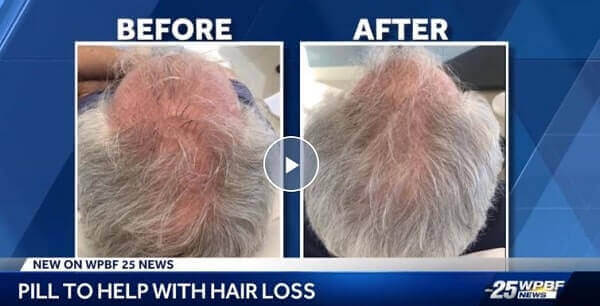
I originally wrote this post in 2017 (see the bottom of this page). However, since an August 2022 NY Times article on low-dose oral minoxidil (LDOM) for hair loss went viral, the media keeps covering this topic regularly. And major new studies on this subject keep getting published at least a few times per year. I cover these in all the regular updates you see below. When I first wrote this post, doctors from Thailand had already been using oral minoxidil to treat hair loss patients for a decade. And an Australian doctor was also using it regularly. Thereafter, Spanish doctors got into the game. It is only in 2022 that this option really took off in the US and much of Western Europe. Update: April 18, 2026 Low-Dose Oral Minoxidil: Hair Growth May Peak After 6 Months In a retrospective review of 178 patients from the US, it was found that the hair growth results from low-dose oral minoxidil peaked after 6 months. More specifically: Mean hair density increased significantly from baseline at 3-6 months (16.1 hairs/cm2). It then remained at a similar level at 6-12 months (16.2 hairs/cm2). This was followed by a modest increase from 12-36 months (19.0 hairs/cm2). Mean hair diameter improved significantly from baseline at 3-6 months (3.0 μm). And at 6-12 months (2.4 μm), but not at 12-36 months. Note that the median LDOM starting dose was only 1.25 mg/day, though 65.2% of patients underwent dose escalation during treatment. Update: September 20, 2025 Oral Minoxidil 2.5 mg/day shows Similar Efficacy to 5 mg/day A September 2025 study from Brazil has found that oral minoxidil 2.5 mg/day showed a similar efficacy to 5 mg/day in the treatment of male androgenetic alopecia. Moreover, the lower dose had a better safety profile compared to the higher dose, as would be expected. Higher Dose Oral Minoxidil Interestingly, just a month earlier, scientists from Spain and Brazil published a report on the rare use of higher-dose oral minoxidil (greater than 5 mg/day) to treat androgenetic alopecia. They found that 17.5% of patients got a significant (over 50%) improvement in hair growth on the higher dose; and another 17.5% saw modest (under 10%) improvement. Update: March 30, 2025 Oral Minoxidil Significantly Raises VEGF Levels A study from Iraq finds that oral minoxidil substantially raises serum VEGF levels. Moreover, hair count and hair diameter also improved significantly. Update: December 1, 2024 Low-Dose Oral Minoxidil Speeds up both Nail and Hair Growth In an interesting small study of 10 adult men, it was found that low-dose oral minoxidil increased the rate of both hair and nail growth drastically. Minoxidil 2.5 mg increased nail growth speed by 50.7%. minoxidil 1 mg and 2.5 mg increased hair growth speed by 16.5% and 35.9%, respectively. Oral Minoxidil and Hair Growth Older Updates Update: April 11, 2024 — According to a new study from Brazil, oral minoxidil 5 mg (once per day) for 24 weeks did not demonstrate superiority over topical minoxidil 5% (twice per day) in men with androgenetic alopecia. Oral minoxidil was superior to topical minoxidil on the vertex (crown), but not on the frontal region of the scalp. It should ne noted that only 68 of the 90 participants completed the study, and 33 of those 68 were enrolled in the low-dose oral minoxidil group. Update: June 2, 2023 — Make sure to also check out my post on oral minoxidil before and after results from Reddit. I selected some of the best hair regrowth results that I have seen during the past year from people taking oral minoxidil. Update: May 18, 2023 — Joe Tillman interviews Dr. Bevin Bhoyrul of Sinclair Dermatology (Australia) in regards to using oral minoxidil to fight hair loss. Update: May 19, 2023 — On today’s Bald Truth show, there were two highly encouraging updates on oral minoxidil from callers. One (Greg, starting at 16:18) said that it has taken his hair quantity to almost how it was ten years ago. The other guy (starting at 57:13) who is 63 year old said that he was regrowing hair in the area of his scalp with scarring alopecia. Update: April 20, 2023 — On today’s “The Mane Event” show (Edit: link no longer working), regular watcher “Andrew 12” said that after 14 years of finasteride and then dutasteride giving him good results, he started oral minoxidil. He got the best ever hair growth results in his life. He later elaborated in the chat: “I never regrew a single hair on fin or dut, it only maintained my hair. Oral minoxidil regrew hair.” Update: April 4, 2023 — Per Dr. Ruth Williams: “I had a lot of patients grow their hair back on this medication so I’m very familiar with it and I really think it works.” Update: March 5, 2023 — In this post’s comments section, make sure to read my recent ones on: a long-time German reader who has been taking oral minoxidil for 20 years (initially 5mg, and then 10mg); a reputable HLT forum member named “Kagaho” who is seeing great hair growth from LDOM. Update: February 20, 2023 — Yet another great testimonial from a 75 year old patient. The below before and after photo is just after a few months use. His doctor Supriya Tomar is very pleased with oral minoxidil and says that the pill is effective, safe and very cheap. She says that LDOM will not regenerate new hair follicles, but will maintain what you have. I think that besides maintenance, it also thickens what you have if you are one of the lucky ones. And since the topical version can grow new beard hair, I would not be surprised that some people even see new scalp hair. Oral Minoxidil before and after in an older 75-year old male. Source: WPBF 25. Update: February 13, 2023 — In a response to a reader question on switching from topical to oral, Dr. William Rassman stated that: “About 40% of men respond to topical minoxidil, but

Does Rosemary Oil Actually Grow Hair? A Hair Specialist’s Honest Answer
Here’s something that surprised even us: in a head-to-head clinical trial, rosemary oil performed comparably to minoxidil — one of the most widely used hair loss treatments on the market, for certain types of hair thinning. That’s a big claim, and it deserves more than a TikTok trend to back it up. So we’re breaking it down, what the research actually says, how rosemary oil works, who it’s most likely to help, and how to use it correctly. As hair loss specialists, we’ve been working with rosemary oil formulations for years. Here’s our honest take. What Is Rosemary Oil? Rosemary is a herb you’ve probably used in cooking, but it’s been used in medicine and skincare for centuries too. When it’s pressed into an essential oil, it becomes highly concentrated and contains compounds that have real, documented effects on the body. In recent years, research has shown that these compounds can have meaningful benefits for scalp health: reducing inflammation, improving circulation, and supporting the environment your hair follicles need to grow. What Does the Science Actually Say? Let’s start with the study people keep referencing because it’s legitimate. A clinical trial published in SKINmed Journal compared rosemary oil directly to 2% minoxidil, one of the most common over-the-counter hair loss treatments, in people with pattern hair loss (the most common type, affecting both men and women). After six months of consistent use, both groups showed similar increases in hair count. The rosemary oil group also reported significantly less scalp itching compared to the minoxidil group, a common complaint with minoxidil. THE BOTTOM LINE FROM RESEARCH After 6 months, rosemary oil produced hair count results comparable to 2% minoxidil for pattern hair loss, with fewer scalp side effects. That’s a meaningful finding. It’s worth being upfront about what this research doesn’t show: it compared rosemary oil to 2% minoxidil, not the stronger 5% version, and it focused on pattern hair loss specifically. It’s not a cure-all, and it won’t work the same way for every type of hair loss. But for what it studied, the results are genuinely encouraging. Why Does Rosemary Oil Help Hair Grow? Here’s the simple version of what’s happening when you apply rosemary oil to your scalp: 1. It Improves Blood Flow to Your Scalp Rosemary oil helps open up the tiny blood vessels in your scalp, which means more blood, and with it, more oxygen and nutrients, reaches your hair follicles. Think of your follicles like plants: they need to be fed to grow. Poor scalp circulation is a real contributing factor in hair thinning, and this is one of the ways rosemary directly addresses it. 2. It Calms Scalp Inflammation A lot of people dealing with hair loss also have an irritated or inflamed scalp, sometimes visibly, sometimes not. Inflammation around the follicle disrupts the hair growth cycle and can speed up shedding. Rosemary oil has strong anti-inflammatory properties that help calm this down and create a healthier environment for your hair to grow. 3. It Supports Follicle Recovery Beyond circulation and inflammation, research suggests rosemary may help revive follicles that have slowed down, not dead follicles, but ones that have become sluggish or are producing thinner, weaker hairs. This is where most people notice the most visible change over time. Source link
Veradermics VDPHL01 Extended-Release Oral Minoxidil Tablet for Hair Loss
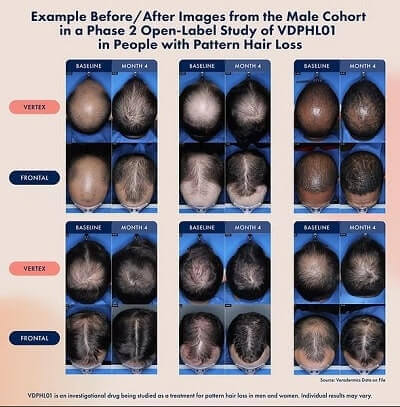
Veradermics (US) is working on a new extended-release oral Minoxidil tablet to treat androgenetic alopecia (AGA). The product is called VDPHL01 and is currently in Phase 3 clinical trials. Also see my past posts on immediate-release low-dose oral Minoxidil and sublingual Minoxidil. Note that this post was originally written in August 2024. The top two-thirds of it contain new updates in reverse chronological order. Veradermics VDPHL01 extended-release oral Minoxidil. Before and after hair growth photos. Update: April 26, 2026 Veradermics Announces Positive Phase 2/3 Clinical Trial Results for Oral VDPHL01 Veradermics just announced positive topline results from Part A of its randomized, double-blind, placebo-controlled Phase 2/3 clinical trial to evaluate VDPHL01 for male pattern hair loss. The company’s stock price “MANE” rose almost 50% in early trading (it is currently up 35%). Make sure to go through their detailed Presentation Slides from today for more details, including very encouraging before and after photos. A quote from there: VDPHL01 is designed to deliver nearly twice the total amount of minoxidil over 12h and maintains concentrations above the hair growth threshold twice as long vs. a 2.5 mg IR tablet.” The trial (referred to as Study “302”) enrolled 519 patients who were randomized to receive either VDPHL01 8.5mg once daily (QD); VDPHL01 8.5mg twice daily (BID); or placebo. The results met all primary and all key secondary endpoints with statistical significance. There was a rapid and consistent response across patients, with a “robust” increase in hair count. There were no treatment-related serious adverse events (SAEs), nor any adverse events of special interest (AESIs) of cardiac origin. Key quote: “Patients achieved an average increase in non-vellus hair count of 30.3 hairs/cm² (p<0.0001) and 33.0 hairs/cm² (p<0.0001) in once daily and twice daily VDPHL01 treatment arms, respectively. Those receiving placebo only showed a 7.3 hairs/cm² increase from baseline at Month 6.” If such results were to hold for many years, this is truly impressive in my opinion. Even better than Finasteride (which inhibits the DHT hormone). But many people report that regular oral Minoxidil effectiveness declines over the years. So it is too early to get overly excited about extended-release oral Minoxidil just yet. In terms of the less meaningful patient self-reported outcomes, following 6 months of treatment with VDPHL01: 79.3% of patients in the once daily dose arm and 86.0% of patients in the twice daily dose arm reported improvement in hair coverage on the Androgenetic Alopecia Impact Rating Scale (AAIRS). A surprisingly high 35.6% of placebo patients also reported an improvement in hair coverage on the AAIRS scale. I am not sure why we see so many studies give significant emphasis to self-reported outcomes. Additionally, 48.4% of patients in the once daily dose arm and 62.9% of patients in the twice daily dose arm reported “improved” or “much improved” hair coverage on the AAIRS (compared to 13.4% of placebo patients). Veradermics believes that these results will lead to VDPHL01 becoming the first FDA-approved oral pill in nearly 30 years to treat pattern hair loss. Finasteride was approved in 1997. Note that Cosmo Pharmaceuticals’ Breezula is a topical solution that is also likely to get FDA approval (in 2027) to treat pattern hair loss. Veradermics also announced that it completed enrollment in a second Phase 3 male trial (Study ’304’) in February 2026. Topline results are expected in the second half of 2026. They also have an ongoing Study ‘306’ Phase 2/3 trial evaluating VDPHLO1 in females with pattern hair loss. VDPHL01 vs Rogaine Foam vs Oral Finasteride vs Oral Minoxidil From the earlier linked presentation, they have an interesting hair growth comparison chart of: VDPHL01 versus Rogaine 5% Foam versus Oral Finasteride 1mg versus Oral Minoxidil 5mg. I will repeat that these results while impressive, are still not proven to be long-lasting. VDPHL01 hair growth comparison versus Rogaine Foam, Oral Finasteride and Oral Minoxidil. Update: March 28, 2026 Faster Onset and Superior Efficacy of an Extended-Release Oral Minoxidil Tablet (VDPHL01) Veradermics is presenting at this week’s American Academy of Dermatology’s 2026 AAD Annual Meeting in Denver. Prior to the presentation, CEO Reid Waldman spoke with “Managed Healthcare Executive”. He said that VDPHL01 produced faster, more consistent and greater hair growth than existing minoxidil treatments. Update: February 4, 2026 Veradermics just completed a successful IPO that raised $256 million. It is now listed on the New York Stock Exchange under the ticker “MANE.” Update: October 16, 2025 Veradermics Raises $150 million in Series C Financing Yesterday, we heard that Pelage Pharmaceuticals (US) raised a massive $120 million in Series B Financing. In 2026, they plan to begin Phase 3 trials for their hair growth product PP405. Today, we have news that Veradermics has raised an even larger $150 million in an oversubscribed Series C Financing. And this is after they raised $75 million in 2024 from Series B Financing. Such numbers are unheard of in the hair loss world. Veradermics is already conducting multiple Phase 3 trials for their hair growth product VDPHL. For context, in 2021, the esteemed RIKEN and Dr. Takashi Tsuji of Japan were finding it difficult to raise $5 million and even asked me to help them with the goal. And in 2025, Yunce Biotech (China) is finding it tough to raise just $2 million to move forward with their hair cloning work. See the most recent comments from reader “Jan Miedza” in that Yunce post. And in late 2024, the much hyped Stemson Therapeutics (US) folded because it could not raise sufficient funds. Many other hair loss companies that I have discussed on this site in the past folded due to lack of funds to proceed with tedious clinical trials and approval processes. In the earlier mentioned press release from Veradermics, they do not mention any other ingredient besides extended-release oral Minoxidil in this VDPHL01 tablet. The do provide some great before and after hair growth photos from their Phase 2 trials: Update: September 29, 2025 Early Study Finds Extended-Release Minoxidil Grows More Hair An optimistic summary of the

Does Exosome Therapy Work for Hair Loss?
How Do Exosomes Support Hair Growth? Exosomes support hair restoration through several well-documented mechanisms. They activate the Wnt/β-catenin signaling pathway, which is one of the primary molecular switches that governs the hair growth cycle. When this pathway is properly activated, follicles transition into the anagen (active growth) phase and stay there longer. A 2024 systematic review published in the Journal of Cosmetic Dermatology confirmed this mechanism as central to exosome-driven hair regeneration. They also reduce scalp inflammation, which is a significant but often overlooked contributor to hair thinning. Chronic low-grade inflammation around the follicle disrupts the growth cycle and can gradually damage the follicle over time. Exosomes carry anti-inflammatory signals that help create a healthier follicle environment. Finally, they improve blood flow and nutrient delivery to the follicle by supporting the growth of new microvasculature around the hair follicle unit. Better circulation means more oxygen and nutrients reaching the cells that power hair growth. What Does the Research Show? The clinical evidence for exosome therapy in hair restoration has grown substantially in recent years. A 2024 systematic review and meta-analysis analyzing nine clinical studies and 125 patients found that every study reported improvements in at least one key hair parameter. Hair density increased by 9.5 to 35 hairs per square centimeter depending on the exosome source and protocol, and hair thickness improved by up to 13 micrometers. No serious adverse events were reported across the studies. A prospective study published in Aesthetic Plastic Surgery in 2024 specifically examined exosome treatment in androgenetic alopecia and found meaningful improvements in both hair density and patient satisfaction over the follow-up period. A broader systematic review from PMC covering multiple alopecia types concluded that exosomes derived from adipose tissue, placenta, and umbilical cord sources all showed substantial benefits, with the research consistently pointing to improvements in follicle cycling and no significant safety concerns. The honest caveat is that most studies to date have been small, and the field is still working toward standardized protocols and larger randomized controlled trials. But the direction of evidence is clear and consistent, which is why exosome therapy has become a meaningful part of how we approach hair restoration at NHLMA. Who Is a Good Candidate? Exosome therapy tends to work best for patients in the earlier to moderate stages of hair loss, before significant follicle miniaturization has occurred. Once a follicle has been fully dormant for an extended period, the window for reactivation narrows. Earlier intervention generally means better outcomes. Good candidates include patients experiencing gradual thinning or increased shedding, those with androgenetic alopecia (pattern hair loss) at early to moderate stages, patients who have not responded fully to topical treatments like minoxidil, those looking for a non-surgical option with minimal downtime, and patients who want to enhance the results of other treatments like PRP or laser therapy. It is not a one-size-fits-all treatment, which is why we begin every exosome conversation with a thorough consultation and scalp evaluation. Understanding what is driving your hair loss determines whether exosomes alone or a combined protocol will produce the best result. Source link
Topical Exosomes for Hair Growth
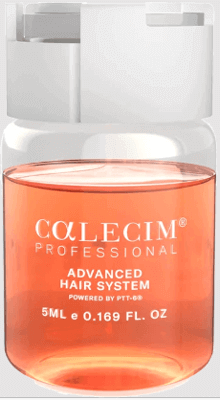
In 2019 when I first discussed exosomes for hair growth, most doctors were injecting them into the scalp. Recently, I also discussed the rarer intravenous (IV) delivery of exosomes to tackle hair loss. Now I look at the topical application of exosome serums into the scalp, due to three such new products being in recent news. Note that some injectable products from exosome suppliers to the hair loss market can also be applied topically. The method of delivery will depend on your doctor’s or clinic’s preference. Calecim (PTT-6) Advanced Hair System with Topical Exosomes Calecim (PTT- 6) Advanced Hair System: Topical Exosomes and Growth Factors for Hair Growth. Recently, HairClone (UK) announced a partnership in which the company will work with an interesting new exosome containing topical product called Calecim Advanced Hair System (that comes with a Derma Stamp). Edit: The manufacturer has now given blog readers a 15% off discount code “HLC2020“ for purchases of the Advanced Hair System kit. Per their website, Calecim includes PTT-6®, which contains over 3,000 proteins, including growth factors, cytokines and exosomes that signal cells to regenerate. PTT-6 is derived from the secretion of cord lining stem cells isolated from the umbilical cord tissues of New Zealand red deer at birth. No deer is harmed during the extraction and harvest process of this rich source of stem cells. Calecim Dermastamp Included. The full list of ingredients is PTT-6® and cord lining conditioned media (from stem cell derived fibronectins, glycoproteins, albumin, collagens and hyaluronic acid). This Calecim topical serum is to be used with an included Derma Stamp for better absorption. A lot people underetrake at-home microneedling for similar reasons. This includes via dermarollers or dermapens or dermastamps. Elevai Exosomes Combined with Yuva Biosciences Mitochondrial Technology Elevai Topical Exosomes for Hair Growth. Elevai Labs (US) recently gave a positive update regarding the company’s topical Elevai “age zero” Exosomes™ product range for hair loss. In a year-long study that the company conducted, patients who used Elevai empower™ exosomes in combination with in-office microneedling saw favorable results. The company also makes Elevai enfinity™ for at-home use in repairing your skin. The 12-month results were assessed using imaging analysis and showed a cessation in crown inflammation, a reversal of miniaturized hairs, and a recovery of hairs from the dormant resting phase. the still on-going research study is being conducted in partnership with Carly Klein, president of the National Hair Loss Medical Aesthetics (NHLMA). Note that I previously also discussed Elevai in my post on Yuva Biosciences and BosleyMDs new hair loss product related to mitochondrial upregulation. Yuva is partnering with Elevai to release a hair loss product that will combine Elevai’s proprietary PREx™ exosome technology with Yuva’s Y100™ mitochondrial technology. The two companies jointly filed for a combination patent in August 2024. Ultimately, Elevai is developing a new hair and scalp care product line, called “Elevai S-Series Root Renewal System” that will be powered by exosomes and mitochondrial technology. According to company CEO Dr. Jordan R. Plews, they are in the process of conducting a follow-on study. This will further analyze the combination of Elevai exosomes and Yuva’s Y100 mitochondrial technology to address hair loss and thinning concerns. In January 2025, Elevai’s skin and hair care business was acquired by Carmell (US). In March 2025, Carmell announced a rebranding and name change to Longevity Health Holdings. The company plans to launch a hair growth serum in the second quarter of 2025. Most likely, it will be the exosome and mitochondrial upregulation product that I discusses above. ExoCelBio Evovex Serum Another company that makes a line of topical exosomes is ExoCelBio (US) via its Evovex serum. The company website says that these exosomes are derived from the chorion of placental mesenchymal stem cells (pMSCs). Their Exovex™ serum Refine brand was launched in 2023 and has a concentration level of 75 billion exosomes per vial. Refine employs a high concentration of non-lyophilized, purified exosomes that results in fuller and stronger hair. In May 2024, the US FDA sent a violation warning letter to ExoCelBio in relation to the company’s marketing and lack of a biologics license. This is not surprising, considering the new stricter FDA guidelines governing exosome products. In the US, exosomes are regulated as both a drug and a biologic. In Europe, you are not even allowed to use human-derived exosomes to treat hair loss. Zishel Xomage A June 2025 study that was co-authored by scientists from South Korea, France and Germany found the use of topical Zishel Xomage exosomes to significantly benefit hair growth. The product was applied to the scalp after microneedling. Note that Zishel makes both plant-based exosomes; as well as human adipose-derived mesenchymal stem cell based exosomes. Source link

Can Accutane Cause Hair Loss? What Isotretinoin Does to Your Hair
Why Does Accutane Cause Hair Loss? Accutane works by dramatically reducing oil gland activity in the skin. This is what makes it so effective for severe acne, but those same oil glands in your scalp play a role in keeping your follicles healthy. When isotretinoin suppresses them, it can disrupt the hair growth cycle in two key ways. The most common is telogen effluvium. This is when a physical stressor, in this case the medication, causes a large number of follicles to shift prematurely into the resting phase. A few months later, those follicles shed at the same time, which is when you notice increased hair fall. Research published in Skin: The Journal of Cutaneous Medicine confirms telogen effluvium as the primary mechanism, with retinoids thought to arrest the anagen (growth) phase and impair how hair is anchored during the resting phase. Beyond that, a 2018 study in the Journal of the European Academy of Dermatology and Venereology found that isotretinoin directly affects the hair cycle at a cellular level, further supporting the link between the drug and follicle disruption. How Common Is It? Less common than most people fear. A systematic review of 22 studies published in the Journal of the American Academy of Dermatology found that hair loss occurred in about 3.2% of patients on lower doses and 5.7% of patients on higher doses. That said, these numbers likely reflect clinically documented cases. Milder shedding that patients manage at home probably goes underreported. A separate retrospective study found that patients who did experience hair loss tended to be older, had higher cumulative doses, and had been on treatment for longer. The takeaway is that dose matters. If hair loss is a concern for you, it is worth talking to your prescribing doctor about whether your dose can be adjusted. What Does It Look and Feel Like? Accutane-related hair loss is usually diffuse, meaning it affects the whole scalp rather than specific patches or a receding hairline. You may notice your ponytail feels thinner, more hair on your pillow, or increased shedding when washing. The scalp may also feel drier or more sensitive than usual. Shedding typically begins two to four months after starting treatment, though some patients do not notice it until they are finishing their course. Source link
A List of New Technology Hair Growth Cosmeceuticals Released in 2024 and 2025
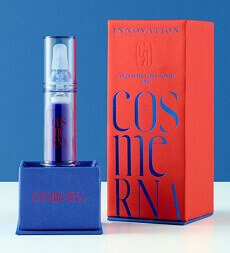
During the past two years, a large number of unique and promising topical hair growth cosmeceuticals have entered the market. None of these have gone through all three phases of clinical trials, though one (KX-826) is currently in Phase 3 trials. All of these cosmeceuticals have some legitimate science behind their potential efficacy. This rapid proliferation of new well researched cosmeceuticals that can be purchased online to fight hair loss is encouraging. Even if many of the beneficial claims (often in mice) turn out to be exaggerated. Hair loss sufferers are tired of lengthy clinical trials that ultimately lead to nowhere. So I am glad about this “shortcut” to market. Most importantly, we have thus far not heard of any major issues with side effects from any of these new hair loss products. Note that the term “cosmeceutical” is a portmanteau of the words “cosmetic” and “pharmaceutical”. However, the FDA does not recognize it, and says that such a product has to be classified as: a (topical) drug, or a cosmetic, or both. New Topical Hair Growth Cosmeceuticals CosmeRNA for hair loss. The product that started this recent trend was CosmeRNA, first released in May 2023 in Western Europe by Bioneer (South Korea). In 2024, it was released in the US on Amazon. CosmeRNA targets the androgen receptor via self-assembled micelle inhibitory RNA (SAMiRNA) nanoparticle-type siRNA. Prior to the product’s release, the scientists behind its development published a study in Nature in January 2022. Yuva Biosciences BosleyMD Revive+ Foam for Hair Loss. In February 2024, Bosley (US) and Yuva Biosciences (US) together released a new hair loss foam product that works by boosting mitochondria levels in scalp hair. It contains Yuva’s Y100™ small molecule that improves mitochondrial function, and is sold on Amazon. Moreover, in December 2024, Elevai Labs (US) and Yuva launched a new line of hair loss products (shampoo, conditioner and serum) that contain Elevai ‘s PREx Exosomes™ and Yuva’s Y100™. Also of note, Atticus Pharma (US) is working on a hair growth topical product that will deliver a mitochondrial-activating molecule using the company’s Z-pod sustained-release technology. Kintor Hair Loss Cosmeceutical. In June 2024, Kintor Pharmaceutical (China) released its much anticipated KX-826 (pyrilutamide) hair growth spray on Amazon. While the original version was at a strength of 0.5%, the company released a higher-strength version in 2025. This was followed by two additional versions, including a foam. KX-826 is an androgen receptor antagonist, and is currently in Phase 3 clinical trials in both China and the US. It is expected to get released in China in 2027. Meanwhile, for the time being, we have the option to buy the cosmecutical version of KX-826 from Amazon. In October 2025, a South Korea based company called AriBio received permission from the Ministry of Food and Drug Safety to market its TeloAct product as a hair loss cosmetic. This topical product activates telomerase enzymes, which supposedly helps prevent hair loss due to telomere shortening. Read more about this in my post on telomerase activation and hair growth. In November 2025, Mallia Therapeutics (Germany) released its 8T3 Essentials Hair Serum. This hair growth product is based on a molecule called MAL-838, which is derived from a soluble version of the CD83 protein (aka sCD83). Research has indicated that hair follicle formation and wound healing are improved in CD83-treated mice. Coegin Pharma (Sweden) will release its Follicopeptide hair growth product in December 2025. This osteopontin-derived peptide product for hair growth has a decade of research behind it via Follicum (a company that was purchased by Coegin in 2022). A number of topical exosome products for hair growth were released in 2024 and 2025, with Calecim getting the most publicity. Some of them are only available at doctor or surgeon offices and often applied after scalp microneedling. Other Potential Future Topical Hair Loss Cosmeceuticals In July 2024, a study from the UK captured global media attention due to its viral finding that a naturally occurring sugar (2-deoxy-D-ribose — 2dDr) could reverse hair loss. The results were only in mice, and I doubt that anything significant will be seen in humans. Nevertheless, the scientists behind these findings plan to further research the potential of developing a topically delivered sugar gel product for human scalps. Meanwhile, a number of companies and entrepreneurs have already started selling cosmeceuticals based on 2dDr online. OliX Pharmaceuticals (South Korea) is conducting Phase 2 clinical trials for its topical hair growth product OLX104C that targets the androgen receptor. In the meantime, in June 2025, they launched a functional hair loss cosmetic called U:BERNA. However, it is unclear if there is any link to OLX104C in terms of mechanism of action. In October 2025, we heard about a new fatty acid serum from Taiwan that will likely be a cosmeceutical if and when released. The product will not need to go through any clinical trials since its fatty acid ingredients are already well established and safe. Energenesis (Taiwan) is working on a topical AMP-activated protein kinase (AMPK) hair growth cosmetic product. It boosts the adenosine triphosphate (ATP) levels of human follicle dermal papilla cells. On a related note, Spain-based Ideeea Therapeutics is working on developing an injectable treatment consisting allogeneic mesenchymal stem cells (derived from adipose tissue) combined with ATP. Topical androgen receptor inhibitor Breezula from Cosmo Pharmaceuticals (Ireland) is also currently in Phase 3 clinical trials. Unlike what Kintor did with its earlier mentioned androgen receptor antagonist, Cosmo does not plan to release any cosmeceutical version of Breezula in advance of official government approval for its main product. Note that the much anticipated PP405 from Pelage Pharmceuticals is a topical hair loss product that will enter Phase 3 clinical trials in 2026. However, it does not seem like the company plans to release any cosmeceutical version in advance. Hope Medicine’s HMI-115 prolactin blocker is delivered via injection, so it is not exactly a topical (lotion, cream, gel or spray). But I will still mention it here since it has completed Phase 2
The Best Hair Loss Treatments Available in Scottsdale, AZ
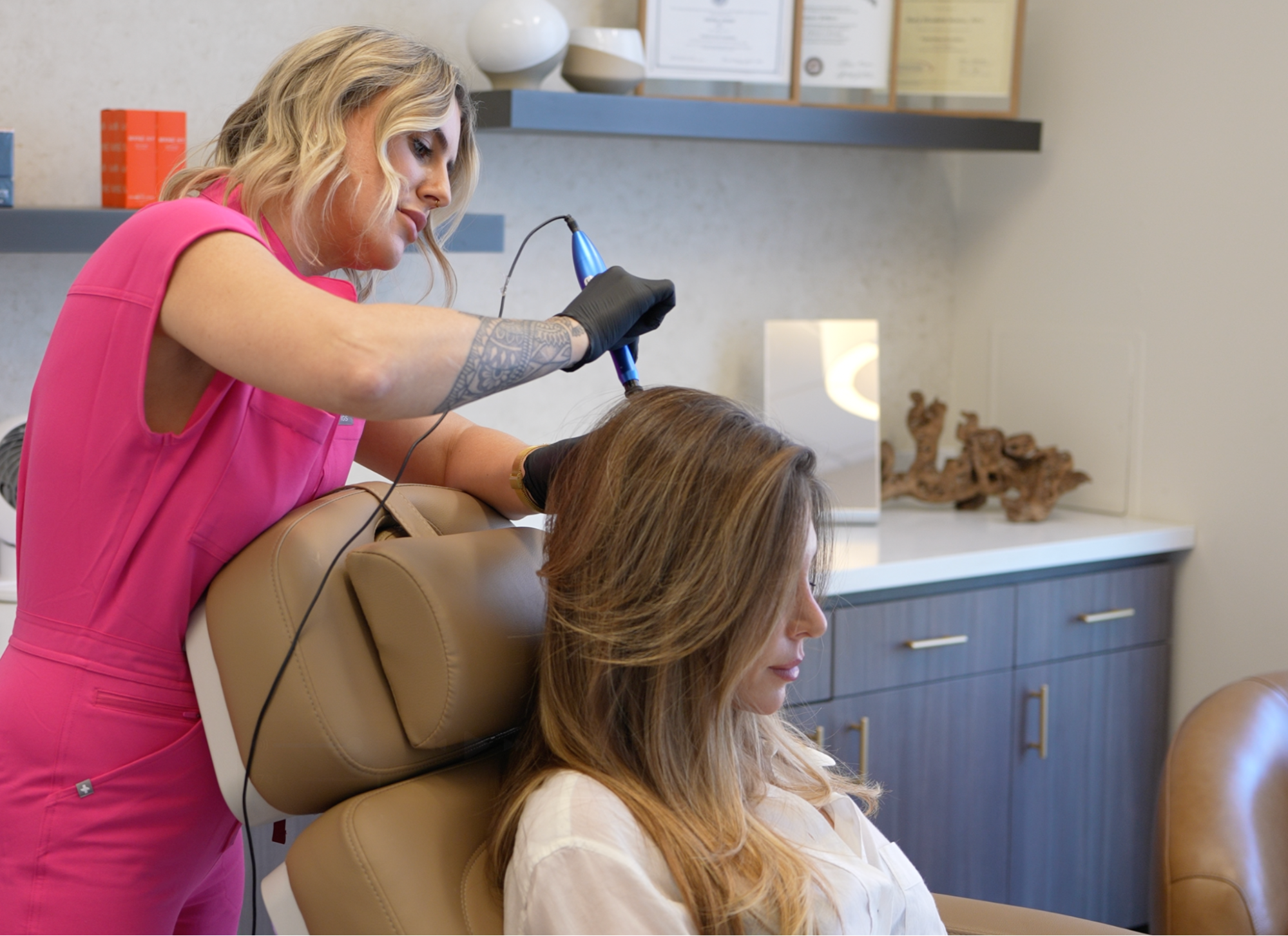
If you have been Googling “hair loss treatment Scottsdale” at midnight, you are already further along than you think. Asking the question is the first step, and getting the right answer is where we come in. Hair loss affects more than your hairline: it affects your confidence, your mornings, and the way you show up in the world. At NHLMA, we have watched thousands of patients walk through our Scottsdale doors carrying that weight, and we have watched them leave lighter, fuller, and more themselves. The right treatment plan makes all the difference, and it starts with understanding what your options actually are. Here is a breakdown of the most effective hair loss treatments available in Scottsdale right now, and the guidance you need to figure out which one belongs in your plan. Why Hair Loss Deserves a Real Treatment Plan Hair loss is one of those conditions that gets minimized far too often. The reality is that research confirms that more than 80% of men and nearly 50% of women will experience significant hair loss in their lifetime. That is a majority of us, and yet so many people spend years cycling through drugstore products and hoping for the best. A personalized, clinically guided treatment plan changes everything. The right combination of therapies can slow shedding, stimulate regrowth, and restore what feels like a piece of yourself. The key is working with a qualified hair loss specialist in Scottsdale who takes the time to find the root cause first. The Most Effective Non-Surgical Hair Loss Treatments in Scottsdale PRP (Platelet-Rich Plasma) Therapy PRP, otherwise known as Platelet-Rich Plasma, is one of the most researched and widely recommended non-surgical hair restoration treatments available today. The process uses your own blood, drawing a small sample and spinning it in a centrifuge to isolate the platelet-rich plasma. That concentrated plasma, packed with growth factors, is then injected directly into the scalp to stimulate dormant hair follicles. Multiple peer-reviewed studies support PRP as an effective treatment for androgenetic alopecia (the most common form of hair loss in both men and women) as well as other forms of pattern hair loss. Patients typically see meaningful results after a series of three to four sessions, with ongoing maintenance treatments to sustain growth. Source link

Qstem: Producing Hair Follicles via hiPSCs and DPCs
Yet again, a new company in South Korea has announced its intention of curing hair loss. Qstem (also called Q-Stem) is a biotech company that was formed in late 2024 and specializes in treating hair loss using stem cell technology. The startup was originally founded by faculty from the prestigious City University of Hong Kong. Qstem has developed a proprietary technology that differentiates dermal papilla cells (DPCs) from human induced pluripotent stem cells (hiPSCs) for use in treating hair loss. In February 2026, the company secured 2.2 billion won ($1.5 million) in seed investment funding. The company’s South Korean founder and CEO Ban Ki-won is a professor at City University of Hong Kong. His h-index score is a high 29 according to Scopus (and 23 according to Google Scholar). The h-index measures the productivity (number of papers) and citation impact of a researcher’s published work. Professor Ban Ki-won’s specialties include stem cell biology, regenerative medicine and cardiovascular regeneration. Qstem: Differentiating human induced pluripotent stem cells (hiPSCs) derived from a patient’s blood into dermal papilla cells and epithelial cells. Then creating new hair follicles. Qstem (Q-Stem): New Hair Creation from hiPSCs and Dermal Papilla Cells Qstem plans to create brand new hair follicles for implantation. According the information here and here and on their Naver blog and in this newspaper article, they describe their technology in the below manner. “Q-Stem’s core technology involves differentiating induced pluripotent stem cells (iPSCs) derived from a patient’s blood into dermal papilla cells (DPCs) and epithelial cells, and then forming hair follicle-like structures in vitro to induce actual hair growth.” According to CEO Ban, while dermal papilla cells are key cells that direct hair growth, their function deteriorates easily during in vitro culture. During the research team’s progress so far, maintaining the ability to actually produce hair was a much more difficult challenge than simply increasing the hair count number. Per CEO Ban: “Q-Stem secured dermal papilla cells that retain hair-inducing ability through iPSC-based differentiation technology and established conditions for stable culture. Furthermore, by implementing three-dimensional interactions with epithelial cells, they created a microenvironment similar to an actual hair follicle. The core of the technology was reproducing these interactions in vitro.” Yet another description states that the company is developing technology to secure dermal papilla cells differentiated from human induced pluripotent stem cells, extract growth factors secreted by these cells, and commercialize them. In animal models, the research team from Q-Stem has already managed to create in vitro hair with repeated normal growth, regression, and resting cycles. Per CEO Ban, the fact that the growth cycle was maintained implies that it is closer to a functional hair follicle (versus just a one-time structure). The company seems confident that their in vitro hair manufacturing technology has reached biological maturity from the perspective of tissue regeneration. Q-Stem’s Three Platforms for Tackling Hair Loss Based on this technology, Q-Stem is expanding its platform in three directions: Dermal papilla cell culture medium. In vitro hair manufacturing. Dermal papilla cell-based therapy. This is a bit confusing, perhaps due to translation. CEO Ban has emphasized that these are not separate businesses, but rather a single regenerative medicine technology platform. It seems like different technologies will be used depending on your stage of hair loss. According to reader “Theo” who e-mailed me about this company, the three stages are as follows per his interpretation from other sources: Dermal papilla liquor (cosmetic shampoo per the photos on their blog). Dermal papilla cells (similar to Epibiotech). In vitro production of hair follicles using hiPSCs (Stemson or Yunce approach). South Korean laws are very strict when someone wants to use stem cells/hiPSCs. Per “Theo”, every company must build or have a partnership with someone that has a proper CMO facility for producing stem cells. Qstem is currently establishing a mass production process for dermal papilla cell culture medium. In addition to the earlier mentioned blog, the company has a basic Instagram page with limited information at present. Source link