
Despite variations in my experience, there are many symptoms that frequently occur. I’ll start with the most obvious- the agonising head pain. Generally I get a searing pain behind my right eye that spreads up and over the right hand side of the head, down into the neck, and deep into the right shoulder. The throbbing pain is often so intense and vice-like that my brain looks for ways to minimise the pain, so I imagine I’m tunnelling my way underneath it to escape it. But there is, actually, no escape. Which sounds strange I know! I can only liken the head/neck/shoulder part to severe whiplash. Still related to the head, my brain races, it feels like synapses getting trigger happy with thoughts and songs whirring at pace. It is a sense of intense cognitive and emotional disquiet resulting in a terrible sense of impending doom. But, migraine doesn’t just involve pain in the head; an attack is a whole body experience negatively affecting each and every one of the five senses. All of the senses become heightened: SIGHT: I develop an aversion to light and to movement. At times I have been unable to see the other half of things or can experience vision disturbances such as zig zag lines, a snowstorm or the rotating wheel of doom. It is not possible to read. SOUND: every sound becomes magnified. Music that would normally be stimulating or soothing becomes intolerable noise. Absolute quiet is required. SMELL: my sense of smell is intensified too making normally pleasant fragrances such as perfume or garlic nauseating. It’s very like morning sickness. TASTE: everything tastes stronger and, again, nauseating. My mouth feels incredibly sensitive to heat and there’s a nasty metallic taste that refuses to go. And yet, despite this, when I experience an attack I need to eat. It must be something that’s sugary, protein-based and/or stodgy. TOUCH: my body and joints ache as if I had flu. I feel hot and cold. Nausea is extremely common with my migraine but what I really fear is being physically sick while it feels like my head is being beaten to a pulp. Fortunately for me, this is infrequent. At times I also experience vestibular migraine which involves a degree of vertigo that’s hard to describe. The world falls away in a spiralling vacuum as though I’m falling through space never to land back on earth. Imagine drinking two bottles of wine, feeling sick, the room spinning, then being forced to drink another two bottles…it’s a revolting feeling. An attack might last one to four days, then there’s the migraine ‘hangover’ that, again, can last for days. I typically feel crushing fatigue, nausea and brain fog. There’s often a residual headache with accompanying neck and shoulder pain. My body and mind feel as though I’m recovering from having been beaten up. Source link

Sugar and Migraine Attacks-All You Need To Know
This post may contain affiliate links. Migraine Strong, as an Amazon Affiliate, makes a small percentage from qualified sales made through affiliate links at no cost to you. In my professional work with people who have migraine and the thousands of people I interact with on social media platforms, much of the conversation is around migraine-oriented eating. I’m a registered dietitian as well as a certified health and wellness coach focused on working with people living with migraine. There is no denying that there is a relationship between sugar and migraine attacks for a significant percentage of people. I shuddered at the very idea of not having sugar in my life. As a matter of fact, I thought those who banished sugar from their lives were extremists. Let me assure you that I am not a zealot who is going to tell you that you need to breakup with sugar in order to get your migraine attacks in good control. Personally, sugar is not a migraine trigger for me but I feel better overall when I limit it. Let’s take a good look at what may be going on. If you notice a relationship between sugar and migraine attacks the below information will be important to know. ** While Migraine Strong writes about the latest in migraine treatments, this is not medical advice. We are patient educators and all information you read should be discussed with your doctor. 4 possible reasons for sugar and migraine episodes 1. Fluctuating blood sugar levels = sugar migraine When we eat food, our body gets to work on digesting and absorbing the meal. Assuming our digestive and endocrine systems are working properly, there is a normal, healthy rise in blood sugar followed by a gradual decline. Blood sugar is kept in a range that allows our body to have enough fuel to provide the brain and all organs of the body to perform vital functions. For some people, the ability to regulate blood sugar is impaired. Blood sugar levels may climb too high in response to sugars and other high-carbohydrate foods. Their body may sense this elevated blood sugar and respond with a surge in a hormone called insulin to try to reduce the elevated blood sugar. The surge sometimes results in blood sugar getting too low. This can cause “sugar headache” for those who are prone to it. The migraine brain is often described as being hyper responsive to normal, benign stimulation. A person who is not prone to sugar migraine attacks may be completely unaware of the ups and downs of their blood sugar whether they are normal fluctuations or not. Contrarily, the person predisposed to migraine may be triggered by the inconsistencies and abnormalities in blood sugar. With this theory about sugar and migraine attacks, the body is sometimes unable to maintain blood sugar in the proper range. This causes the brain to respond with pain as a warning signal that something is wrong. This response to the low blood sugar level is described as a “sugar headache”. Yet, quite a few of us often experience headaches that quickly escalate to migraine when not treated early enough. A leading expert’s opinion on sugar and migraine Dr. Alexander Mauskop is one of world’s authorities on headache disorders. In his recent book, The End of Migraines- 150 Ways to Stop Your Pain, he states: Sugar is not always an obvious trigger. Many people develop migraine hours after a carbohydrate-rich food. Three-quarters of people with migraine have reactive hypoglycemia. This means that their blood sugar drops too low after a carbohydrate-rich meal. #AD 3 steps to take to avoid sugar migraine episodes First, know the signs of hypoglycemia aside from headache such as shakiness, sweating, confusion and hunger. You may only recognize the sugar headache, but that should be reported to your doctor. He/she will ask you more questions and determine if further testing needs to be done to figure out if your blood sugar is stable and if something else should be done. Second, pay attention to the types of foods in your meals and snacks and make sure that if you have a sugary food, you pair it with a good protein, fat and/or fiber source. Protein, fat and fiber slow the digestion and absorption of sugar into the blood stream. So, if you have a sweet tooth and enjoy candy as an afternoon snack, consider switching to honey-roasted nuts. Nuts are a good source of protein, fat and fiber. Or, if you must have a cookie, wash it down with a little whole milk. In general, if you already suspect sugar and migraine attacks are linked for you, you should limit sugary foods and meals that are high in sugar and/or simple carbohydrates. Third, do not skip meals. Not having food when your body is used to having nourishment can make your blood sugar dip and set you up for a hunger-headache or migraine. Additionally, you may tend to overeat and indulge in too much sugar/carbs when you have your next meal. Your blood sugar could be spiking and falling throughout the day and antagonizing your hyper-responsive brain. If you have headaches that come and go, consider blood sugar fluctuations as one possible cause. The migraine brain likes consistency Do all you can to eat at consistent times and keep nonperishable snack items with you for those times that you cannot get a proper meal. Being prone to migraine often means you must be more vigilant about keeping a routine to keep your brain happy. Some people find that they can reduce their migraine frequency by making sure they have at least a small snack every few hours. Others avoid sleeping late when they do not have morning commitments so that their mealtime is consistent. Morning headaches after sleeping late may also be due to delayed caffeine for those who are accustomed to having caffeine each morning. 2. Sugar is an inflammatory food I think the overwhelming majority of people

Neurologist Professor Fayyaz Ahmed to donate book proceeds to The Migraine Trust
Former trustee of The Migraine Trust and renowned neurologist Professor Fayyaz Ahmed shares his inspiring story in a newly published book, with proceeds going to support The Migraine Trust. Professor Ahmed’s memoir, “Beneath the Dust”, details his life journey from his childhood in Karachi, Pakistan through to his career as a consultant neurologist with a passion for improving headache and migraine care. Chief Executive of The Migraine Trust, Rob Music said, “We are incredibly grateful to Professor Ahmed for choosing to support the work of The Migraine Trust through sales of his new book. Professor Ahmed has been a long-time champion of the work of The Migraine Trust, including serving as a valued Trustee for 12 years, and it is wonderful to see his passion for better migraine care reflected in his memoir.” If you’re interested in purchasing the book, priced at £10 ( £15 including postage and packing), you can get in touch with Professor Ahmed and his team via email: fayyaz.ahmed@nhs.net, debbie.buttle@nhs.net. Source link
Minimizing Migraine Attacks: What I Wish I Knew…
This post may contain affiliate links. Migraine Strong, as an Amazon Affiliate, makes a small percentage from qualified sales made through affiliate links at no cost to you. There is so much I wish I knew about minimizing migraine when my frequency of attacks was ramping up a few years ago. I would have avoided “chronifying” and felt like myself rather than someone going through the motions in life for so long. I assume you have episodic migraine that is worsening and you are here trying to figure out what to do to minimize the attacks. It’s gotten so bad that you can’t be the person that you once were and it’s sucking the life out of you so many days of the month. You don’t know what’s worse – canceling commitments and looking like a flake or pushing through and pretending you are ok when you can barely think straight. In the back of your mind you think, “Could this get worse?” Maybe you don’t want to go to see your doctor or specialist again and you want to know what can be done right now to get better. Or you have been to see your doctor and feel reluctant to fill the prescribed daily migraine medication. This is not medical advice. The tips below can help you get better, along side the help you get from your doctor, and start minimizing your migraine attacks. ** While Migraine Strong writes about the latest in migraine treatments, this is not medical advice. We are patient educators and all information you read should be discussed with your doctor. Things I know now but wish I knew then… Medications – A love/hate relationship If you haven’t already done so, please read my blog about episodic migraine and medications. Understanding the role of migraine meds as well as others you may take is very important. Implementing the steps from that one blog may help you tremendously. The Personal Plan to Roll-Back Attacks detailed in the blog may take a few weeks for you to implement if you take those prescribed and over-the-counter medications. The effort will be worth it. Medications can provide wonderful relief when properly taken. I wish I knew that the the medications that were helping me live my life and ditch my increasing migraine attacks ultimately hurt me. The good news is that now that my migraine attack frequency has diminished, they help me again. Migraine Strong recently interviewed a migraine expert about keeping migraine attack frequency from moving from episodic to chronic. Her tips for helping to get chronic migraine back to episodic migraine will help many who are trying to find the right combination of medications and other interventions. Next, take a good look at what you think your triggers are. Triggers are Tricky. What makes triggers so tricky is that they tend to be cumulative. That is, they stack on top of each other. A stressful day may not trigger you, but a stressful day after a lousy night of sleep, on a stormy day that you capped off with a glass of red wine may do you in! This eye-opening blog from Eileen Zollinger discusses this concept in more detail and may help you understand your personal trigger threshold. The internet will provide you with conflicting lists of the most common migraine triggers and they will rank them differently. Stress is usually at the top followed by poor sleep. Weather, hormones, diet, hydration, scents, lighting, alcohol and caffeine are also common triggers. How each rank with an individual will vary. How do you figure out your personal triggers? My favorite way is to use a popular tracker called Migraine Buddy. It’s a popular smartphone app as it’s easy to use and is frequently updated to help the user figure out what’s helping and what’s hurting. I wish I knew about Migraine Buddy when things were so bad. The Migraine Buddy App ** IMPORTANT – If you are in a phase where it seems like “everything is a trigger,” it’s likely the time to up your migraine preventive game with help from your doctor’s prescription pad or a neuromodulation device. Most people only have a few triggers. If your migraine brain is over-responding “to everything,” it’s not likely that you can “lifestyle your way to wellness.” The MOST Controllable Triggers – Caffeine, Foods and Beverages Caffeine – I know, I know- Many of you are wincing right now. Questions about coffee and migraine come up all the time, but significant caffeine sources are in other, less obvious places. This blog called Caffeine and Migraine- Trigger or Treatment and it is a must-read. I have 2 strong recommendations for you: Note your caffeinated beverage intake and notice if your attacks tend to happen when you deviate from your pattern. Some patterns I have seen that cause trouble – Varying amounts of caffeinated coffee, tea and/or soda due to weekend/weekday habits. Out of town travel is also a common problem as it interrupts the usual morning routine. Notice if you tend to feel fine when having your usual number of caffeinated beverages but start getting symptoms after you have the extra serving while at a mid-morning meeting or spontaneous trip through a drive-thru. Read ingredient labels. Is that smoothie that you love so much made with caffeine? How about that powdered drink that you have occasionally? Are you drinking energy drinks or taking supplements to boost your energy? Caffeine may be an ingredient. The inconsistent amount or having too much caffeine may be triggering you. Inconsistency of caffeine intake makes minimizing your migraine attacks more difficult. Caffeine In Medications Caffeine is an important part of some over-the-counter (OTC) and prescribed medications and is part of why the medication works so well. The OTC medication that you take for joint pain may get its boost from caffeine. Check out those labels, too. Why is caffeine a potential problem? One reason it might be a problem for you is that your body may be used to a steady amount and when it varies, it can trigger an
What actually happens in the brain during a migraine attack?
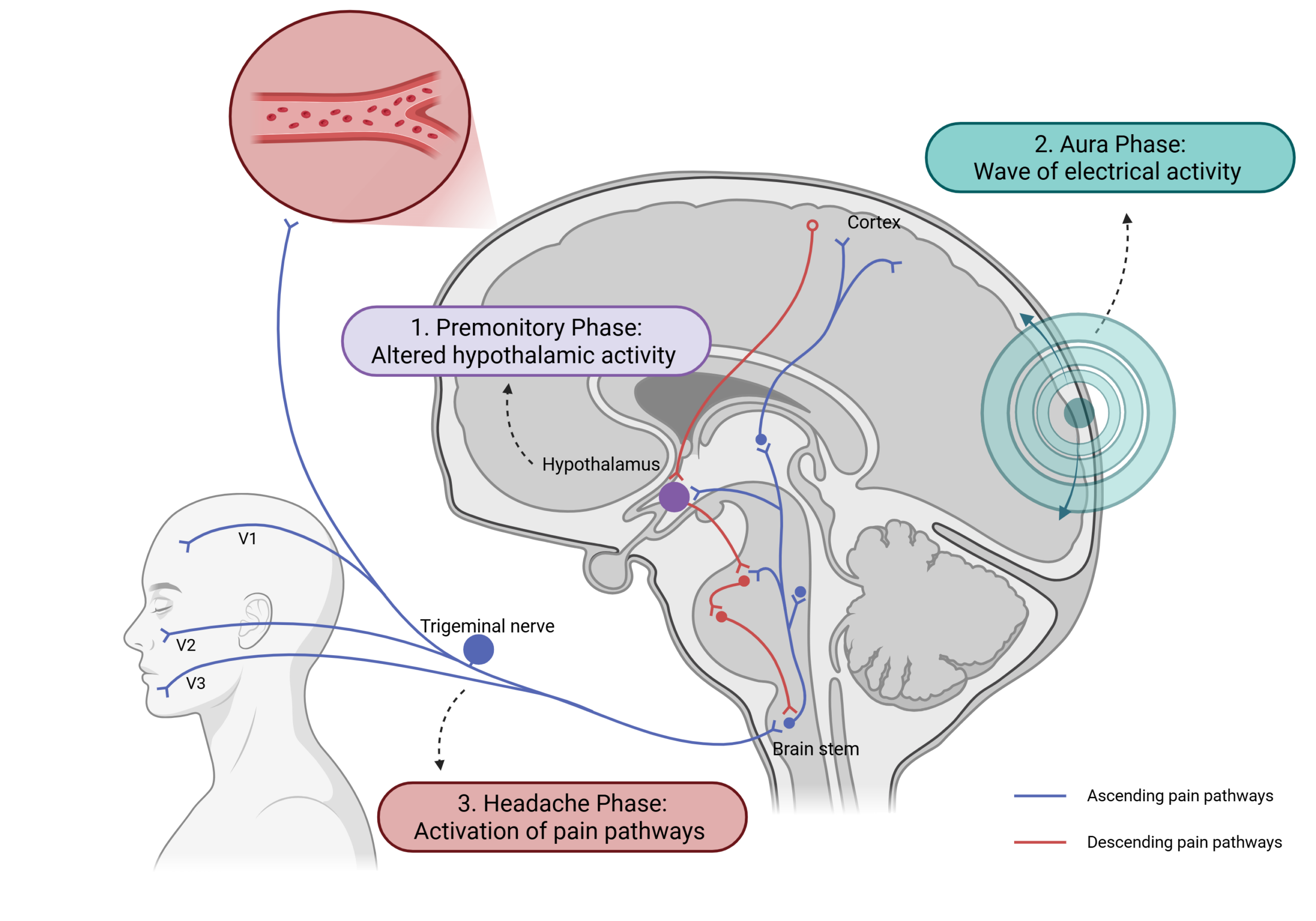
A simple guide to the phases of a migraine attack and what researchers think is happening inside the brain. Many people mistakenly believe a migraine attack to be “just a bad headache”. But inside the brain, a migraine attack is far more complex. A migraine attack is a brain-wide event, meaning it involves changes in nerve activity, brain chemicals, blood vessels and sensory processing. These changes unfold over time and lead to four commonly defined phases of a migraine attack. Researchers often divide these phases into: Prodrome or Premonitory phase Aura phase (only in approximately 30% of cases, defined as migraine with aura) Headache phase Postdrome phase Let’s walk through what researchers currently think is happening inside of the brain as a migraine attack unfolds. The premonitory phase: the brain’s early warning system For many people, the first signs of a migraine attack, or premonitory symptoms, show up before the head pain even begins. These symptoms are indicators that the migraine attack, and its underlying changes in the brain, have already started. A timeline of the phases of a migraine attack and its associated symptoms. Created in BioRender. Rubio beltran, E. R. (2026) One of the brain regions that is believed to be important in generating premonitory symptoms is a small almond-sized region deep in the brain, called the hypothalamus. We know that the hypothalamus is activated in migraine, before the onset of head pain and its normal function is to keep the body in a stable, consistent state, adjusting to changes in the environment (a process known as homeostasis). In a way, it is like the master thermostat, monitoring internal and external conditions and regulating things like appetite, sleep, and hormones. Given this important function, changes in activity of the hypothalamus are thought to lead to some of the diverse non-pain symptoms that occur, including fatigue. It’s still unclear exactly what triggers the cascade of changes that happen during a migraine attack. But a better understanding of the biology underlying the earliest premonitory phase may give us clues that hint at how migraine attacks begin, offering new hope for treatment. Aura: a wave across the brain Up to one third of people living with migraine experience aura as part of a migraine attack. This phenomenon is called Cortical Spreading Depression (or CSD for short). This wave travels surprisingly slowly at only a few millimetres per minute. As it moves across different regions of the cortex, it interrupts normal brain activity, giving rise to the symptoms experienced, including visual symptoms when it crosses the visual cortex. The headache phase: pain-pathways are activated and become sensitised The phase that most people associate with migraine is the headache phase. During this time, there are several processes occurring simultaneously in the brain. A key player in the headache phase is the trigeminal nerve. This nerve is responsible for carrying sensory information from the face and head to the brain. During a migraine attack, the trigeminal nerve becomes activated and sends pain signals to different areas of the brain. The nerve endings also release chemical signals, like Calcitonin Gene-Related Peptide (CGRP), which helps drive inflammation and increases sensitivity of pain pathways in the brain. As these pathways become more active, the brain begins to amplify sensory signals. This is why some people with migraine often become sensitive to light, sound and even smells. Overall, the brain’s pain-processing network is being switched into overdrive making it highly sensitised and overactive. Currently several therapies target this phase including molecules that block the actions of CGRP. The Postdrome: the migraine “hangover” Even after the headache fades, the migraine attack isn’t over. People often describe the postdrome as feeling like a “migraine hangover.” At this point, the brain is gradually recovering from the migraine attack. Pain pathways sensitivity is reducing, but networks involved in things like attention, thinking, and energy regulation may still be temporarily affected. Research investigating this phase is currently limited. In the future, research into this phase will hopefully provide a better idea about the changes happening in the brain at the end of a migraine attack. Overview of the key players in the brain relating to migraine phases. Created in BioRender. Rubio beltran, E. R. (2026) The big picture A migraine attack is a cascade of events occurring outside and inside the brain, not just a single event. These events unfold in phases: Brain regulation changes begin in the premonitory phase A wave of altered electrical activity can spread across cortex during aura phase Pain pathway and sensory systems become active and sensitised during the headache phase The brain recovers during postdrome phase Understanding migraine in light of all the changes that occur over time helps explain why it’s considered a neurovascular disorder, not simply a severe headache. Researchers are still working to fully understand how and why these attacks occur, hopefully leading to more answers to the question marks that remain to be answered about migraine biology. Source link

Traveling With Migraine – How To Avoid Travel Attacks
This post may contain affiliate links. Migraine Strong, as an Amazon Affiliate, makes a small percentage from qualified sales made through affiliate links at no cost to you. Traveling with migraine can feel daunting, especially when trying to avoid the inevitable airplane headache. The excitement of a trip often comes with extensive planning and packing, ensuring all medications and supplements are accounted for, and arranging for head-friendly meals away from home. However, careful preparation can help reduce some of the typical triggers that arise during travel. Here’s how you can tackle these challenges and make your trips more enjoyable. ** While Migraine Strong writes about the latest in migraine treatments, this is not medical advice. We are patient educators and all information you read should be discussed with your doctor. Plan Ahead to Prevent Travel Migraine Attacks Creating a solid plan is essential when traveling with migraine, even though perfect plans don’t exist. Migraine often throws surprises at us, but planning ahead minimizes stress and reduces the likelihood of triggers. Start building your plan as soon as you book your trip, whether you’re flying or driving. Use Lists to Stay Organized: Consider travel length, your destination, and your companions when drafting your lists. Work Backwards from the Departure Date: Start with your departure day and plan backwards to determine when to start packing and order any necessary supplies. Getting your suitcase out a week early allows you to pack gradually and avoid last-minute stress. Don’t forget to include tasks like arranging pet care, turning off your home’s water, and setting the thermostat. Schedule Downtime After Arrival: If possible, build a recovery day into your itinerary. Many people, including myself, experience migraine attacks the day after traveling. Use this day to relax while others explore, or join in if you feel up to it. #AD Why Does Traveling Sometimes Reduce Migraine Attacks? Many people notice fewer migraine attacks while traveling, which often sparks discussion. Why does this happen? The reasons vary but often include reduced stress from daily responsibilities, reduced screen time and the therapeutic effects of time with loved ones. For example, when I travel, I don’t have to answer the dreaded, “What’s for dinner?” question—restaurants handle that for me! However, if you follow a migraine elimination diet, eating out may bring its own stressors. Later in this article, we’ll share strategies for dining out while managing your triggers. I recently took a trip to Yellowstone and the Grand Tetons with my husband. My migraine attacks definitely reduced during the week, even with all of the hiking and the change in time zones. A significant reduction in screen time probably also really helped. Tips to Limit Migraine Triggers During Travel Both flights and car rides pose challenges, but you can take steps to reduce the risk of migraine attacks. 1. Stay Hydrated Travel dehydrates us—plane cabins and car air conditioning or heat exacerbate this. Dehydration is a common migraine trigger, so keep a refillable water bottle with you at all times. Choose one with measurement markings to track your intake. While frequent bathroom stops or trips to the airplane bathroom may feel inconvenient, staying hydrated is worth the effort. 2. Choose Head-Friendly Foods If you’re following a migraine elimination diet, strive for “good enough” rather than perfection. Pack snacks that align with your diet for car rides, and research restaurant options ahead of time. When dining at unfamiliar places, make the best choices you can and move forward with a positive attitude. 3. Protect Yourself from the Sun Pack essentials like a wide-brimmed hat, sunscreen, and a sun shirt. Stay cool and drink plenty of water to replenish fluids. Sunglasses are also a must, especially when hiking, skiing or hanging at the beach. 4. Maintain a Sleep Routine Headache specialists recommend a consistent sleep schedule. While slight deviations for activities like late dinners or movies are okay, avoid drastic changes. Pack earplugs and a sleep mask, to block noise and light. 5. Carry Medications and Emergency Supplies Always keep a stocked emergency kit within reach. Include your preventive and acute medications, supplements, and any tools you use for managing attacks. Never pack essential medications in checked luggage—lost bags mean lost treatments. Unexpected delays can cause all kinds of havoc. Whether stuck in a plane or in traffic, always have supplies to avoid the ‘hangry’ attack. Drinks and some safe crackers or granola bars can head off the impending ‘I skipped a meal’ attack. Flight Tips: Prevent Airplane Headaches Airplane headaches often result from cabin pressure and altitude changes. Consider these strategies to reduce your risk: Dexamethasone – Is a steroid that has been shown to be effective in preventing high altitude headache (1) A low dose (4mg) the day before, day of and day after flying can offer protection against airplane headaches or migraine attacks. Diamox (acetazolamide) – This prescription preventive medication is used also to treat altitude sickness. Taking Diamox prior to and during your flight may help you avoid a migraine attack. (1) If you want to learn more about how Diamox can help with pressure and weather related attacks, read our article on a migraine forecast. Acute medication – Headache specialists suggest premedicating prior to your flight if you are susceptible to airplane headaches or migraine attack during flights. Keep in mind that this goes towards your total for the week/month so if your are towards the chronic end of the migraine spectrum, use this option with that in mind. Ginger is always a good option as well and our article on ginger for migraine can give you the needed information. A decongestant like pseudoephedrine can help prevent an attack and can be taken prior to your flight as well. Check with your doctor to see if they recommend any of these options. Essentials for the airplane headache emergency kit Emergency Kit – Always have your emergency kit packed and ready to go. All kits are a bit different but some helpful things to consider packing

I genuinely feel that we rescued each other.
It didn’t take long at all for our bond to build once the adoption was confirmed. Even that first day of bringing him home in the car, I could feel he had established a sense of trust in me. From there, our connection continued to build, and we developed our daily routine: waking in the morning to take my medication followed by cuddles, getting out for our morning and afternoon walks (Bruce on timekeeping duties, of course!) and mealtimes right on schedule. As a result of having this routine, Bruce would also sense I was having my bad migraine days if I got up in the morning but wasn’t able to shower due to lack of balance, and he would be very patient, quiet, and forego his usual demands for outings, being quite happy to potter around in the back garden. If I needed assistance, I would shout “Bruce, here, help”, and he would come upstairs and stand by my bed, close enough for me to put my hand on his back so that I could stabilise myself to get up and stand. He then would walk beside me and somehow had learnt himself the best position to stand behind me when coming down the stairs, so that the weight of his body would support me behind my legs if I started to tip backwards or could put my hand there next to him to maintain balance. I didn’t teach him to do this; he just seemed to know what to do! When my migraine attack had lifted, and he would hear me go into the bathroom, the noise of the shower and see me come downstairs changed out of my pyjamas – that was it; action stations, and usual routine back on! Source link

Navigating Life with POTS: My Dystautonomia Experience
Living with POTS (Dysautonomia) is new for me. Living with Migraine is something I’ve been living with forever. The thought that I live with something other than migraine has been a topic of discovery for many years. I know comorbidities are common with migraine so it’s been on my mind. Living with a chronic illness is complex because so much of it crosses over. My Migraine Life started way back when I was 5 years old. Over the last decade, I have dedicated my life to being a migraine advocate and educating myself about my disease. The pieces just weren’t coming together. For some reason, I felt like my migraine treatment was effective yet I was still in a chronic state of riding these intense symptoms that I couldn’t shake and came in flairs. This post is for informational purposes only, and should not be taken as medical advice in any way. Please speak with your doctor if you suspect you have dysautonomia and for treatment options. I am sharing my journey and everyone is different. Key Features of POTS Postural Orthostatic Tachycardia Syndrome (POTS) is a condition that affects the autonomic nervous system, which controls involuntary functions like heart rate, blood pressure, and digestion. POTS is a form of dysautonomia, and its primary characteristic is an abnormal increase in heart rate when transitioning from lying down to standing. Symptoms of POTS/Dysautonomia may Include: Heart rate: Fast or slow heart rate, heart palpitations, or an irregular heart rhythm Blood pressure: Low blood pressure, especially when standing up, or unstable blood pressure Blood sugar: Low blood sugar (hypoglycemia) Sweating: Excessive sweating, sweating more in certain areas, or not being able to sweat Temperature: Sensitivity to heat or cold, or swings in body temperature Vision: Blurred vision, light sensitivity, or trouble adjusting to light changes Headaches: Migraines or frequent headaches Dizziness: Frequent dizziness, especially when standing up Fainting: Fainting or passing out, especially when standing up Nausea and vomiting: Nausea and vomiting, or gastroesophageal reflux Bowel movements: Constipation or diarrhea, or changes in bowel movements Urination: Frequent urge to urinate, urinary incontinence, or bladder dysfunction Fatigue: Chronic fatigue or feeling tired all the time Cognitive issues: Brain fog, forgetfulness, or trouble concentrating Chest pain: Chest pain or discomfort Sleeping problems: Insomnia or sleep-disordered breathing Skin: Clammy or pale skin, blotchy reddening of the skin, or swelling and/or discoloration of the legs Dysautonomia Triggers: Prolonged standing, heat, dehydration, or illness can worsen symptoms. Hormonal changes, stress, or certain medications may also exacerbate the condition. What Causes POTS? The exact cause isn’t fully understood, but potential contributors include: Underlying Conditions: Viral illnesses or infections Autoimmune disorders (e.g., Sjögren’s syndrome, lupus) Ehlers-Danlos syndrome (a connective tissue disorder) Neuropathic POTS: Damage to small fiber nerves that regulate blood vessel constriction. Hyperadrenergic POTS: Excessive release of norepinephrine, leading to heightened “fight or flight” responses. Hypovolemic POTS: Low blood volume contributing to symptoms. Who Does It Affect? POTS is more common in women (80–85% of cases) and typically starts between the ages of 15 and 50. It can occur after a triggering event like a viral illness, surgery, pregnancy, or trauma. Is There a Cure for POTS? There’s currently no cure for POTS, but many treatments and lifestyle changes can significantly improve quality of life. My Diagnosis of POTS My diagnosis of POTS (postural orthostatic tachycardia syndrome /dysautonomia) was a long time coming. Chronic migraine allowed me to ignore other symptoms because my migraine symptoms are so diverse and range in intensity. One symptom I ignored was a burning in my leg which turned out to be blood pooling or neuropathic pain. I had this burning in my leg that I felt at night that went on for months, maybe even longer. It wasn’t something I thought to discuss with my headache specialist. It didn’t seem migraine-related and didn’t weigh heavy on my mind but it was something I mentioned to my husband often questioning what it could be. Looking back, this was a symptom of Neuropathic POTS and was a puzzle piece I put together in hindsight. A symptom I was talking about but possibly incorrectly was my anxiety. I was passing off my racing heart, clenching chest, and breathlessness on anxiety. My anxiety (or what I felt was anxiety) has been increasing in the last few years. Between living with chronic migraine and the stresses of life, my anxiety was through the roof and I didn’t consider blood pressure or heart rate to be something to discuss with my doctor. It was when I mentioned my head pain spiking when I was lying on the couch and walking upstairs to go to bed that my doctor mentioned POTS. Additionally, I was waking up with a migraine attack (or many symptoms of it) every morning. Even with a sleep schedule, when I went from lying to standing, my symptoms spiked. How Do I Know If I Have POTS? I had heard of POTS or dysautonomia at this point but was curious to have something to investigate further. I follow other migraine advocates who also speak about POTS and it’s comorbidity, like fibromyalgia or other conditions that often occur. It was something I never investigated. My headache specialist ordered a tilt test for me and a few weeks later I was standing there waiting to trigger my symptoms. I wasn’t sure how to feel. I have had many years of trying to figure out what else is going on besides migraine. Like migraine isn’t enough. I spent one summer between school and college and they were insistent that I had anemia because no one could figure out my dizziness. In 2018, I went to the Miles for Migraine Cincinnati race and met an amazing doctor who specializes in high/low-pressure headaches. When my doctor suggested it, I drove 4 hours to see this doctor to hear that I have both high and low-pressure headaches and it’s not that. But I escaped a painful test to discover this so that was a relief. Fast forward to 2023 and I’m still complaining of a spike of symptoms

The Truth About Turmeric for Headaches and Migraine
This post may contain affiliate links. Migraine Strong, as an Amazon Affiliate, makes a small percentage from qualified sales made through affiliate links at no cost to you. Turmeric is often celebrated for its powerful anti-inflammatory, anti-fungal, and pain-relieving properties—some even tout its potential cancer-fighting abilities. But can it play a role in easing headaches and especially for those living with migraine? While migraine is primarily a genetic neurological condition and not traditionally linked to inflammation, emerging research suggests there may be a neurogenic inflammatory component involved during attacks. This growing area of interest has led researchers to explore whether reducing that inflammation could help manage migraine symptoms. That’s where turmeric may come in. In this article, we’ll explore what science currently says about turmeric’s potential to support migraine and tension headache relief—and whether it could be a helpful part of your treatment strategy. While Migraine Strong writes about the latest in migraine treatments, this is not medical advice. We are patient educators and all information you read should be discussed with your doctor. Turmeric and Migraines: What You Should Know Turmeric is a flowering plant from the ginger family—and yes, it shares a lot of the same benefits as its spicy cousin. Like ginger, turmeric is often used to help manage pain and inflammation, which is why it’s becoming a popular natural remedy for migraine relief. Native to Asia, India, and Central America, turmeric is widely grown and commonly used as a spice in cooking. It has a warm, slightly bitter, and earthy flavor, and it’s best known for giving curry its vibrant golden-yellow color (and often shows up as a natural food coloring, too). But here’s the twist: while turmeric steals the spotlight, it’s actually curcumin—the active compound inside turmeric—that does the heavy lifting. Curcumin is packed with powerful anti-inflammatory and antioxidant properties, which can play a big role in easing migraine symptoms. The catch? Turmeric root only contains about 3% curcumin by weight, which means it’s tough to get enough just by sprinkling it on your dinner. That’s where curcumin supplements come in. Adding a high-quality curcumin supplement* to your routine, alongside a turmeric-rich diet, can help you tap into the full benefits—more on how to do that effectively a little later. *See our note of caution at the end of this article, but ALL supplements should be reviewed with your physician before you start. #AD How Turmeric May Help Relieve Migraine Symptoms Turmeric (and its active compound, curcumin) may support migraine relief in several key ways: Fights Inflammation NaturallyTurmeric is a powerful natural anti-inflammatory, which can help reduce chronic pain without the side effects or risks of addictive medications. Perhaps it helps with the neuroinflammation associated with migraine. (2) Reduces Oxidative StressCurcumin helps combat oxidative stress by boosting your body’s antioxidant defenses—important for anyone dealing with inflammation or chronic illness like migraine. (3) Supports Brain HealthSome studies suggest curcumin may improve cognitive function and reduce the risk of neurodegenerative diseases, offering long-term brain health benefits.(4) In another study, working memory was improved with curcumin supplementation. (9) What person living with migraine wouldn’t welcome that nice benefit? Improves Circulation and Histamine ResponseBetter blood flow means more oxygen to the brain, which may help reduce symptoms like brain fog, tinnitus, and even histamine-related reactions. (5) Is turmeric for headaches and migraine well-researched? Honestly, the study links above are not directly related to turmeric for migraine and not all of the studies are on humans. Like most supplements, research on using turmeric for migraines is pretty limited. The jury is still out on just how much turmeric can improve our symptoms. But, even if it’s simply a reduction of the number of attacks you experience each month or a reduction in the severity of symptoms you experience during an attack it’s an interesting spice to explore. There are many studies available that support turmeric’s pain fighting abilities like this one managing arthritis pain with daily turmeric use. (6.) I also came across a small Iranian study that found a reduction in frequency of migraine attacks when turmeric and omega-3 fatty acids were taken together as a daily migraine preventive. (7.) Yet another small study that showed turmeric can increase the effectiveness of naproxen. Since naproxen is my abortive of choice, I can’t wait to try this one out myself during my next painful attack. (8.) Should you consider a supplement that has only a few studies for migraine use? Many experts believe neurogenic inflammation plays a role in migraine disease. Over the counter anti-inflammatory NSAIDS like naproxen and ibuprofen are used very successfully to treat migraine attacks. So with its anti-inflammatory benefit, it’s not that big of a jump to consider turmeric for the management of migraine pain even with little research supporting it. Especially for those who are looking for natural migraine relief. This makes me think of Dr. Geppetti’s talk on multi-modal treatment approach at the 2019 Migraine World Summit. In his talk he stated that because most of us have migraine for many years, we should try everything reasonable to gain control over our symptoms. Not necessarily everything proven or well-studied but, everything rational. Personally, I consider it reasonable to try a supplement with so many health benefits standing behind it. In a recently published must-read book by Dr. Alexander Mauskop, prominent headache specialist, founder and director of NY Headache Center, specifically discusses curcumin as one of the “150 Ways to Stop Your Pain.” He uses it himself for the potential cognitive benefits. I have personally supplemented with turmeric for many years and believe it helps gently calm down my inflammatory response, soothing my pain and reducing dizziness and ear symptoms related to vestibular migraine. One thing I’ve learned when it comes to managing migraine symptoms is to stick with what works even if no one else is talking about it or doing it. Continue what’s effective and rewarding for you personally. If it works, I keep going! Logically it just makes sense to

The Migraine Trust joins leading organisations to shape government’s Keep Britain Working initiative
The Migraine Trust, alongside over 150 other employers, is working with the government to tackle ill-health that pushes many people with long-term health conditions and disabilities, like migraine, out of work. This group of organisations, called Vanguards, includes some of the biggest employers in the country, healthcare providers, mayoral authorities, and charities like The Migraine Trust. It has been assembled by the government as part of its Keep Britain Working programme following the publication of the Keep Britain Working Review in November 2025. The Vanguards will work with the government to help reshape how health issues and disabilities are managed in the workplace. They will contribute to the development of practical, scalable solutions across several aspects of the ‘healthy working lifecycle’, including improving disability inclusion, acting early to prevent deteriorating health at work and supporting employees to remain and return to work. The Migraine Trust is looking forward to working with the government and fellow employer Vanguards to ensure that the workplace needs of people living with migraine are represented. 33% had to leave their job altogether due to the impact of migraine We know from our research that many of the one in seven people living with migraine have experienced a significant impact on their employment because of the condition. Research we conducted in 2023 highlighted that a staggering 29% of people with migraine said they had needed to move from full-time to part-time work because of migraine, while 33% had to leave their job altogether. Employers have an important role to play in ensuring people with migraine are supported to stay in, and thrive at, work. According to our 2025 survey of people with migraine, only 2% of respondents strongly agreed that their workplace had migraine-friendly policies. Often, simple and straightforward changes in the workplace can make a big difference for people with migraine. Whether you are an employer, a colleague of someone with migraine, or you live with migraine yourself, our workplace hub has lots of resources and support, including details on how to book a migraine training session for your workplace. Source link