

August 31, 2026 10 min read Add topic to email alerts Receive an email when new articles are posted on Please provide your email address to receive an email when new articles are posted on . “ data-action=”subscribe”> Subscribe We were unable to process your request. Please try again later. If you continue to have this issue please contact customerservice@slackinc.com. Back to Healio Key takeaways: Mentorship and peer support are invaluable when presenting at live conferences. Preparation is essential for overcoming fears at the podium. Click here to read the At Issue to this Healio Exclusive. Take a look at the Healio | OSN calendar page, and you will find more than three dozen meetings, symposia and summits that make up a year of ophthalmology gatherings. Image: Courtesy of Nandini Venkateswaran, MD Whether they are one-room, single-day conferences, such as Clinical Trials at the Summit, or they take up full convention centers, such as the American Academy of Ophthalmology annual meeting, they all give physicians a chance to stand in front of their peers to present research, discuss hot topics and celebrate their profession. Speaking at these conferences is a shared experience for many ophthalmologists. Nandini Venkateswaran, MD, was a first-year ophthalmology resident when she gave her first two presentations at a national conference at the 2017 American Society of Cataract and Refractive Surgery annual meeting in Los Angeles. “These were my first opportunities to present research that I had done with mentors, one from my residency program and one from outside my residency program,” she said. “It was just a special opportunity to have visibility at those paper sessions as a trainee in front of doctors who I looked up to and are leaders in the field.” Venkateswaran said a physician who moderated one of those sessions, Liliana Werner, MD, PhD, still brings up that paper session every time they see each other. “I was presenting a paper about the impact of IOL glistenings on vision quality that I had prepared with Dr. Kenneth Rosenthal, and I was all nerves to be presenting as a first-time resident about a topic that I did not feel I was an expert in,” she said. “But I ensured I knew all the details of my presentation, was prepared to answer any potential questions and ran through my talk several times. To this day, Dr. Werner will come up to me and say, ‘I remember when you were a first-year resident presenting that great paper on IOL glistenings and now look how far you have come!’ We always connect about that memory when we see each other at various meetings. It’s so memorable to me to have had that opportunity to present at the ASCRS meeting back then as a first-year resident, and now ASCRS has grown into one of my favorite and most important meetings to present at annually.” Start Small If young physicians want to present at a conference, they can start with research that is easily available to them, said Healio | OSN Associate Medical Editor William B. Trattler, MD. “What keyed my early success was just doing clinical research in my own practice that led to data that I could present at meetings,” he said. “Look at your outcomes from cataract surgery or refractive surgery.” William B. Trattler Trattler said starting out as a speaker can be as easy as presenting a complication and management. His first presentation was related to his practice outcomes for PRK in patients with a history of LASIK. Previous research had recommended against PRK after LASIK due to potential for corneal haze. Using data from his own practice, as well as outcomes reported by colleagues, Trattler came to a different conclusion. “I looked at my own results but then also reached out to other doctors and made a spreadsheet with all the results,” he said. “I was able to present that at various meetings, showing that it was safe to perform PRK over LASIK with the use of mitomycin C and other advances at the time.” Overcoming nerves Healio/OSN Board Member Laura M. Periman, MD, started presenting before she was even in medical school. When she was an undergraduate, she presented her summer research on proopiomelanocortin expression in primate hypothalami at the Oregon National Primate Research Center. Laura M. Periman “That ended up forming the basis for my expert knowledge on medications like melanocortins that we use in medicine,” she said. “No matter how esoteric something may seem from a basic science perspective, there are clinical applications. You can build on that knowledge base, share it with your colleagues and say, ‘This is how I’ve come to understand it.’” Periman said she did a lot of preparation before her first presentation, but she was still “terrified.” “I still get nervous, especially in front of big venues, but it gets better with time,” she said. For people who might struggle with that fear factor, Periman said there are ways to work on the issue. She recommended working on projects with passion behind them and submitting them as much as possible for practice. “The opportunity to present your work many times is powerful,” she said. “You don’t necessarily have to become a clinician scientist, but it’s good practice and skill building. Every time you do it, you’ve built more skills, more experience, more knowledge and more know-how.” Periman suggested starting at smaller conferences, whether that means a regional meeting or a niche national meeting such as Women in Ophthalmology. “Something less intense than ASCRS or AAO can help you get your feet wet,” she said. “I think it’s a great strategy to get started.” Periman said some people never actually overcome their fears; they just learn strategies to manage them. Practice is a good place to start. “It feels so silly to practice in front of a mirror, but it’s priceless,” she said. “Just run it again and again and
Much preparation needed to become a speaker, key opinion leader
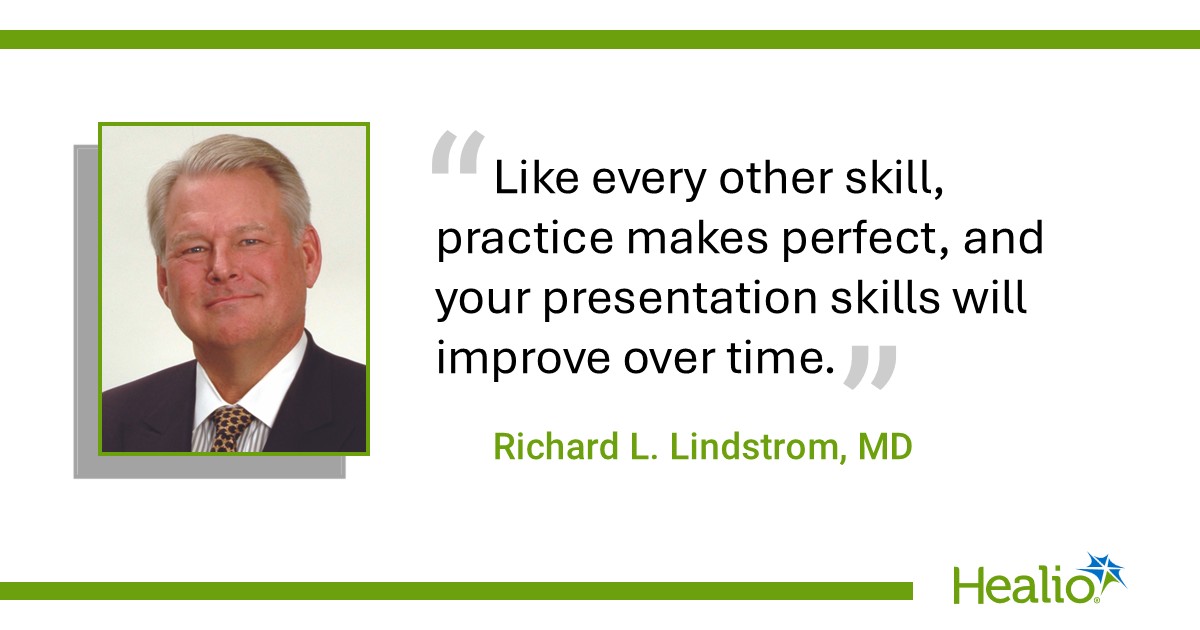
Column Lindstrom’s Perspective September 01, 2026 3 min read Add topic to email alerts Receive an email when new articles are posted on Please provide your email address to receive an email when new articles are posted on . “ data-action=”subscribe”> Subscribe We were unable to process your request. Please try again later. If you continue to have this issue please contact customerservice@slackinc.com. Back to Healio More from Column Lindstrom’s Perspective View all Click here to read the Healio Exclusive, “Experience builds confidence when it comes to speaking at meetings.” I am often asked by residents, fellows and younger ophthalmologists to share the pathway to becoming a key opinion leader in ophthalmology and a regular invited speaker at educational meetings. In the following paragraphs, I will share a few thoughts gained from my personal journey as a lecturer and a frequent organizer of educational programs today. Remember, there is no elevator to success or excellence as a key opinion leader (KOL) or speaker — you must take the stairs. The first stair is quality training including, for most, one or more years of post-residency fellowship. I personally completed three fellowships after residency, the first in cornea and external disease at the University of Minnesota, the second in advanced microsurgery at a busy surgical academic private practice in Dallas, and the third in glaucoma at the University of Utah supported by the Heed Ophthalmic Foundation. These fellowships provided extremely valuable clinical training and a strong knowledge base as well as a solid set of credentials supporting expertise. Next, it is important to build a busy clinical practice. You cannot be a credible educator of other clinicians unless you have strong clinical experience. As you grow your clinical experience, you will become passionate about one or more areas of clinical practice. Focus on these areas of interest and study global literature to become a true expert in your chosen topics. Then, compile and evaluate your own clinical outcomes and compare them with world literature. Collaborating with an industry partner and performing an investigator-initiated clinical trial in your area of interest is a good way to strengthen this process. Once complete, you will have a unique set of personal data and clinical insights useful to others, including your colleagues and industry. The next step is to get invited to share your thoughts and insights at a meeting. Here, a residency or fellowship mentor, senior partner or industry representative can help. Finally, when invited to present to your colleagues at an educational event, it is critical to take the time and effort required to deliver an outstanding presentation. It is important to know that once you are at the podium, you will have a critical audience. Your presentation with be critiqued by the meeting organizer, in many cases a panel of expert colleagues, meeting attendees and any industry representatives present. The lecture you give must end on time, be delivered smoothly with support from high-quality audiovisual PowerPoints and/or video, and be free from commercial bias. If you fail in any of these regards, you are much less likely to be invited to present again. If you succeed, you will find yourself a regular speaker as your reputation as an excellent and honest educator expands by word of mouth among those who have the responsibility to organize quality educational programs for their colleagues. Always present information that is evidence based with references, clinically useful and unbiased, while being presented in the time allotted with a high-quality delivery style. Once positioned as a quality speaker with useful information to share, you will find yourself in demand to participate in industry-sponsored clinical trials, join medical advisory boards, participate in leadership positions at ophthalmology societies and over time become a meeting organizer yourself. You will be a KOL! Now, a few thoughts on how to prepare and present a quality medical lecture. An excellent lecture has a central idea and provides information that can be used immediately to improve a colleague’s clinical or business performance when returning to their practice. It is important to know your audience, know your subject matter, prepare your presentation well in advance and practice the talk repeatedly at home. Every lecture has an architecture. Dress appropriately for the setting. Adjust the microphone before you begin to speak. Speak in an audible, purposeful, paced fashion and make eye contact with the audience right, left, center, front and back. Pause and direct the audience view to the PowerPoint presentation when appropriate to emphasize key points. Start by telling the audience what you are going to teach them, teach with your verbal and audiovisual presentation, and then, when closing, tell them again what you taught them. Case presentations are a powerful and memorable way to illustrate diagnostic reasoning and therapeutic choices and keep listeners engaged by making them think during the presentation. Just like no one is born a great surgeon, no one is born a great orator. It helps to critically observe other speakers. One can learn from good and bad speaker examples. Adopt a style you find attractive and emulate it through practice. Training courses such as Dale Carnegie and Toastmasters are available as are personal coaches. Many universities, colleges, societies and some companies offer speaker training programs. Ask a few friendly colleagues and mentors to critique your presentations and offer constructive advice. If your presentation is recorded or on video, watch it and learn, just like you would review a video of your surgical procedures. Like every other skill, practice makes perfect, and your presentation skills will improve over time. Be patient with yourself and do not expect to be perfect at first. Remember that while it is an honor and gratifying to be chosen to teach your colleagues, it is also a significant responsibility. Never forget that what you teach has the potential to impact many patients’ vision, positively or negatively. Integrity and

Q&A: How citizenship status impacts cancer screening rates
September 03, 2026 7 min read Add topic to email alerts Receive an email when new articles are posted on Please provide your email address to receive an email when new articles are posted on . “ data-action=”subscribe”> Subscribe We were unable to process your request. Please try again later. If you continue to have this issue please contact customerservice@slackinc.com. Back to Healio Key takeaways: Noncitizens had substantially lower rates of breast, cervical and colorectal cancer screening. Many of the barriers to screening may only be solvable with systemic intervention or improved public health policy. Patients in the United States who are not U.S. citizens are much less likely to get screened for breast, cervical and colorectal cancers, highlighting structural barriers to care, according to experts. Jenny S. Guadamuz, MSPH, PhD, an assistant professor of health policy and management at University of California, Berkeley, School of Public Health, and colleagues recently published a cross-sectional study in JAMA Network Open to evaluate cancer screening equity associated with citizenship status. Using nationally representative data and USPSTF guidelines, Guadamuz, also the health equity program director for UC Berkeley’s Center for Health Management and Policy Research screening services, and colleagues measured how often immigrants without U.S. citizenship received breast, colorectal and cervical cancer screening services. They found that noncitizens had significantly lower cancer screenings for all three types studied than U.S.-born citizens: breast cancer rates — 73% (95% CI; 66.4%-78.7%) for noncitizens and 80.1% (95% CI; 78.8%-81.3%) for citizens; cervical cancer rates — 57.1% (95% CI; 53.1%-61%) for noncitizens and 71.6% (95% CI; 70.3%-72.8%) for citizens; and colorectal cancer rates — 43.6% for noncitizens (95% CI; 38.7%-48.4%) and 75.5% for citizens (95% CI; 74.6%-76.5%). The researchers wrote that the disparities occurred in many states and throughout the study period. Noncitizens also saw significantly lower odds for receiving the screenings than citizens born in the U.S.: OR = 0.57 (95% CI; 0.52-0.62) for breast cancer screening; OR = 0.41 (95% CI; 0.38-0.44) for cervical cancer screening; and OR = 0.35 (95% CI; 0.32-0.38) for colorectal cancer screening. Together, healthcare and socioeconomic factors mediated those inequities (proportion mediated rates were 97.1% [95% CI, 87.1%-107.1%] for breast cancer; 39.6% [95% CI, 32.3%-47%] for cervical cancer; and 56.6% [95% CI, 49.1%-64.2% for colorectal cancer). Healio spoke with Guadamuz to learn about the study, what can be done to close the screening gap and more. Healio: Why did you decide to research this subject? Why is it important for healthcare professionals to know about? Guadamuz: I decided to focus on citizenship and ask what it means for access to cancer screening because — and specifically in these three types of cancers — over the last couple decades, deaths in these cancers have declined sharply. This is primarily driven not only by new treatments, but by the fact that they’re being diagnosed at earlier stages when they are more treatable. But we also know that because of the health and immigration systems we have in the U.S., certain populations don’t have equitable access to these screening services, which have really clear implications for how people are diagnosed with cancer, when they’re diagnosed with cancer, and, ultimately, when they die, how they die. If someone is diagnosed at a late stage of any of these three types of cancer, their survival drops, and they end up dying a very unjust death because oftentimes these catches are very treatable. Healio: What are the barriers to access here? What are the consequences? Guadamuz: It’s a bit of a gimme. Once you know how healthcare for citizens and noncitizen works in the U.S., it was pretty evident that you would find this inequity consistently and of this magnitude. That being said, the No. 1 cause is the fact that noncitizens have much lower access to health insurance and much less access to a usual source of care, like a primary care provider or some other type of regular provider who can notice that someone has a history of certain types of diseases that need screening, or who simply just follows the clinical guidelines and says, “Oh, this person reached 45, they need to go get the screening.” Those are the No. 2 biggest causes. And this is the mediation analysis that led to these inequities that we observed. But the other things that were really important were economic barriers, so having lower incomes. I talk about this in the discussion of my manuscript as I’m trying to interpret the findings: these screenings, even if you’re insured, can be time-consuming and expensive because you have to take off work. For example, a colonoscopy requires you to take off the whole day, and we know from the literature that noncitizens, on average, have jobs with limited flexibility in terms of taking paid time off. So, the barriers to these screenings were really structural barriers. We didn’t really find that things like language proficiency or years in the U.S. — these measures of how well a person has integrated into the U.S. society — led to the differences. They are important for clinicians to think about, but it was really caused by lower health insurance, lower healthcare access and worse socioeconomic conditions for noncitizens. Healio: What can be done to improve cancer screening (and other preventive healthcare) in this population? Guadamuz: The No. 1 thing we can do — we being the medical community, the public health community — is advocate for more inclusive health coverage policies. For example, California, albeit temporarily, expanded health insurance for undocumented immigrant adults. About 50% of noncitizens are undocumented or have some status that boots them from health insurance. They could be, for example, on a work visa — a noncitizen but not undocumented — and they still don’t have access to health coverage from the public system. So, that’s No. 1. There’s also healthcare access programs that can be implemented. As one example, essentially the county

Stroke risk elevated after cancer diagnosis
September 09, 2026 5 min read Add topic to email alerts Receive an email when new articles are posted on Please provide your email address to receive an email when new articles are posted on . “ data-action=”subscribe”> Subscribe We were unable to process your request. Please try again later. If you continue to have this issue please contact customerservice@slackinc.com. Back to Healio Key takeaways: Stroke risk is elevated for up to a year after cancer diagnosis, with greatest risks in the first few months. Risk varied by cancer type and age, potentially informing targeted assessment and intervention. People with invasive cancer may be more likely to experience ischemic stroke, according to results of a retrospective cohort study. Risk — which varied considerably by cancer type — appeared particularly elevated in the first few months after diagnosis. Data derived from Libruder C, et al. Cancer. 2026;doi:10.1002/cncr.70536. This establishes “a critical window” for targeted assessment and intervention, according to lead author Carmit Libruder, MSc, researcher with University of Haifa and the Israel Ministry of Health. “Our findings reinforce the importance of a multidisciplinary approach to cancer care,” Libruder told Healio. “Cancer treatment is, of course, central after diagnosis, but vascular health should not be overlooked. Identifying and appropriately managing modifiable vascular risk factors — while taking the patient’s cancer type, stage, age, treatments and overall clinical situation into account — may be particularly important during this period.” Clarifying the link Cancer and stroke are among the top contributors to the chronic disease burden worldwide. About 10% of stroke cases occur among people with cancer, according to study background. That percentage is expected to increase as the population ages and the number of cancer survivors rises. Meta-analyses and systemic reviews have consistently suggested stroke risk is elevated after a cancer diagnosis. Stroke that occurs in conjunction with cancer frequently is more severe, having been linked to higher risk for recurrence or mortality. “Yet the magnitude and timing of first-ever ischemic stroke risk across specific cancer types have not been fully characterized,” Libruder said. “We, therefore, examined this question using a large, nationwide population-based cohort to determine how the risk varies by cancer type, time since diagnosis, stage, age and other demographic characteristics.” Elevated risks The researchers used linked data from population-based stroke and cancer registries from Israel’s universal health care system to calculate standardized incidence ratios (SIR) for first ischemic stroke among people with cancer relative to the general population. Investigators evaluated outcomes by cancer site, and they stratified by demographics, cancer stage at diagnosis and time since diagnosis. They aimed to place relative risk “in a more clinically interpretable context” by assessing cumulative incidence of stroke at 1 year while accounting for competing risk for death, Libruder said. The analysis included 182,221 people aged 40 years or older (median age, 67.1 years; 52% women) with no stroke history who had been diagnosed with their first invasive cancer between 2014 and 2021. The most common cancers in the cohort included breast (18.2%), colorectal (11.5%), prostate (10.5%) and lung (9.8%). Researchers determined 1,125 ischemic stroke events occurred during a combined 162,593 person-years of follow-up. Sixty-two of every 10,000 adults experienced a stroke in the first year. This equated to 1-year cumulative incidence of 0.62%, with the highest among adults with pancreatic cancer (1.62%) and the lowest among those with breast cancer (0.3%).Results showed a nearly twofold higher risk for ischemic stroke within the first year of invasive cancer diagnosis than would be expected in the general population (SIR = 1.8; 95% CI, 1.7-1.9). Stroke risk peaked during the first 3 months after cancer diagnosis (SIR = 2.5; 95% CI, 2.2-2.7). Risk declined but still remained elevated between 3 and 6 months (SIR = 1.6; 95% CI, 1.4-1.8), and between 6 and 12 months (SIR = 1.5; 95% CI, 1.3-1.6). An exploratory analysis with extended follow-up showed SIRs remained “modestly elevated” — ranging from 1.3 to 1.5 — up to 3 years after cancer diagnosis. Impact of cancer type, age The overall increase in ischemic stroke risk after cancer diagnosis did not surprise investigators given prior research, but “the marked variation” across cancer types “stood out,” Libruder said. Researchers observed the highest risk observed among people with pancreatic cancer (SIR = 5.9; 95% CI, 4.8-7.3) and lung cancer (SIR = 3.9; 95% CI, 3.4-4.4). Researchers observed what they called “pronounced excess risks” among people with esophageal cancer (SIR = 4.1; 95% CI, 2.2-6.8) and gallbladder cancer (SIR = 3.6; 95% CI, 2-5.9) but noted those estimates had been based on smaller numbers of events. Investigators also reported two- to threefold increases in risk among adults with bladder, stomach or liver cancers, myeloid leukemia, and malignant brain or nervous system tumors. In contrast, diagnosis of breast or prostate cancers did not appear linked to elevated stroke risk. There probably is “no single explanation” for the variation between cancer types, Libruder said. “Cancer can promote hypercoagulability and systemic inflammation, which can increase the tendency to form clots, and these mechanisms may be particularly relevant in cancers with strong prothrombotic features, such as pancreatic and lung cancers,” Libruder said. “Shared vascular risk factors for both cancer and ischemic stroke — including smoking — may also contribute, and cancer treatment-related factors may play a role, as well. Our study did not have the clinical information needed to disentangle these different potential contributions.” Stroke risk varied by age, peaking among those aged 40 to 54 years (SIR = 3.6; 95% CI, 2.8-4.6) but declining among those aged 75 years or older (SIR = 1.4; 95% CI, 1.3-1.6). Risk also varied by cancer stage, with greater risk among those with metastatic disease (SIR = 2.8; 95% CI, 2.5-3.2) than localized disease (SIR = 1.2; 95% CI, 1-1.4). Risks appeared similar between men and women, as well as between Jewish and Arab individuals. Tailored prevention Researchers acknowledged study limitations. For example, a limited number of ischemic stroke events

La salud mental si vives con EPOC
English En 2015, Phyliss DiLorenzo se preparaba para las peores noticias después de pasar varios días en el hospital debido a problemas respiratorios graves. Sospechaba que era cáncer pulmonar debido a sus antecedentes familiares de ese trastorno y sintió alivio cuando su profesional clínico le dijo que tenía una enfermedad pulmonar obstructiva crónica o EPOC. Entonces DiLorenzo pensó en su abuela, a quien le diagnosticaron enfisema, una EPOC, años atrás, y en cómo esa enfermedad la transformó. “Vi como mi abuela se transformó de una mujer muy activa y espontánea a alguien que nunca salía de su casa”, dijo DiLorenzo. “Incluso dejó de pasear a su perro”. No fue hasta que recibió su diagnóstico que DiLorenzo experimentó las conexiones entre la ansiedad, la depresión, otras dificultades de la salud mental y su vida con EPOC. Su dificultad para respirar aumentó su ansiedad y se deprimía cuando la fatiga no le permitía realizar sus tareas laborales cotidianas. Su equipo de atención médica en ese entonces podía abordar sus necesidades físicas, dijo DiLorenzo, pero no supieron qué hacer cuando mencionó su depresión. El “círculo vicioso” de la salud mental DiLorenzo es una de casi 16 millones de estadounidenses que viven con EPOC, con algunas estimaciones que sugieren que otros 15 millones simplemente no han recibido el diagnóstico. La EPOC, un grupo de trastornos crónicos que obstruyen el flujo de aire a los pulmones y que dificultan la respiración, es una de las 10 causas más importantes de muerte en Estados Unidos. El enfisema y la bronquitis crónica son unos de los trastornos que se clasifican como EPOC y los factores de riesgo son, entre otros, exposición a largo plazo a humo, gases, polvo y químicos. Fumar cigarrillos es el factor de riesgo más frecuente de esa enfermedad. Después de un diagnóstico de EPOC, las opciones terapéuticas se enfocan en hacer que los pacientes respiren más fácilmente y en prevenir más lesiones pulmonares, pero ignorar los problemas potenciales de la salud mental puede empeorar los desenlaces clínicos en general. Se estima que hasta el 55% de pacientes con EPOC viven con ansiedad y otros estudios estiman que pacientes con EPOC tienen más del doble de episodios de depresión que la población general. Investigaciones también sugieren que entre el 26 y el 43% de pacientes con EPOC experimentan ansiedad y depresión, lo cual causa síntomas más graves en lo que se refiere a la salud física y mental. “Los profesionales clínicos deben familiarizarse con las dificultades de la salud mental que sus pacientes con EPOC podrían tener”, dijo David Mannino, M.D., director médico y cofundador de COPD Foundation. “Podría ser difícil identificar cuánto de lo que le ocurre a un paciente se debe a un empeoramiento de una EPOC o a problemas relacionados con la salud mental”. La ansiedad, la depresión y otros problemas de la salud mental de pacientes con EPOC tienen varias causas. Podría haber ira y frustración por el diagnóstico o una sensación de luto relacionada con perder la capacidad de respirar libremente, de moverse sin fatigarse y de hacer actividades que solían disfrutarse. Algunos pacientes se aíslan socialmente como resultado. Los pacientes también podrían tener dificultad para dormir y estrés crónico debido a sus problemas respiratorios. Estos sentimientos no los tienen exclusivamente los pacientes. Sus cuidadores podrían experimentar estrés, agotamiento y otros problemas de la salud mental mientras tratan de ayudar a sus seres queridos. Lee: Cuidar a alguien con EPOC >> En algunos casos, pacientes podrían experimentar ansiedad o depresión relacionada con el estigma externo de la EPOC. Puesto que la EPOC tiene una correlación significativa con el cigarrillo, algunos estudios indican que los pacientes podrían culparse por desarrollar ese trastorno. Mannino indicó que a medida que los síntomas físicos de la EPOC generan problemas de la salud mental, esos problemas, a su vez, podrían hacer que empeore su salud física. Los pacientes con EPOC y con trastornos de la salud mental podrían tener crisis más graves y mayores tasas de hospitalización y de mortalidad que pacientes con EPOC que no tienen problemas de la salud mental. “Puesto que uno de los síntomas principales de la EPOC es no poder respirar, esto podría hacer que personas sientan ansiedad”, dijo Mannino. “Los medicamentos para tratar la EPOC aceleran la frecuencia cardiaca, lo cual también podría sentirse como una crisis de angustia. La EPOC tiene el potencial de reducir la actividad física de una persona, lo cual puede causar aislamiento social y depresión. A medida que la EPOC empeora, los síntomas se vuelven más graves y la actividad física tiende a limitarse más”. Con cualquier enfermedad, el estrés crónico debilita el sistema inmunitario, y para pacientes con EPOC, eso les predispone más a experimentar infecciones respiratorias y crisis. Puesto que la depresión reduce la motivación y la energía, los pacientes también podrían tener dificultades para comer apropiadamente, hacer ejercicio, seguir su plan terapéutico y descansar adecuadamente. La ansiedad relacionada con problemas respiratorios podría evitar que un paciente se mantenga físicamente activo, lo cual es crucial para acondicionar el corazón y los pulmones para procesar el oxígeno de mejor forma. “[Reducir la actividad física] es lo peor que los pacientes pueden hacer”, dijo. “Ponemos énfasis en la actividad física como un método para interrumpir este círculo vicioso”. DiLorenzo conoce como la vergüenza y el estigma podrían evitar que pacientes reciban la atención que necesitan. Su abuela que tenía enfisema nunca fumó, pero su madre, quien fumaba, desarrolló cáncer pulmonar. “Pienso que mi madre se culpaba a sí misma y rechazaba los tratamientos debido a una sensación de vergüenza y culpa“, dijo DiLorenzo. “No quiero tener esa actitud”. Lee: El estigma puede ser un obstáculo para la atención de EPOC >> El tratamiento de todos los aspectos de la EPOC Ahora que tiene 68 años, DiLorenzo ha vivido más de una década con EPOC. Tuvo hospitalizaciones recientes que incrementaron su ansiedad y depresión porque ahora tiene más dificultad para realizar quehaceres domésticos, cargar víveres o caminar distancias largas. Dijo que ahora es
Post-bariatric surgery weight loss appears unimpeded by GLP-1 use
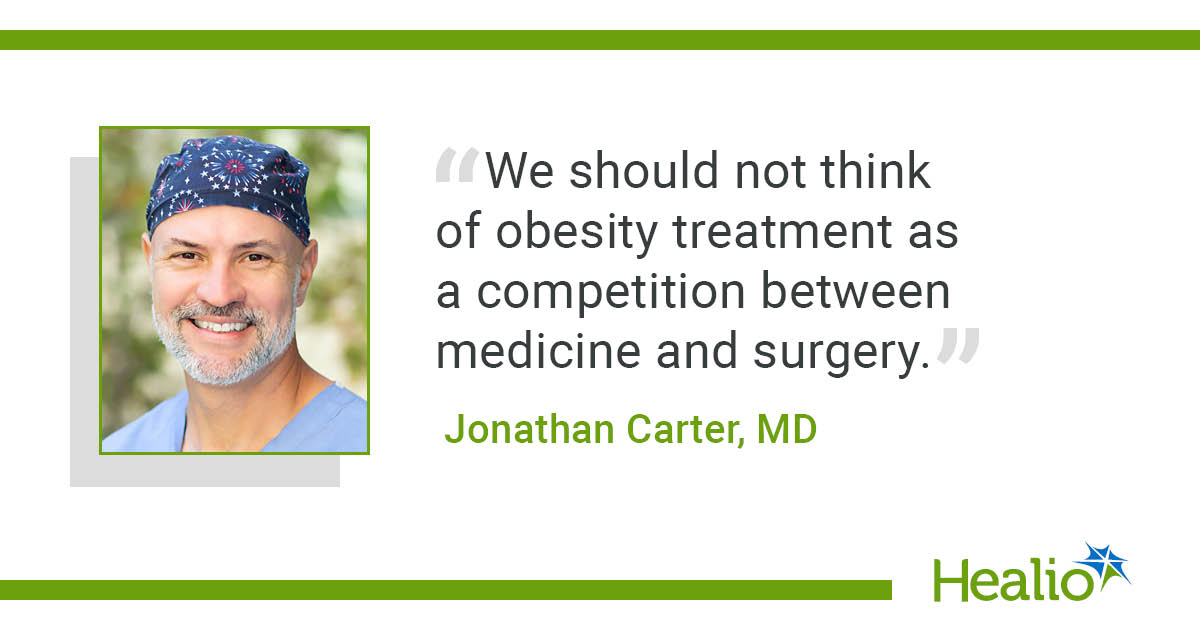
September 09, 2026 3 min read Add topic to email alerts Receive an email when new articles are posted on Please provide your email address to receive an email when new articles are posted on . “ data-action=”subscribe”> Subscribe We were unable to process your request. Please try again later. If you continue to have this issue please contact customerservice@slackinc.com. Back to Healio Key takeaways: GLP-1 users and nonusers achieved comparable total body weight loss 1 year after bariatric surgery. Diabetes control and postsurgical complications also were similar between groups. Preoperative GLP-1 receptor agonist use did not impact bariatric surgery outcomes, including weight loss at 1 year, diabetes control and postsurgical complications, according to a research letter published in JAMA Surgery. GLP-1s have become an integral part of obesity care, but clinicians still have questions about how pharmacologic therapy and surgical intervention interact. “Since the most effective treatment for obesity remains bariatric surgery, many have wondered how best to combine bariatric surgery with GLP-1 RAs and whether being on a GLP-1 RA affects the results of subsequent surgery,” study author Jonathan Carter, MD, bariatric surgeon and professor of surgery at UCSF Medical Center, told Healio. Carter and colleagues conducted a retrospective analysis of 383 patients who underwent bariatric surgery at UCSF between 2022 and 2024. Before surgery, 92 patients (mean age, 44 years; 78% women; baseline BMI, 43 kg/m2) had initiated GLP-1 therapy, the most common of which was semaglutide, and 291 had not (mean age, 44 years; 80% women; baseline BMI, 44 kg/m2 ). Those taking GLP-1s were advised to discontinue use after surgery to mitigate risk for vomiting. The majority of patients in both groups underwent sleeve gastrectomy (83% of GLP-1 users and 88% of nonusers) vs. gastric bypass. Total body weight loss percentage at 1 year served as the primary outcome. Secondary outcomes included surgical complications and postoperative HbA1c. According to results, total body weight loss at 1 year was comparable between GLP-1 users and nonusers (mean, 24% vs. 25%), as was excess body weight loss (mean, 60% vs. 62%), and did not reach statistical significance. Differences between groups in operative time, length of hospital stay, ED visits within 30 days of surgery and surgical complications also were not statistically significant. Multivariable analysis — adjusted for age, sex, race/ethnicity, BMI and diabetes, among other factors — showed preoperative GLP-1 use did not predict total body weight loss at 1 year (beta=0.17). “Given that one mechanism of how bariatric surgery works is via GLP-1 augmentation, I thought that weight loss in patients on GLP-1s taken preoperatively might ‘steal’ from the weight loss we see later with surgery,” Carter said. “In our study, we saw no such effect. “Those taking GLP-1s, who presumably lost weight from the medications before surgery, turned out to lose additional weight the same as the GLP-1-naive patients,” he added. Diabetes control “was excellent in both groups,” according to the researchers, with 1-year HbA1c levels of 5.4% and 5.3% for GLP-1 users and nonusers, respectively. Carter and colleagues identified independent associations between greater total body weight loss at 1 year and higher baseline BMI (beta=0.29; P <0.001) and male sex (beta=2.67; P =0.014). Lower total body weight loss was independently associated with diabetes (beta=4.49; P <.001) and sleeve gastrectomy (beta=4.72; P <.001). Among the 15 GLP-1 users who resumed treatment postoperatively, total body weight loss at 1 year was similar to that of patients who did not take GLP-1s (mean, 22% vs. 25%). The study had several limitations, including lack of data on duration of GLP-1 use prior to surgery, as well as preoperative weight loss attributable to GLP-1s. “Ours was a single-center study of patients mostly on semaglutide, and very few were on tirzepatide,” Carter said. “The data on this question will evolve over time with larger studies, newer drugs and a better understanding of how much weight was lost at medicine initiation and then [with] surgery.” Future studies should investigate optimal methods to combine and sequence pharmacological and surgical aspects of obesity therapy to maximize weight loss, according to the researchers. “Patients on GLP-1s can go on to have terrific results with bariatric surgery to lose additional weight,” Carter told Healio. “In other words, it is not a zero-sum game; the weight loss of GLP-1s and then bariatric surgery seems to be additive. “We should not think of obesity treatment as a competition between medicine and surgery. Rather, combination therapy is proving to be the best for our patients.” For more information: Jonathan Carter, MD, can be reached at jonathan.carter@ucsf.edu. Published by: Ask a clinical question and tap into Healio AI’s knowledge base. PubMed, enrolling/recruiting trials, guidelines Clinical Guidance, Healio CME, FDA news Healio’s exclusive daily news coverage of clinical data Learn more Add topic to email alerts Receive an email when new articles are posted on Please provide your email address to receive an email when new articles are posted on . “ data-action=”subscribe”> Subscribe We were unable to process your request. Please try again later. If you continue to have this issue please contact customerservice@slackinc.com. Back to Healio Source link

Cómo afecta la menopausia al cuerpo
La pérdida de estrógeno por la menopausia puede afectar a todo tu cuerpo. Los huesos, las articulaciones y los músculos La menopausia es la causa más común de osteoporosis . Aproximadamente 7 de cada 10 mujeres menopáusicas y perimenopáusicas lidian con: causados por la disminución de los niveles de estrógeno. La glándula tiroidea NOTA: Algunos síntomas de la menopausia coinciden con algunos síntomas de trastornos tiroideos, tales como: La composición corporal Cambio de masa de las caderas y muslos al estómago. Aumento de peso, el cual podría ser un resultado de: Un metabolismo que se está haciendo lento Síntomas de la menopausia , tales como mal sueño y cambios de humor, que afectan nuestros hábitos alimenticios y de ejercicio La vagina Sabías lo siguiente: Al menos la mitad de mujeres menopáusicas tienen SGM. La piel Piel que se afloja y se arruga debido a la pérdida de colágeno Piel irritada y seca por una menor producción de aceite Brotes de acné y de otros trastornos de la piel La salud mental Las mujeres son 2 veces más vulnerables en lo que se refiere a la depresión durante la menopausia y la perimenopausia, particularmente si tuvieron problemas con eso antes. ¿Las buenas noticias? No tienes que soportar los síntomas de la menopausia. Habla con tu profesional clínico sobre cambios de tu estilo de vida o tratamientos que podrían ser útiles para que te sientas bien otra vez. Este recurso educativo se preparó con el apoyo de Astellas. Source link

Lo que ocurre en el cuerpo durante un bochorno
English + Texto de infografía Aproximadamente 3 de cada 4 mujeres lidian con bochornos relacionados con la menopausia. ¿Qué es un bochorno? A medida que tus ovarios producen menos estrógeno, las células de tu hipotálamo, la parte de tu cerebro que controla la temperatura, se desequilibran. Estas células envían una señal falsa a tu cuerpo indicando que está demasiado caliente. Cuando tu cuerpo trata de reducir su temperatura, los vasos sanguíneos cerca de tu piel se dilatan tratando de enfriarte. Esto causa rubor y sudoración, lo que también se conoce como un bochorno. Si ocurren bochornos cuando duermes, esto se denomina sudoración nocturna. Durante un bochorno La piel podría ponerse roja, ruborizada y tener manchas Tu rostro, cuello y pecho podrían sentirse calientes y sudorosos Tu corazón podría latir aceleradamente o tener aleteos Podrías sentir ansiedad Es posible que tengas escalofríos o que tiembles ¿Cuál es la duración de un bochorno? Un bochorno común dura solo unos minutos. Las mujeres experimentan bochornos durante 7 años en promedio. ¿Experimentan bochornos todas las mujeres? Algunas mujeres nunca tienen bochornos o apenas los notan. Para otras, los bochornos son extremos y alteran sus vidas. Reducción de los bochornos Hay cambios de estilo de vida y tratamientos que pueden ser útiles para los bochornos: Reduce la cafeína Evita comida picante Restringe el alcohol No fumes Terapia hormonal Medicamentos no hormonales Terapia conductual cognitiva Habla con tu profesional clínico para que comprendas tus opciones. Este recurso educativo se preparó con el apoyo de Astellas. Source link
Mental Health While Living with COPD
In 2015, Phyliss DiLorenzo was prepared for the worst after a multi-day hospital stay for severe breathing issues. She suspected lung cancer because of her family history with the disease and was relieved when her clinician told her she had chronic obstructive pulmonary disease, or COPD. Then DiLorenzo thought about her grandmother, who’d been diagnosed with emphysema, a type of COPD, years earlier, and how much the disease changed her. “I watched my grandmother change from an out-and-about, on-the-go woman to someone who never left her home,” DiLorenzo said. “She even stopped walking her dog.” It wasn’t long after her diagnosis that DiLorenzo experienced the connections between anxiety, depression and other mental health challenges and life with COPD. Her fight to breathe increased her anxiety and she grew depressed when fatigue left her unable to complete her daily tasks at work. Her healthcare team back then could address her physical needs, DiLorenzo said, but didn’t know how to respond when she mentioned she was depressed. The mental health “downward spiral” DiLorenzo is one of nearly 16 million Americans living with COPD, with some estimates suggesting another 15 million remain undiagnosed. COPD, a group of chronic conditions that prevent airflow to the lungs and make it difficult to breathe, is one of the top 10 causes of death in the United States. Emphysema and chronic bronchitis are among the conditions that fall under the COPD umbrella, and risk factors include long-term exposure to smoke, fumes, dust and chemicals. Cigarette smoking is the most common risk factor for the disease. After a COPD diagnosis, treatment options focus on helping patients breathe more easily and preventing further lung damage, but ignoring potential mental health concerns can worsen overall outcomes. As many as 55% of COPD patients have been estimated to be living with anxiety, and other studies estimate COPD patients have more than double the instances of depression than the general population. Research also suggests that between 26% and 43% of COPD patients experience both anxiety and depression, resulting in more severe physical and mental health symptoms. “Providers need to be aware of the mental health difficulties their COPD patients are likely to have,” said David Mannino, M.D., chief medical officer and cofounder of the COPD Foundation. “It can be difficult to separate how much of what is going on with a patient is related to worsening COPD or to the mental health issues associated with it.” Anxiety, depression and other mental health struggles in COPD patients have multiple causes. There can be anger and frustration about the diagnosis itself or a sense of loss related to losing the ability to breathe freely, move without fatigue and do activities one used to enjoy. Some patients become more socially isolated as a result. Patients can also have difficulty sleeping and chronic stress due to their breathing issues. These feelings also don’t stop with the patient themselves. Caregivers can experience stress, burnout and other mental health concerns as they attempt to help their loved ones. Read: Caring for Someone with COPD >> In some cases, some patients can experience anxiety or depression related to external stigma surrounding COPD. Because COPD has a significant correlation with smoking, some studies have found that patients can blame themselves for developing the disease. Mannino noted that as the physical symptoms of COPD create mental health issues, those mental health conditions in turn can make patients’ physical health worse. COPD patients with mental health conditions can have more serious flare-ups, higher rates of hospitalization and higher mortality rates than COPD patients without mental health issues. “Because one of the main symptoms in COPD is being unable to breathe, this can cause people to feel anxious,” Mannino said. “Medications to treat COPD increase the heart rate, which can also feel like an anxiety attack. COPD has the potential to decrease a person’s activity, which can lead to social isolation and depression. As COPD gets worse, symptoms get worse and activity tends to become more limited.” With any illness, chronic stress weakens the immune system, and in COPD patients, that makes them more prone to experiencing respiratory infections and flare-ups. Because depression saps motivation and energy, patients could also struggle to eat properly, exercise, follow their treatment plan and get needed rest. Anxiety about breathing issues can prevent a patient from getting physical activity, which is crucial to conditioning the heart and lungs to better process oxygen. “[Decreasing activity] is the worst thing that patients can do,” he said. “We stress activity as a means of interrupting this downward spiral.” DiLorenzo is also aware of how shame and stigma can also prevent patients from receiving the care they need. Her grandmother with emphysema never smoked, but her mother, who was a smoker, developed lung cancer. “I believe my mother blamed herself and refused treatments due to her shame and blame,” DiLorenzo said. “That was not the stance I wanted to adopt for myself.” Read: Stigma Can Be a Barrier to COPD Care >> Treating all aspects of COPD Now 68, DiLorenzo has lived more than a decade with COPD. She’s had recent hospitalizations that have made her more anxious and depressed because she’s had more difficulty doing household chores, carrying groceries or going for long walks. She said she has gotten slower, faces more physical limitations and requires more breaks in between tasks. Still, she said she makes time for the things she knows can boost her mental health, like meditation, exercise, time outdoors, reading and enjoying music. She’s also found a sense of purpose through advocacy for COPD and all lung disease patients, getting involved with COPD Foundation committees and taking on leadership roles. “Staying involved in meaningful activities that engage my mind is key,” she said. To maintain their physical and mental health, Mannino advises patients to talk with their clinicians about their current COPD therapy to make sure it’s still working well for them and to continue exploring treatment options as more new therapies enter the market. He

Understanding Menopause Stages and Terms
Although the word “menopause” often serves as shorthand for the whole process, the menopausal transition actually happens in stages — and menopause is only one of them. Perimenopause is the time leading up to menopause when a woman has symptoms (like hot flashes and irregular periods) linked to hormone changes. Menopause technically only lasts a single day — the one marking 12 consecutive months without a period. Postmenopause starts the day after you’ve gone 12 months without a period (menopause) and lasts the rest of your life. Early menopause is when menopause (12 months without a period) happens before age 45. Premature menopause is when menopause happens before age 40. Medically induced menopause is menopause caused by a medical treatment like chemotherapy, radiation or surgery. Note: While it’s not a technical term, some people use the word “ premenopause ” to refer to the timespan between when you start your period and when you reach menopause. Questions about the stages and terminology of menopause? Talk to your clinician or visit healthywomen.org to learn more. This educational resource was created with support from Astellas. Source link