
This month’s Healio Exclusive focuses on one of the most complex — and frankly saddest — realities in American health care: the profound unmet needs of rural populations, particularly with respect to access to care.
We also explore whether HHS Secretary Robert F. Kennedy Jr.’s “Make America Healthy Again” (MAHA) initiative is prepared to meaningfully address these challenges.

From the outset, I will attempt to approach this controversial topic by focusing on facts and avoiding, as best I can, the political maelstrom currently surrounding national health policy. That is easier said than done. Life is complicated, and when it comes to interpreting the current health policy landscape, complexity seems to be the rule rather than the exception.
Philosophically, I find myself sympathetic to several core themes emphasized by MAHA: a renewed focus on chronic disease, criticism of ultra-processed foods, attention to the influence of corporate interests on public health, and a stronger emphasis on prevention. For too long, our national health strategy has focused disproportionately on cures while comparatively underinvesting in the broader determinants of health and chronic disease prevention.
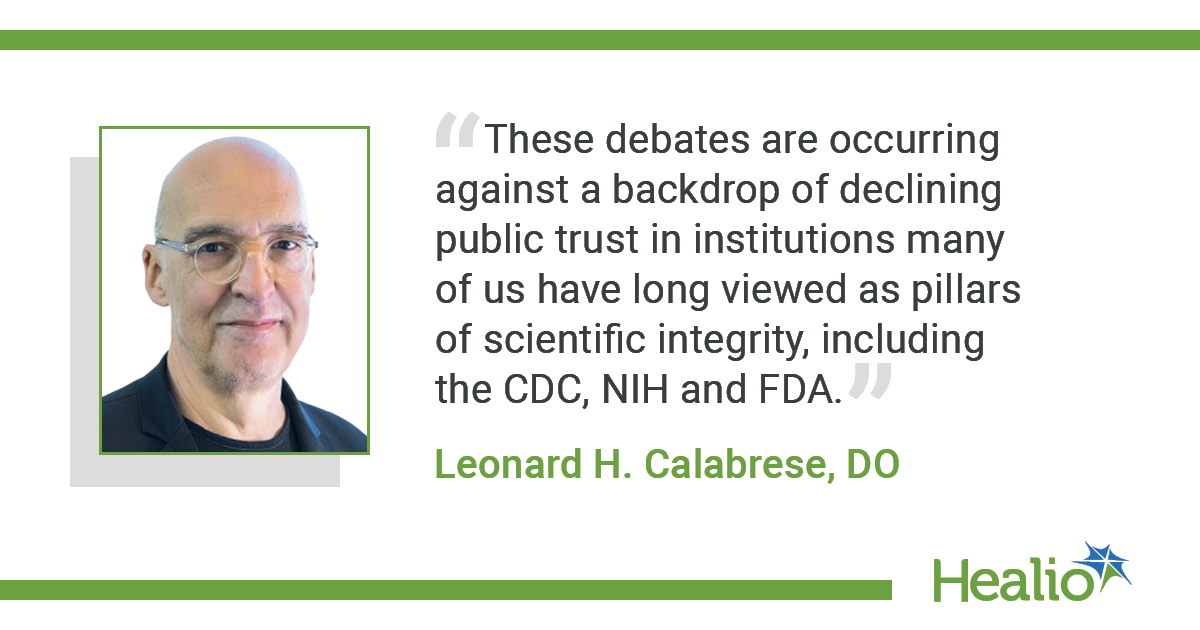
At the same time, it would be intellectually dishonest to ignore the controversies surrounding the movement. Concerns regarding vaccine skepticism remain substantial, even if some questions raised about transparency and public trust deserve thoughtful discussion. Likewise, positions surrounding fluoride in drinking water, enthusiasm for raw milk, and what can at times appear to be an overemphasis on personal responsibility risk distracting from more evidence-based and structural approaches to public health. Nevertheless, these debates are occurring against a backdrop of declining public trust in institutions many of us have long viewed as pillars of scientific integrity, including the CDC, NIH and FDA.
Our discussants this month — Jessica Jolly; Stephen M. Lindsey, MD, MACR; Terry L. Moore, MD, FACP, FAAP, MACR; Bethany Pellegrino, MD; and Rebecca J. Schmidt, DO, FACP, FASN — thoughtfully explore many of these tensions, highlighting both strengths and weaknesses of the MAHA agenda.
There was broad agreement on at least one point: It is refreshing, and overdue, to have renewed national attention directed toward the health disparities and access challenges faced by rural Americans, populations that by many metrics remain socially and medically disadvantaged.
Given that our panel included several rheumatologists, it is not surprising that the discussion repeatedly returned to workforce shortages and access to specialty care for patients with rheumatic and immunologic diseases, including children. Just last month, we discussed the national crisis in pediatric rheumatology manpower — a problem magnified exponentially in rural communities.
I was especially pleased that Dr. Lindsey had the opportunity to describe his innovative approach to addressing this shortage by training rheumatologists who are contractually committed to returning to practice in rural hospital systems. I believe this is a creative and potentially transformative model that deserves serious consideration by teaching programs across the United States. Importantly, Dr. Lindsey is not merely talking about solutions; he is implementing them, training fellows within this framework, and presented the program at ACR Convergence 2025.
In closing, I certainly do not pretend to have simple answers to problems this complicated. My hope, however, is that over the next several years we can identify and support those elements of MAHA that are constructive and evidence-aligned, while respectfully challenging recommendations that fall short of scientific rigor. Most importantly, as I have written before, we must continue to strongly advocate for the institutions within HHS that helped make the United States the global leader in biomedical science, therapeutic innovation and public health policy.
Today, however, even that feels more complicated than it once did.
That’s my take. What’s yours? Please share your thoughts with me at calabrl@ccf.org or at rheumatology@healio.com.
- For more information:
- Leonard H. Calabrese, DO, is the Chief Medical Editor, Healio Rheumatology, and Professor of Medicine, Cleveland Clinic Lerner College of Medicine of Case Western Reserve University, and RJ Fasenmyer Chair of Clinical Immunology at the Cleveland Clinic.
Sources/Disclosures
Source:
Expert Submission
Disclosures:
Calabrese reports being a medical advisor for OpenEvidence, as well as professional relationships with AbbVie, AstraZeneca, Bristol Myers Squibb, Galvani, Genentech, GlaxoSmithKline, Janssen, Novartis, Regeneron, Sanofi and UCB.

Ask a clinical question and tap into Healio AI’s knowledge base.
- PubMed, enrolling/recruiting trials, guidelines
- Clinical Guidance, Healio CME, FDA news
- Healio’s exclusive daily news coverage of clinical data