
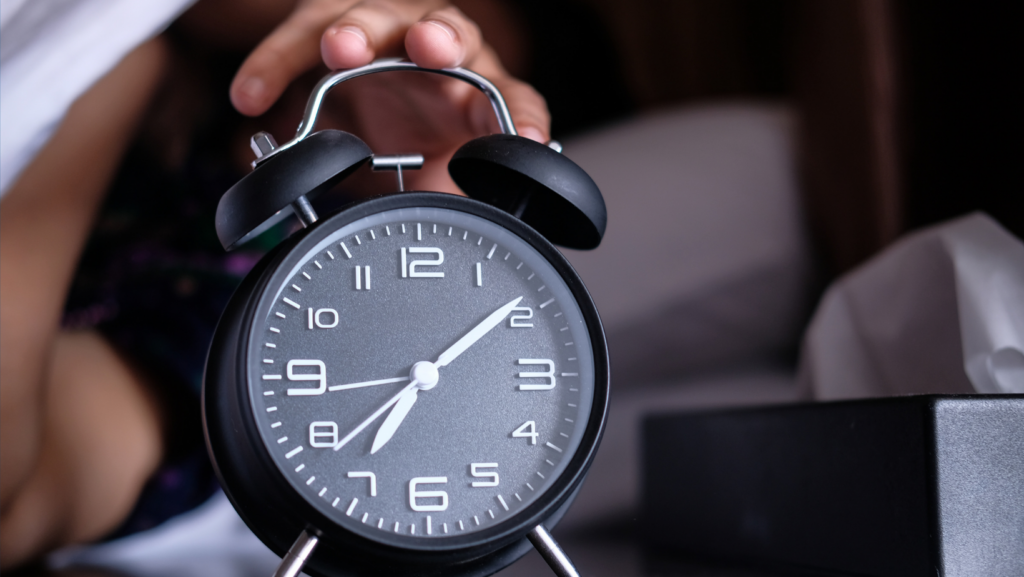
By Nikhil Sadavarte I fell to the pillow. I was exhausted. It had been a long day and a long shift at work. My eyes had already begun to drift closed, and my mind had pushed my checklist of remaining tasks off to the next morning. I tucked myself into bed and looked at my alarm clock. 8:42 pm. I had over 10 hours before I had to wake up. For once, when I closed my eyes, I felt nothing across my lower back or leg. No dull ache, no irritating numbness, no flashing pains. I let out a grateful sigh. Maybe tonight was the night I would finally get some rest. I drifted off within seconds. 10:02 pm. I felt the familiar droop below my eyelids and knew that I had woken up too soon. Why had I gotten my hopes up? Frustrated, I pushed my face into the pillow, as if the action could force my mind back into a slumber. It had been years since I got a good night’s sleep. What was truly the chance of tonight being any different? I lay still, waiting for the all-too-familiar pain to start. Just like it did each night, it started with a dull ache in my lower back. I pushed a pillow under my back—most likely a futile effort, but I had hoped to trick my mind into thinking it was as effective as a magic medicine. I was exhausted. My eyes operated without my conscious input, sometimes remaining wide open during bouts of pain, then turning back into drooping jelly just a few moments later. I fell back asleep, only to immediately wake up again. I tossed and turned, trying the many positions my physical therapist had taught me. I knew none of them would work, but I tried anyway. The pain hadn’t left yet. I could still feel it in my lower back. I closed my eyes. How long had it been since I woke up? I looked at the clock. 10:14 pm I sighed. I shouldn’t have looked. I wanted the night to be over. I wanted to get out of bed and face whatever the day brought. But I also wanted to sleep for just a few hours. I began to bargain with my body, knowing well that it had no intention of listening to me. My body was the one producing the pain. Could it not turn it off for just a few hours? I had two projects to do, and my Neurology quiz the next day. I hadn’t slept well the night before. Or the night before that. I needed some rest. 10:16 pm. The ache began to spread. Frustrated, I threw my pillow at the bedside clock. I lay flat on my back, hoping that if I didn’t move, the pain would retreat back to the small area where it had started. After a few minutes of prayers I didn’t really expect to help, I decided to let the pain run its course. I loosened my body and welcomed it. Maybe if I just gave in to it, then I could get just a few minutes of sleep. I wasn’t surprised when it didn’t work. Another night wasted. 6:59 a.m. I silenced my alarm. I didn’t need the beeping sounds; I was already awake. Like most mornings, I watched as sunlight flooded the room. The warm touch of the sun was the sign that I had lost yet another battle against my body. I had slept four hours in total, if that, and had woken up more times than I could count. I took solace in the fact that I was too tired to remember most of the night. I got up and began my day. I stumbled through my morning routine, grabbing whatever snack required the least energy to make and heading out the door. My day went as it usually did: Carefully planned. The closest parking spot. The shortest path between buildings. A place to sit and rest between classes. None of these decisions seemed particularly important on their own. But together, they had become the architecture of my life. I had learned to think of my energy as something finite. Every extra flight of stairs, every unnecessary walk across campus, every few minutes spent standing when I could have been sitting—they all pulled from a reserve that was already drained. That day, there were two projects and a quiz. The next day, as I worked to complete my biology degree, it would be something else. The strange part was how normal it all began to feel. I still went to class. I still managed to study for exams. If someone asked how I felt, they received the same automatic answer I had given countless times before: “Good.” Saying that was easier than describing the exhaustion I felt. It wasn’t just the physical exhaustion, but the exhaustion from plotting each step I took. It was exhaustion from saying no to late-night outings with friends, knowing well that my body wouldn’t last the few hours I wanted it to. I was exhausted from memorizing how many flights of stairs there were in the Physics building. I was exhausted from debating the likelihood that my legs would make it to class in time for the next quiz. I was exhausted from making decisions that in the past, I’d never once had to consider. Tired had once meant something different to me. It meant staying up too late studying for an exam or waking up early for a hike. It was a long day that ended with the promise of crawling underneath the covers and finally getting some rest. I wanted to be that kind of tired. I wanted that promise of rest. Instead, I would eventually finish my projects, take my quiz, make the familiar walk home, and prepare myself for bed. I would be exhausted. I would want nothing more than to sleep. I would have allowed plenty of

Lonely Hearts: A Poem – U.S. Pain Foundation
By Molly Kamper “Kings depend on lonely hearts to trust their gilded lies.”* How do you get a Lonely Heart? By believing your pain is more_______________________(important, intense, justified)than any other’s. How do you heal a Lonely Heart? Realize that ALL painIS pain. Make space to hold others’ painand your pain becomes less lonely. “FREEDOM COMES to thosewho dareto holdeach other’s pain.”* *Lyrics from “Freedom Hymn” by MILCK. Source link

Alix and Ashtin Earle Share BRCA Mutation After Mom’s Cancer Battle
Alix Earle and her sister, Ashtin, are urging women to take proactive control of their health after learning they both carry a BRCA gene mutation. The news arrived shortly after their mom, Alisa, was diagnosed with breast cancer in late 2025 and subsequently tested positive for the BRCA2 mutation. The family documented the emotional moment the sisters received their test results during their Netflix docuseries, Earle Meets World. Related story Stella Parton Reveals the Real Reason Why Dolly Kept Her Cancer Battle Private What Is the BRCA2 gene? The BRCA2 (BReast CAncer gene 2) gene helps repair damaged DNA and stops abnormal cells from forming tumors. When this gene is mutated, or doesn’t work as it should, it increases the carrier’s lifetime risk of breast cancer and other cancers, including ovarian, prostate, and pancreatic, according to the Breast Cancer Research Foundation. The National Cancer Institute estimates that over 60% of women who inherit the BRCA mutation will develop breast cancer compared to about 13% of women in the general population. It’s also hereditary — if a parent has the mutation, a child has a 50% chance of inheriting it. “That moment in our life was really difficult and something I think we tried to brush off,” Alix told People. “And I think when we both got the results, my body just took over and broke down, and even seeing my mom get emotional was super hard for us. And that was a very unexpected twist that also happened during these crazy few months.” Taking Proactive Steps for Future Health Medical guidelines for individuals with a BRCA mutation generally include clinical breast exams every six to 12 months, annual breast MRIs starting at a younger age, and annual mammograms beginning at age 30. For many young women, a BRCA diagnosis also shapes how they approach family planning. Preventive options, like embryo genetic screening and egg freezing, give carriers choices and control when considering having children. “Going forward when it comes years down the line and getting pregnant, having kids, I think it just made us a lot more aware of our options and the possibilities of things,” Alix continued. “And it’s something that we are taking into account and working on making the right choices going forward.” Ashtin added, “Even just eating healthier and working out and living a healthy lifestyle does really contribute to whether you get cancer or not… just working on being healthier and being more conscious of what we do and what we put in our bodies has been really heavy on my mind since.” Source link

Why Dolly Parton Kept Her Cancer Battle Private
Stella Parton is sharing the truth about her sister Dolly Parton‘s private battle with cancer. The beloved country music icon died on August 25 at age 80. She was surrounded by loved ones at a Nashville medical center following what her team described as a “brief battle” with the disease. Her family privately laid her to rest just days later. During an interview on CBS Mornings, 77-year-old Stella spoke to host Gayle King about Dolly’s final days and her decision to keep her diagnosis hidden from the public. Related story Alanis Morissette Says This Postpartum Depression Symptom Was ‘Harrowing, Terrible, Ceaseless’ Shielding Her Family and Fans Stella told King that the singer made a deliberate choice to hide her condition because she despised negativity and hated seeing people worry. “Dolly did not want anybody to tell that because Dolly could not bear negative things,” Stella said. “She would not have wanted her fans worried about it. She didn’t want a lot of the family worried about it. Some of us knew, the ones that were closer, but not every relative.” Despite the shock of her sudden passing, Stella believes her sister would appreciate the outpouring of public support. “She’d be really happy and delighted that people have shown her so much love because she knew that would make us feel better as her family,” Stella continued. Finding Peace in Her Final Days Stella also addressed Dolly’s mindset in the weeks leading up to her death. “I know she was at peace,” Stella said. “I could always tell by looking at her face, even if I hadn’t seen her in months. She wasn’t going anywhere bad; she was going to be with Momma and Daddy. She was definitely prepared.” Dolly, who grew up in rural Tennessee with 11 brothers and sisters, had already lost five of her siblings before her own passing. A Legacy of Giving Back Throughout her illness, Dolly stayed dedicated to helping others. Stella previously revealed that her sister was willing to undergo experimental medical treatments, even if there was no hope for her own survival, just to help future patients. Over her lifetime, the country star donated an estimated $600 million to various charitable organizations, and that selflessness extended directly to her final wishes. Her cousin, Richie Owens, told the Today Show that Dolly specifically asked fans to send $50 donations to her Imagination Library — an initiative that gifts free books to children from birth to age five — instead of buying flowers. Even in her final days, her primary focus was giving back. Source link
Alanis Morissette on the Reality of Postpartum Intrusive Thoughts
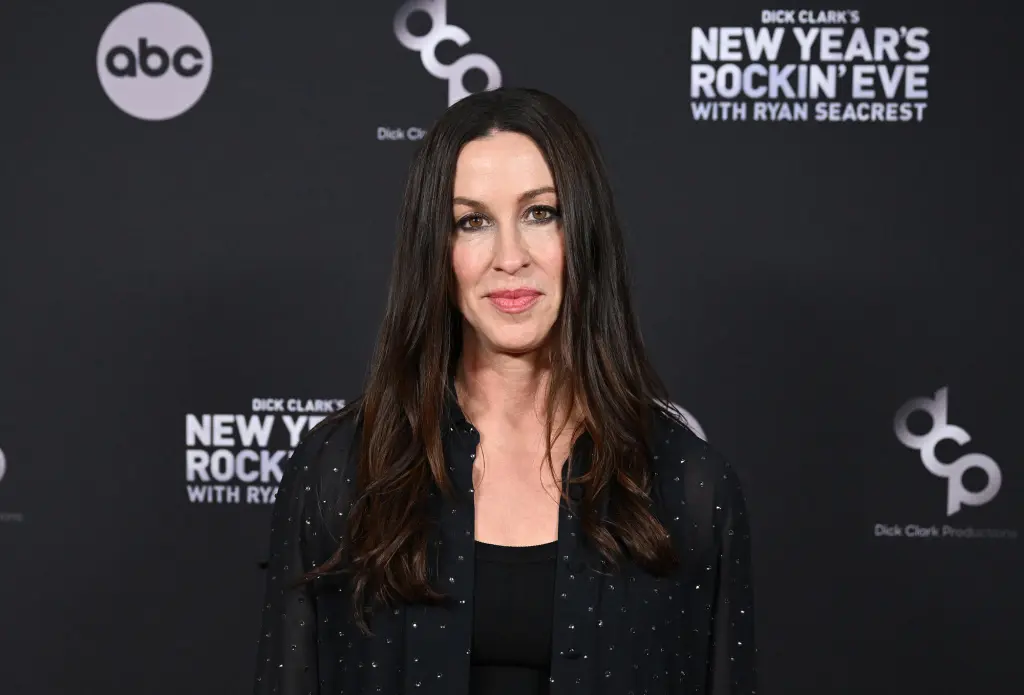
Alanis Morissette is sharing the reality of her battle with postpartum depression (PPD) following the births of her three children. During a recent appearance on the Call Her Daddy podcast, the 52-year-old musician addressed her lifelong history with depression and the sudden, terrifying symptoms that hit after giving birth. Morissette shares children Ever, Onyx, and Winter with her husband, Mario “Souleye” Treadway. Related story Michael J. Fox Shares the Reason He Still Feels ‘Privileged’ 35 Years After Parkinson’s Diagnosis PPD and Intrusive Thoughts “The depression piece inside PPD, unfortunately and fortunately, I was familiar with it,” Morissette said. “It was all the other stuff. It was the invasive thoughts and the terror — just all I could picture was death and terrible things.” The clinical term for these alarming mental images is “perinatal intrusive thoughts,” and according to the International OCD Foundation, 70-100% of new moms have them. Unlike postpartum psychosis, which is a psychiatric emergency where a person loses touch with reality, “intrusive thoughts” are unwanted flashes of disturbing mental images or scenes where a mother envisions harming her child — even though she is horrified by the thought and would never actually act on it. Morissette described her own visions as “harrowing, terrible, ceaseless.” She also pointed out the harsh expectations placed on women who just went through “the most transformative, traumatic experience that physiologically a human being could ever go through.” A Loss of Trust and Speaking Out “The minute the mother gives birth, it’s like we get invisible again,” Morissette continued. She described the jarring shift from being surrounded by care during pregnancy to suddenly facing demands to “get up” and lose the baby weight. The intense anxiety also made her worry about how her loved ones viewed her. “The bummer for me inside PPD was that I was losing people’s trust in my sanity,” Morissette said, adding that people looked at her like she might “fly off the handle.” She admitted that she even “dipped into psychosis” while pushing through stage shows on tour. “Invasive thoughts, anxiety, depression, rage, off the charts. I felt [so] out of control. Yet, I was touring and leading and being a boss and taking care of money and finances and everything,” she said. Now on the other side of her struggle, she expressed relief to feel like herself again. When asked why she chose to speak out while actively suffering, she replied, “It just was what was happening.” She shared that her phone immediately blew up with messages from families in the same situation. Source link

Officials declare end to largest US outbreak of Cyclospora
September 11, 2026 2 min read Add topic to email alerts Receive an email when new articles are posted on Please provide your email address to receive an email when new articles are posted on . “ data-action=”subscribe”> Subscribe We were unable to process your request. Please try again later. If you continue to have this issue please contact customerservice@slackinc.com. Back to Healio Key takeaways: The outbreak is over after more than 2 months and thousands of reported illnesses. It was traced to a farm in central Mexico that provided lettuce to Taylor Farms Federal health officials on Friday declared an end to the largest recorded outbreak of cyclosporiasis in United States history. CDC and FDA websites tracking the outbreak were updated mid-morning to say that it was over after more than 2 months. The largest recorded outbreak of cyclosporiasis in U.S. history was traced to iceberg lettuce sourced from central Mexico. Image: Adobe Stock Although the FDA said it would continue investigating the outbreak, which was traced to iceberg lettuce sourced from central Mexico by Taylor Farms, the agencies noted that there has been a sharp decline in cases, and that stores and restaurants should have cleared their shelves of the contaminated lettuce. “This outbreak has ended,” the CDC page says. In all, the outbreak included 12,883 cases, 570 hospitalizations and two deaths in 21 states, according to the CDC and FDA. The actual count is likely higher. Michigan alone has recorded more than 14,700 cases and 366 hospitalizations, according to the state health department. Cyclosporiasis is caused by Cyclospora, a parasite that spreads to people through food or water that has been contaminated with feces, frequently causing bouts of watery diarrhea. Past outbreaks have been linked to lettuce, raspberries, basil, cilantro and snow peas. The CDC considers cyclosporiasis “season” to be May through August. As of Sept. 8, the agency says there have been 19,595 cases and 1,043 hospitalizations recorded overall in the U.S. since May 1 this year — a more than 16-fold increase over 2025. The CDC emphasized that although the outbreak traced to iceberg lettuce is over, the risk for cyclosporiasis from other sources remains. “At this time, there is no risk of people getting sick with cyclosporiasis from this source,” the agency noted, with emphasis. Below is a timeline of stories related to the outbreak. Foodborne parasite sparks surge in cyclosporiasis outbreak Federal and state health officials announced in July there had been a surge in cases of cyclosporiasis caused by an unknown source. Read more. Worsening diarrhea outbreak raises questions about changes at CDC The outbreak raised questions about whether the partial dismantling of a federal surveillance system for foodborne pathogens negatively impacted the response, but a CDC official said tracking of Cyclospora remained “unchanged.” Read more. Lettuce from Taco Bell is source of diarrhea outbreak, officials confirm Federal health officials announced in mid-July that there was evidence that shredded lettuce served at Taco Bell restaurants in five states was the source of the outbreak. Read more. FDA clears air, says Taylor Farms lettuce still linked to cyclosporiasis outbreak After Taylor Farms announced that the FDA had apologized for a false positive test linking the company’s lettuce to the outbreak, the agency cleared the air, telling reporters that the evidence for the connection was strong. Read more. Cyclosporiasis outbreak expands to nine states The full scope of the outbreak began to emerge in late July as federal health officials began linking illnesses in more states to the contaminated lettuce. Read more. Crypto: The other diarrheal illness that causes summer outbreaks The outbreak got us thinking about another intestinal pathogen with a similar name that also causes outbreaks of diarrhea in the summer. Read more. ‘High degree of suspicion,’ diagnostics key as Cyclospora outbreak expands Experts warned that failure to suspect Cyclospora as a cause of diarrheal illness and order the right diagnostic test may be the biggest obstacles to controlling its spread. Read more. Published by: Sources/Disclosures Source: Website References: Ask a clinical question and tap into Healio AI’s knowledge base. PubMed, enrolling/recruiting trials, guidelines Clinical Guidance, Healio CME, FDA news Healio’s exclusive daily news coverage of clinical data Learn more Add topic to email alerts Receive an email when new articles are posted on Please provide your email address to receive an email when new articles are posted on . “ data-action=”subscribe”> Subscribe We were unable to process your request. Please try again later. If you continue to have this issue please contact customerservice@slackinc.com. Back to Healio Source link
Blood-based CRC screening assay detects 81% of advanced adenomas
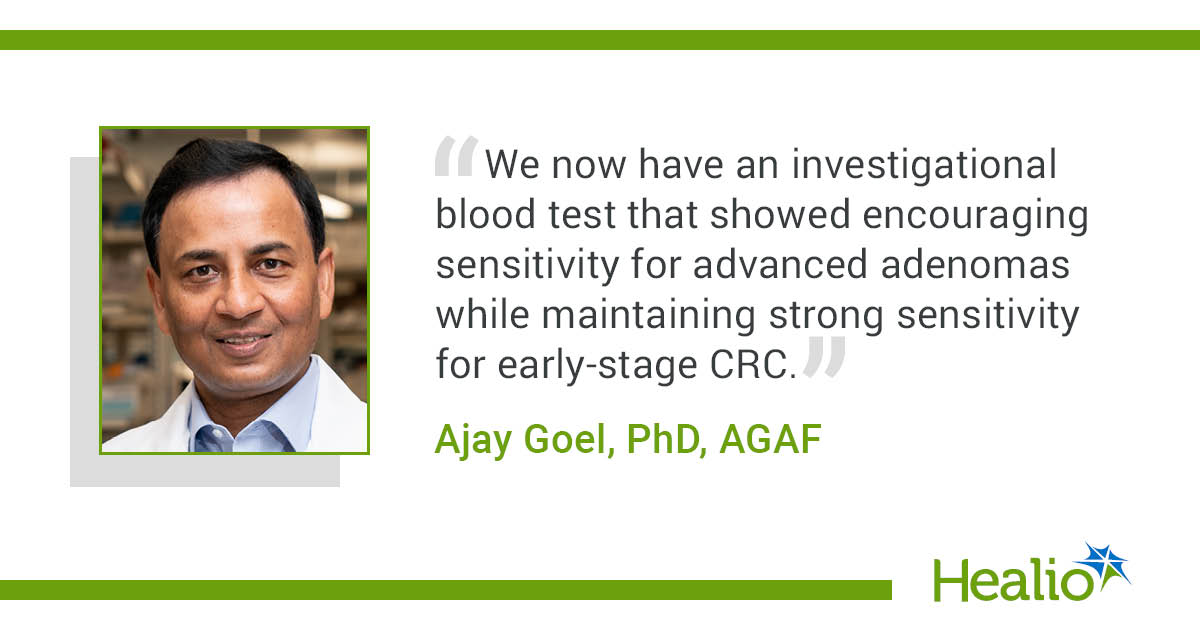
September 11, 2026 3 min read Add topic to email alerts Receive an email when new articles are posted on Please provide your email address to receive an email when new articles are posted on . “ data-action=”subscribe”> Subscribe We were unable to process your request. Please try again later. If you continue to have this issue please contact customerservice@slackinc.com. Back to Healio Key takeaways: A blood-based assay reached 81% sensitivity for advanced adenomas and 85% specificity for advanced neoplasia. The test may address the “Achilles’ heel” of blood-based screening: detection of precancerous lesions. Researchers have developed a blood-based assay that could help identify individuals with precursor lesions for colorectal cancer, a known limitation of many blood-based screening tests. The assay, known as DENEB, detected 81% of advanced adenomas, as well as 91% of CRC overall and 92% of stage I to III cancers. Screening rates among adults at average risk for CRC in the U.S. often fall short of the proposed 80% benchmark for population-level impact, according to study background. Blood-based tests have the potential to reach people who would otherwise remain unscreened. However, these tests have an “Achilles’ heel,” according to Ajay Goel, PhD, AGAF. “Several [blood-based] tests out there can find cancers — even stage II cancers — but where they fail is finding precancerous polyps, particularly advanced adenomas,” Goel, professor and founding chair of the department of molecular diagnostics and experimental therapeutics at City of Hope in Duarte, California, told Healio. Existing blood-based tests have generally shown much lower sensitivity for advanced adenomas than for CRC, while colonoscopy remains the most effective preventive tool for detecting and removing precancerous lesions, he said. In a three-stage, multicenter study, Goel and colleagues aimed to address this shortcoming. They investigated a blood-based assay with a multitarget approach that captured microRNA signals from both CRC and advanced adenomas. “Advanced adenomas were treated as a primary biological endpoint from the earliest biomarker discovery phase,” Goel said. Assay development Researchers developed discovery and clinical cohorts in Spain and Japan, and used three external in silico datasets from China, Japan and Spain. Clinical participants had colonoscopy findings from screening or diagnostic colonoscopy, and treatment-naive patients with CRC also were recruited before surgery to enrich for CRC as an outcome. Based on colonoscopy findings and histopathology, individuals were classified as having CRC, advanced adenomas or low-risk adenomas, or as controls. The discovery cohorts included 274 participants from Spain and 307 from Japan, with combined data for both cohorts spanning March 2010 to December 2017. Researchers catalogued microRNA biomarkers that were overexpressed in the blood of patients with CRC or adenomas in the discovery cohorts. The in silico cohorts — comprised of 99 individuals from Japan, 61 from Spain and 107 from China — served as a reproducibility filter for biological validation of biomarkers identified in the discovery cohorts. After discovery and in silico filtering, Goel and colleagues retained a panel of 19 cell-free and 20 exosomal microRNAs associated with CRC and advanced adenomas, which were then measured by reverse transcription quantitative polymerase chain reaction in the clinical cohorts. These cohorts were used for model training and independent testing. The first included 535 individuals from participating centers in Spain and Japan, with data gathered between July 2018 and September 2023. A second clinical cohort included 230 individuals from the same sites during that time period and was used for independent testing. Sensitivity for CRC and advanced adenomas, as well as specificity for advanced neoplasia, served as primary endpoints. CRC and adenoma detection The assay had sensitivity of 91% (95% CI, 80%-96%) for any-stage CRC and 92% (95% CI, 80%-97%) for stage I, II or III cancers. Sensitivity for advanced adenomas reached 81% (95% CI, 69%-89%). “I was intrigued by the evidence that advanced adenomas and cancer appear to have related but distinct circulating signatures,” Goel said. “We were able to detect both with high sensitivity while maintaining 85% specificity for advanced neoplasia. “When we plotted the two risk scores, patients with advanced adenomas and cancers clustered separately,” he continued. “That was striking because it suggests we can detect both with high accuracy while also seeing that, biologically, they have distinguishable molecular signatures.” Specificity for advanced neoplasia was 85% (95% CI, 77%-90%) and 83% (95% CI, 72%-91%) for negative colonoscopy. Goel and colleagues acknowledged study limitations, including that the cohorts were comprised primarily of Asian and white individuals; lack of data on potential confounders such as lifestyle factors, comorbidities and medications; and the outcome-enriched study design. “It was not a population-based screening trial,” Goel said. “The results therefore should not be interpreted as showing that DENEB is ready to replace established screening modalities [such as] colonoscopy. But I think the data we have published clearly point us in the right direction. We now have an investigational blood test that showed encouraging sensitivity for advanced adenomas while maintaining strong sensitivity for early-stage CRC.” According to the researchers, the current study established biological validity and diagnostic potential. “The critical next step is a large-scale, prospective phase 4 study in an actual screening population,” Goel said. Goel emphasized that a positive blood-based test must be followed by colonoscopy, which remains the “most effective preventive tool” for CRC. “If DENEB’s performance is confirmed prospectively in future screening studies, I could envision it functioning as a complementary or rescue screening strategy,” he told Healio. For more information: Ajay Goel, PhD, AGAF, is founding director of biotech innovations at Beckman Research Institute and associate director for basic science at City of Hope Comprehensive Cancer Center in Duarte, California. He can be reached at ajgoel@coh.org. Published by: Ask a clinical question and tap into Healio AI’s knowledge base. PubMed, enrolling/recruiting trials, guidelines Clinical Guidance, Healio CME, FDA news Healio’s exclusive daily news coverage of clinical data Learn more Add topic to email alerts Receive an email when new articles are

20 Celebrities With Autism Speaking About Life on the Spectrum
Autism is more common than you might know. About 1 in 36 children has autism spectrum disorder (ASD), according to the CDC, and that number has been steadily increasing since the org started collecting data in 2000. More adults are being diagnosed with autism too, studies have found, leading to increased awareness and interest in the disorder. TikToks sharing signs of autism in adults and little-known symptoms rack up millions of views, and more and more celebrities are starting to come forward with their own autism diagnoses (or sharing that their kids are on the autism spectrum). Autism spectrum disorder is “a developmental disability caused by differences in the brain,” according to the CDC. There are a wide variety of signs and symptoms, including communication or interaction challenges, restricted or repetitive behaviors, or delays in language, movement, or learning skills. While many people with ASD are diagnosed as children, adults can also be diagnosed (as you’ll see with the celebs ahead). Because autism exists on a spectrum, people with ASD present a wide variety of symptoms. And with more and more people being diagnosed, awareness and acceptance of ASD is more important than ever, which is why we love that these celebrities are speaking out about their experiences and bucking the lingering stigma that still exists around autism. From pop star Sia to environmental activist Greta Thunberg, keep reading for the stories of celebrities who are sharing their journey with autism. Tallulah Willis Image Credit: River Callaway for WWD Actress Tallulah Willis shared her autism diagnosis in March 2024, in a sweet, low-key Instagram caption accompanying a throwback video with her dad, Bruce Willis. “tell me your autistic without telling me your autistic,” she wrote next to the video, which featured a young Tallulah happily rubbing her dad’s bald head. Willis expanded on the diagnosis down in the comments. When one fan asked if she was diagnosed as a child, Willis replied, “Actually this is the this is the first time I’ve ever publicly shared my diagnosis. Found out this summer and it’s changed my life.” Robbie Williams Image Credit: Kristina Bumphrey/Variety Robbie Williams was diagnosed with “a little bit of autism,” he shared in 2026 — and wasn’t afraid to admit that he uses the diagnosis as a “get-out-of-jail-free card.” “All the weird s–t that I do I just say, ‘Sorry, I’m autistic,’” Williams quipped during a Q&A at the Autumn/Winter launch of his clothing brand Hopeium. He added that he “loves” knowing that he has autism (as well as ADHD) “because it explains so much.” As an example, Williams explained that he’s “creating images and making funny things.” There’s a big bright side to that obsession: “if I’m creating images and funny things, I’m not thinking about me, because my brain is incredibly creative, and it can be creative about everything in the world that you panic or scared about.” Sia Image Credit: Raymond Hall / Contributor/GC Images via Getty Images Pop singer Sia opened up about her autism diagnosis on a 2023 Rob Has a Podcast interview, saying, “I’m on the spectrum, and I’m in recovery and whatever — there’s a lot of things.” The “Unstoppable” singer continued, “For 45 years, I was like, ‘I’ve got to go put my human suit on.’ And only in the last two years have I become fully, fully myself.” Sia faced backlash in 2020 for her depiction of autism in her film Music, where neurotypical actor Maddie Ziegler was cast as a nonverbal autistic character. Sia later apologized and promised that scenes showing Ziegler’s character in restraints while experiencing sensory overstimulation would be removed, Rolling Stone reported. Discussing her own ASD diagnosis in the 2023 interview, Sia said, “Nobody can ever know and love you when you’re filled with secrets … And when we finally sit in a room full of strangers and tell them our deepest, darkest, most shameful secrets… and we feel seen for the first time in our lives for who we actually are, and then we can start going out into the world and just operating as humans … and not pretending to be anything.” Bella Ramsey Image Credit: Amy Sussman/GA It was while filming the first season of The Last of Us that Bella Ramsey, the series’ star, was diagnosed with autism. As the 21-year-old revealed in a 2025 British Vogue profile, a crew member on the show who had an autistic daughter assumed Ramsey had autism, too, which led them to eventually being diagnosed. The diagnosis, Ramsey added, helped them find clarity around things they’d “always wondered” about, like their self-described status as a “weirdo” and “loner” while growing up and other sensory issues. Ramsey also believes their autism makes them a better actor because they’ve “always been watching and learning from people,” including “having to learn more manually how to socialise and interact with the people.” The diagnosis was “freeing,” they continued. “It enables me to walk through the world with more grace towards myself about not being able to do the easy everyday tasks that everyone else seems to be able to do.” Greta Thunberg Image Credit: Michael Campanella/Getty Images Environmental activist Greta Thunberg shared her ASD diagnosis on social media back in 2019 as a response to the relentless rolls attacking her actions and appearance. “When haters go after your looks and differences, it means they have nowhere left to go. And then you know you’re winning!” Thunberg wrote on Instagram. “I have Asperger’s syndrome and that means I’m sometimes a bit different from the norm. And — given the right circumstances — being different is a superpower.” In a 2021 interview with The Guardian, Thunberg expanded on the experience of getting diagnosed and why she sees autism as a superpower. “A lot of people with autism have a special interest that they can sit and do for an eternity without getting bored. It’s a very useful thing sometimes,” she explained. “Autism can be something that holds you back, but

Michael J. Fox Reflects on Parkinson’s Journey 35 Years Later
Michael J. Fox is reflecting on his 35-year journey with Parkinson’s disease after receiving major recognition for his advocacy work. The 65-year-old actor was named a recipient of the prestigious Lasker-Bloomberg Public Service Award (often referred to as “America’s Nobels”) for his tireless efforts in funding medical research. Since launching the Michael J. Fox Foundation in 2000, his organization has raised over $3 billion to find a cure for the neurodegenerative condition. “When we launched the Foundation, our goal was simple, yet ambitious — cure Parkinson’s,” Fox said in a statement following the announcement. “I am humbled to be recognized by the Lasker Foundation and jury. I accept this honor on behalf of everyone living with Parkinson’s and everyone with us in our shared mission to end the disease.” Related story Sharon Stone Reveals Bizarre ‘Orb’ Visions Following Near-Fatal 2001 Stroke A Humbling Honor and Family-Backed Mission The Back to the Future star first began experiencing Parkinson’s symptoms in 1990 at age 29, eventually making his diagnosis public years later to help eliminate the stigma around the disease. He credited his ongoing advocacy to the support of his wife, Tracy Pollan, and their four children, who have stood by him through decades of health challenges. While he admitted that managing his symptoms has naturally become more difficult over time, he hasn’t let it affect his mission. “Of course, things have gotten harder over the years,” Fox shared in an exclusive interview with People. But “I’m privileged to commit my time and energy to bringing everything I’ve got to help cure this disease.” Balancing Acting and the Fight for a Cure Fox recently returned to acting with a guest-starring role on the Apple TV+ comedy Shrinking. He stepped back from full-time acting in 2020 when memorizing dialogue became difficult, but the relaxed schedule on Shrinking offered a welcome return to the screen. Playing a character who also lives with Parkinson’s gave him the chance to perform authentically while sharing scenes with Harrison Ford. His foundation is now launching a new campaign aiming to raise an additional $2.5 billion for research. “Science is hard… But as long as we stay focused, we stay hopeful, we’ll get there,” Fox told People. “And the science is showing we’re getting close.” Source link

Womanizer’s Sex Toy Advent Calendars 2026 Has Arrived
If you purchase an independently reviewed product or service through a link on our website, SheKnows may receive an affiliate commission. Now that the “ber” months have arrived, the countdown to the holidays is officially on! And if your everyday routine could use a little spicing up, you don’t have to wait for the official holiday kickoff to start getting cozy in the bedroom. This year, Womanizer is making the holiday countdown more magical with its advent calendars filled with intimate toys, accessories, games, and plenty of surprises. Whether you’re shopping for yourself, couples play, or looking for a gift that’s unexpected, the brand offers several advent calendars at different price points and with different focuses. From the more affordable Romance Calendar to the splurge-worthy Luxury Calendar, there’s an option for every budget and level of adventure. Related story Coach Fans, a New ‘Pillow’ Version of the Brooklyn Tote Just Launched (& One Color Is Already Selling Out) And while opening a new door every day is fun on its own, what’s really eye-catching is what’s actually inside these boxes. We’re talking full-size vibrators, mini toys, massage products, games, accessories, and more not 24 tiny fillers designed to make the calendar look full. Keep reading to see what you’ll get with each Womanizer advent calendar this year. Our mission at SheKnows is to empower and inspire women, and we only feature products we think you’ll love as much as we do. Womanizer is a SheKnows sponsor, however, all products in this article were independently selected by our editors. Please note that if you purchase something by clicking on a link within this story, we may receive a small commission of the sale. Couples Advent Calendar Make the countdown to Christmas exciting this year with Womanizer’s Couples Advent Calendar, a 24-piece collection designed for partners who want to add some variety to their intimate routine. Each door of the Womanizer Couples Advent Calendar holds a different surprise, including the Womanizer Liberty 2, We-Vibe Sync Lite, a rechargeable bullet vibrator, accessories, massage oil, lubricant, games, and more, making it a festive way to explore together. Luxury Calendar If you’re looking for the ultimate adult advent calendar, the Womanizer Luxury Advent Calendar delivers. This advent calendar features 24 doors that are filled with a mix of full-size toys, smaller accessories, and extras, including the Womanizer Enhance, We-Vibe Sync Lite, Arcwave Zing, a rechargeable bullet vibrator, a mini wand, massage oil, lubricant, games, and more. There’s plenty to discover throughout the month and enough variety to make this one feel worth the splurge. Romance Calendar Want to try a Womanizer advent calendar without committing to the price of one of the 24-day versions? The Romance Advent Calendar is a more affordable, low-key way to add a festive touch to your intimate time, with seven surprises tucked inside. It includes the We-Vibe Moxie+, a rechargeable vibrator, several sleeves, lubricant, toy wipes, restraints, and a sex-position card game. Enjoy Advent Calendar The Womanizer Enjoy Advent Calendar offers 24 days of surprises, including toys, accessories, and playful extras. Inside the box is the bestselling Womanizer Starlet 3, a compact clitoral stimulator, plus a rechargeable mini wand, a battery-powered bullet vibrator, and interchangeable bullet sleeves. The box also includes everything from a blindfold, massage oil, lubricant, and toy wipes to cuffs, games, and other accessories. Whether you plan to enjoy solo play, surprise a partner, or turn the countdown into something you can enjoy together, there’s a Womanizer advent calendar to match your mood and budget. But don’t wait! These calendars sell out fast every season. About the Author Taylor Lane is a contributing commerce writer at SheKnows, covering beauty, style, and lifestyle. With over eight years of media experience, she previously served as a beauty writer at The Zoe Report and a fashion assistant at Glamour. Her work has appeared in StyleCaster, The FlowSpace, WWD, Forbes Vetted, Teen Vogue, InStyle, and more, where she’s tested hundreds of products — from top-performing mascaras to the most functional strollers. She’s also a mom of two girls, a ten-year-old and a 4-month-old. And when she’s not online, she’s usually at Pilates. Before you go, check out our slideshow below: Source link
