June 26, 2026
5 min watch

Key takeaways:
- Study results showed nearly 1% of veterans with cancer attempted suicide between 2014 and 2023.
- Most suicidal self-directed violence did not result in death.
Individuals with cancer are at increased risk for suicide, and suicidal ideation can persist for years after diagnosis.
An evaluation of nearly 300,000 veterans with cancer showed approximately 1% attempted suicide, with several subgroups having increased rates, including younger and unmarried veterans, those with central nervous system and thyroid malignancies, and those with increased frailty.

And though 1% may seem like a “small number,” the fact that most suicide attempts do not result in death indicates suicide rates among people with cancer in the general population likely underestimate the scope of the issue, Donald R. Sullivan, MD, MA, MCR, coleader of the cancer prevention and control program at Oregon Health & Science University Knight Cancer Institute, told Healio.
“We think a lot about this hope and this fighting spirit during cancer treatment,” he said. “If a significant number of patients are experiencing some strong psychological manifestations of their disease that results in significant depression, it’s really impacting their outcomes. This study is not capturing all those people. This is the tip of the iceberg for the worst-case scenario, but this says nothing of the millions of patients with cancer that are really psychologically impacted by their disease.
“To say that this is only a veteran problem is really shortsighted.”
‘A big problem’
More than 1.5 million attempted suicides occur in the U.S. every year, according to study background.
Individuals with cancer have an 85% greater risk for death by suicide than the general population, but 95% of attempts are nonfatal.
“This is a big problem, and it probably impacts more people than we know,” Sullivan said.
Numerous factors contribute to suicide attempts, including symptoms from the disease or side effects of treatment, financial hardship, depression and feeling isolated, and those issues could last for years.
Overall, 5-year cancer survival has increased from 49% in the 1970s to 70% between 2015 to 2021, according to American Cancer Society’s Cancer Statistics 2026 report.
“A cancer diagnosis has a huge impact on someone’s life, and it doesn’t just go away when they finish treatment,” Sullivan said.
Sullivan and colleagues used the Veterans Health Administration, which tracks all suicide behaviors among its patients, to investigate suicidal trends among those with cancer.
The cohort consisted of 292,271 veterans (mean age, 69 years; standard deviation, 9.4; 98% men; 75% white) diagnosed with cancer between January 2014 and December 2023.
The most common malignancies included prostate (32%), lung (22%) and colorectal cancers (7%).
Suicidal self-directed violence and rates per 100,000 person years served as the primary outcome.
‘Call to action’
Overall, 2,400 attempted suicides occurred, with a rate of 203 events per 100,000 person years (nonfatal, n = 181 per 100,000; fatal, n = 22 per 100,000).
The most common methods for attempted suicide included poisoning with prescription medications such as opioids (26%), and firearms (23%).
Subgroups with higher rates of suicidal self-directed violence per 100,000 person years included veterans aged 45 years and younger, women, both Asian and American Indian or Alaska Native veterans, unmarried individuals, and those with increased frailty, depression, alcohol and/or substance use disorder, mild liver disease and/or chronic mental illness.
Veterans with certain cancers — including CNS, thyroid, pancreas, and liver and biliary — also had elevated rates of suicidal self-directed violence, as did those with stage IV disease.
Most suicide attempts occurred within the first 6 months (n = 278 events per 100,000 person years), but rates remained high at 5 years (n = 192 events per 100,000 person years).
Groups with the greatest risk for suicidal self-directed violence 5 years following diagnosis included those with CNS malignancies (aHR = 1.63; 95% CI, 1.22-2.17), veterans aged 45 years and younger (adjusted HR = 1.58; 95% CI, 1.29-1.94), unmarried individuals (aHR = 1.48; 95% CI, 1.35-1.62), and those with advanced cancer (aHR = 1.3; 95% CI, 1.14-1.5).
Those with decreased risk 5 years after diagnosis included veterans aged 65 years and older (aHR = 0.43; 95% CI, 0.39-0.47), women (aHR = 0.77; 95% CI, 0.61-0.96), individuals who live in rural areas (aHR = 0.81; 95% CI, 0.74-0.9) and Black veterans (aHR = 0.82; 95% CI, 0.73-0.92).
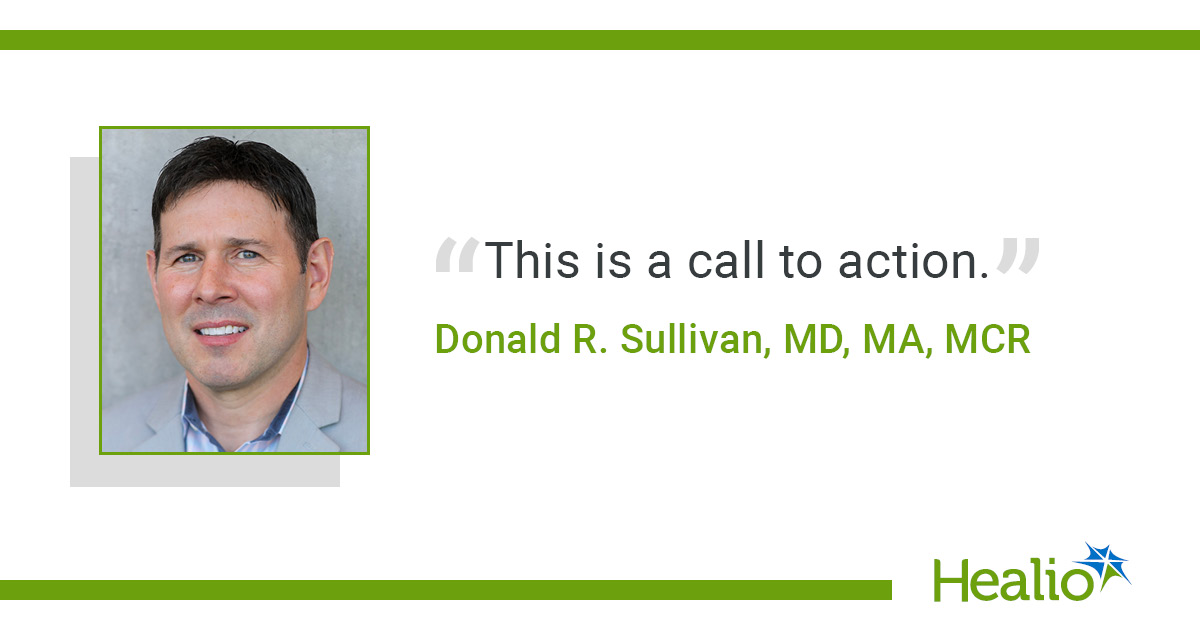
“This is a call to action,” Sullivan said. “Although we identify some subgroups that we should pay particular attention to, we should not ignore any one group that’s diagnosed with cancer. If you look at fatal attempts and nonfatal attempts, it covers a wide swath of patients. We talk about younger patients, older patients, good prognosis and poor prognosis cancers. This is a much bigger problem [than certain subgroups]. Some groups are higher risk than others, but I wouldn’t say there was any one group we don’t have to worry about and we should put in place appropriate remedies.”
Researchers acknowledged study limitations, including potential for misclassification, as well as a low number of women in the cohort.
‘We’re failing our patients’
Sullivan emphasized the importance of developing better screening and suicidal behavior surveillance, both among veterans and nonveterans.
“We need to start instituting some psychological supports and suicidal behavior screening programs within cancer centers,” he said. “I would like to see more interventions in that space. I don’t think we need to wait for evidence-based interventions to be developed for another 10 years. We can just start implementing better support structures now.”
Time remains a barrier, though.
“What do we get, less than 15 minutes per patient?” Sullivan said. “And we need to talk about a bunch of other really important things, as well. This shouldn’t fall on the individual clinician to prioritize this. This is really a cancer treatment center and a health system problem. How can they provide us more resources and multidisciplinary support with nurses, psychologists, and social workers? I think we’re failing our patients when we don’t think about this as more of a holistic approach to care.”
Sullivan admitted he does not have a lot of optimism regarding system-level improvements in the near future.
“We don’t need medications. We need cancer treatment teams to acknowledge that this could be a problem, and to talk to patients about this, to let them know their feelings are completely normal,” Sullivan said. “Let’s normalize conversations and discussions about mental health as part of usual cancer care. That can really go a long way to patients feeling more supported and being seen and heard.”
For more information:
Donald R. Sullivan, MD, MA, MCR, is associate professor in the division of pulmonary, allergy and critical care medicine at Oregon Health & Science University and coleader of the cancer prevention program at OHSU Knight Cancer Institute. He also is an affiliate physician-scientist at Portland Veterans Affairs Healthcare System. He can be reached at sullivad@ohsu.edu.

Ask a clinical question and tap into Healio AI’s knowledge base.
- PubMed, enrolling/recruiting trials, guidelines
- Clinical Guidance, Healio CME, FDA news
- Healio’s exclusive daily news coverage of clinical data