In case the heat waves and smoky skies weren’t enough, this July, over 30 US states are currently facing an outbreak of cyclosporiasis, a parasitic infection that causes water-y, “explosive” diarrhea, cramping, and fatigue. In the latest news, the CDC today announced that the outbreak has been linked — partially — to shredded iceberg lettuce served at Taco Bell locations in Indiana, Kentucky, Michigan, Ohio, and West Virginia. This contaminated lettuce has been traced back to a single supplier, per the FDA.
While identifying a source is an important step (and Taco Bell said yesterday it has “voluntarily remove[d] potentially impacted lettuce” from locations in impacted states), this outbreak is still the largest in years — and Taco Bell is likely not the only brand implicated. While 1,644 cases are currently confirmed and attributed to Taco Bell’s outbreak, there are over 5,000 more across the country that are unconfirmed, CDC experts said, per New York Times. And while only five states were named in the CDC’s latest brief, the agency previously said that 34 states had reported cases.

Related story
Bite Is the Plastic-Free Oral Health & Deodorant Brand Taking on the Age of Microplastics
With symptoms that can linger for weeks, cyclosporiasis has parents rushing to learn what foods to avoid, what signs to look for, and how to keep their kids safe. Here’s what we know about cyclosporiasis and the 2026 outbreak.
The 2026 Cyclosporiasis Outbreak: What to Know
There have been no confirmed deaths from this outbreak, but 141 hospitalizations were confirmed by the CDC as of July 13. It’s worth noting that there are likely more cases than currently being reported, as some people who get sick are never diagnosed. There’s also a lag time between diagnosis and states reporting numbers.
Michigan is reporting the highest numbers, at over 5,000 cases and over 100 hospitalizations. Nationwide, this is already the largest cyclosporiasis outbreak in US history.
What Is Cyclosporiasis?
Cyclosporiasis is an infection caused by the cyclospora parasite, which spreads via contaminated food and water. Past cyclosporiasis outbreaks in the US have been linked to fresh produced, particularly basil, cilantro, and raspberries, says Dr. Jason Korenblit , a board-certified gastroenterologist at the Center for Digestive Health in Orlando.
Cyclosporiasis symptoms can be severe, including:
- Frequent, watery diarrhea
- Cramping
- Nausea
- Loss of appetite
- Fatigue
Typically, symptoms start a week after exposure, Korenblit says, and can continue for weeks if you don’t treat the infection.
What If My Kid Has Cyclosporiasis?
If you’ve got little (or not so little) ones in the house, taking care during this infection becomes even more important. When it comes to kids, watch closely for signs of dehydration (such as increased thirst, decreased urination, signs of faintness or confusion, blood in the stool, or high fever) as well as sudden, persistent watery diarrhea, says Korenblit.
If you notice any symptoms, contact your health care provider right away for testing and treatment. Note that your child may need additional testing for cyclospora, as not all routine stool tests include it. From there, cyclospora is typically treated with a prescription antibiotic, Korenblit says; typically trimethoprim-sulfamethoxazole (TMP-SMX or Bactrim).
Managing Cyclosporiasis at Home
If you think you, your kids, or another loved one might have cyclosporiasis, seek medical care right away. It’s essential to get on an antibiotic right away to start recovering.
After getting medical treatment, rehydration is key while managing cyclosporiasis. That means more than just water, Korenblit says. “The most important thing during severe diarrhea is not just drinking fluid, but replacing the right mix of water, salt and sugar,” he explains. Electrolyte drinks like Pediatlyte, CeraLyte, Oralyte or Naturalyte are the best choice for kids suffering from frequent, watery diarrhea “because they’re designed to replace both fluids and electrolytes,” Korenblit says. (Avoid sports drinks, which “are made more for exercise than illness and often don’t replace diarrhea losses as well.”)
When it comes to food, eat simple, easy-to-digest foods that are low in fat until symptoms improve. These include:
- Bananas
- Rice
- Applesauce
- Toast
- Crackers
- Soup
- Potatoes
- Eggs
- Chicken
Make sure to avoid:
- Alcohol
- Caffeine
- Greasy food
- Spicy food
- Heavy dairy
- Large amounts of fruit juice, soda, and sugar-free candies or gums (sugar alcohols can irritate the gut further)
Keeping Your Family Safe from Cyclosporiasis
The best treatment is prevention, and there are actionable steps you can take to keep cyclospora out of your home. These include:
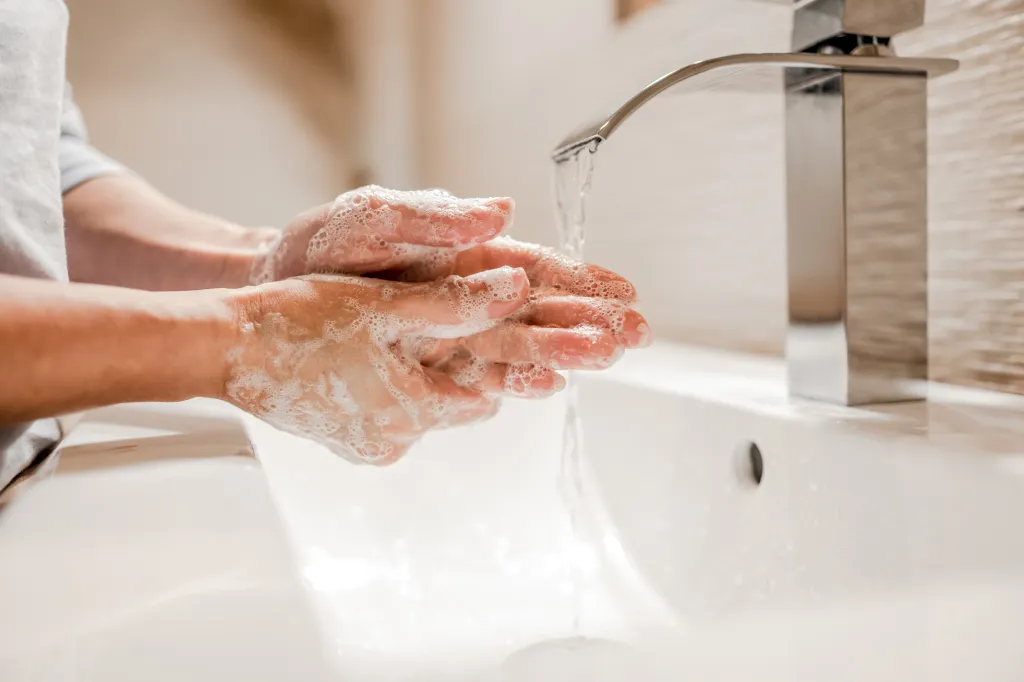
- Washing your hands and produce well. Korenblit says this is the “single most important prevention step.” Wash your hands well, with soap and water, before preparing food (make sure your kids do too!), and rinse your produce under running water before eating, cutting, or cooking. While cyclospora may not always be killed by rinsing, it is always the best first step to take.
- Choose whole produce over pre-cut, and cook produce when you can. “The riskiest foods right now are raw foods that are handled a lot and not cooked before eating,” Korenblit says. “I would be more cautious with pre-cut fruit, salad bags, salad kits, fresh herbs and meal-kit ingredients that are eaten raw.” Whole produce involves less handling from third-parties, and cooking your produce kills the parasite.
- Use a produce brush for firm fruits and vegetables. Give produce like melons, cucumbers, and potatoes a scrub before preparing to remove dirt and surface contamination. Skip produce washes (including soap, detergent, or commercial produce wash) as Korenblit says they’re not recommended by the FDA. “Plain running water is still the best everyday method,” he says.
- Know what produce is most at risk. Iceberg lettuce has already been mentioned in this outbreak, and previous ones have involved berries, cilantro and basil — so if you’re worried, it’s not a bad idea to steer clear of these for the time being. Dr. Susan Cheng, the associate dean for public health practice at Tulane University’s Celia Scott Weatherhead School of Public Health and Tropical Medicine, notes that fruits that are easy to wash and peel (oranges, honeydew, mangoes) are a better choice than raspberries, blackberries, strawberries since they have more nooks and crannies for parasites to hide. Blueberries and grapes, on the other hand, are also easy to wash; same with cucumber and zucchini, which are easier to wash clean than broccoli or cauliflower.
- Remove outer layers of lettuce. These are the parts most likely to harbor an infection. After removing, Dr. Cheng recommends cutting the lettuce at the stem and soaking it in a vinegar wash (1 cup distilled vinegar to 1 liter of water) for five to 10 minutes, before rinsing it with water and air drying.
Keep these food safety tips in mind. It could save your gut — and your kids’ guts! — as the outbreak continues.