
Your Part Looks Wider Than It Used To
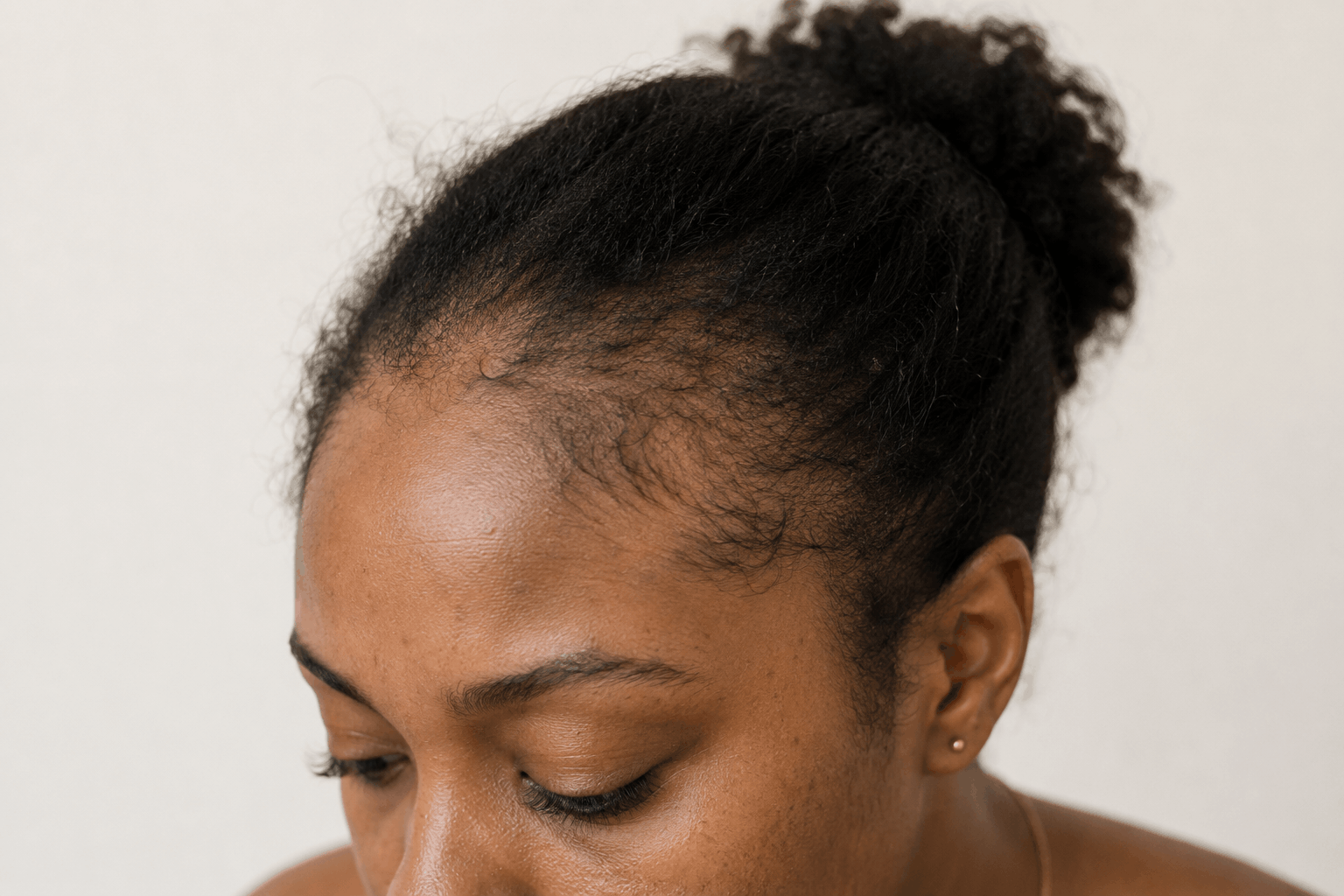
For women especially, a widening part is one of the earliest and most telling signs of female pattern hair loss (FPHL), a type of hair loss. It happens so gradually that it’s easy to miss in real time. If you look at a photo from a year or two ago and notice a difference in how much scalp is visible along your part, that’s worth paying attention to.
You’re Seeing More Hair Than Usual in the Shower or on Your Brush
Losing 50 to 100 hairs per day is within the normal range. But if you’re consistently noticing a significant increase in hair in the shower drain, on your pillowcase, or on your brush over several consecutive weeks, that’s a pattern rather than a phase.
Context matters here. A burst of shedding for a few weeks following a stressful event, illness, or hormonal shift is normal and usually temporary. Persistent elevated shedding over months is the signal to take seriously.
Your Hair Texture Has Changed
Hair that was once thick and full starting to feel fine, limp, or flat is a sign that your follicles may be miniaturizing, which means producing progressively thinner strands over time. This is one of the hallmarks of androgenetic alopecia and responds well to treatment when caught before the miniaturization progresses too far.
Your Scalp Is More Visible at the Crown
Increased scalp visibility at the top of the head, or a growing area of thinning, is one of the more advanced early warning signs. If you’ve started styling your hair differently to cover an area, or if you notice it in photographs, it’s worth having it properly evaluated sooner rather than later.
Your Hairline Has Shifted
Men typically notice a receding hairline first, with gradual retreat at the temples or the forehead. Women can also experience hairline changes, though they more commonly present as diffuse thinning at the crown. Any shift from where your hairline has historically been is worth noting.
Your Scalp Feels Off
Chronic scalp itching, flaking, redness, tenderness, or irritation isn’t just uncomfortable, it can be a sign that your scalp environment isn’t supporting healthy hair growth. Conditions like seborrheic dermatitis and scalp inflammation can contribute to shedding and impair follicle function over time. A healthy scalp is the foundation of everything else.
Your Skin Is Changing Too
The skin and hair follicle share more biology than most people realize. Changes in skin texture, increased breakouts, persistent dryness, or a loss of your natural glow can sometimes point to the same underlying issues affecting your hair, hormonal shifts, nutritional deficiencies, chronic inflammation, or stress. If you’re noticing changes in both your hair and your skin around the same time, that’s worth mentioning at a consultation.