

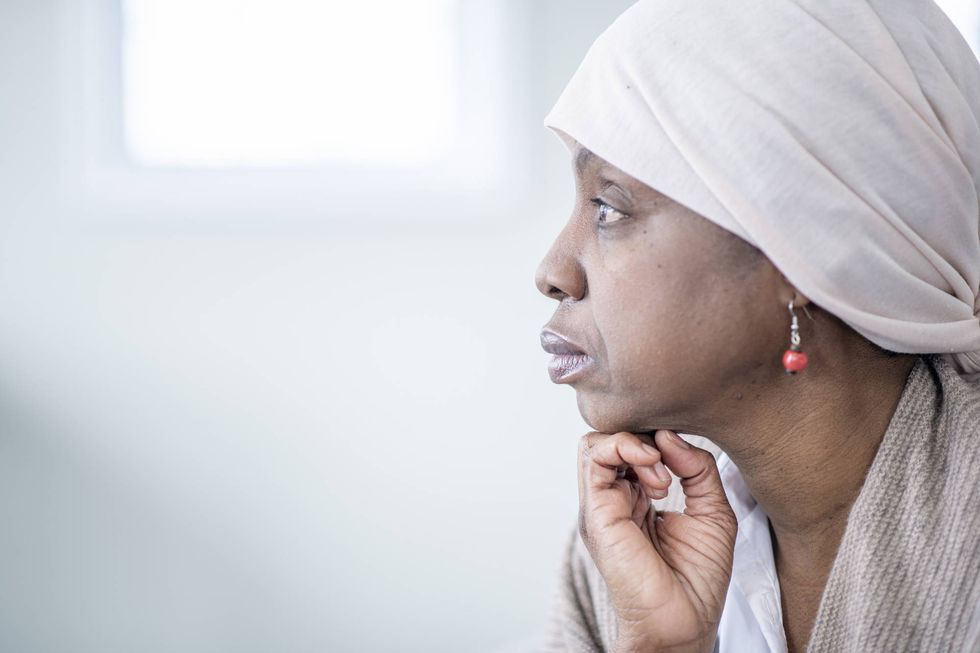
In 2015, Valarie Traynham visited her primary care physician (PCP) after weeks of intense exhaustion, serious nosebleeds, back pain and flu-like infections.
Her PCP noted high protein levels in Traynham’s bloodwork and referred her to a hematologist-oncologist, a doctor who treats cancers of the blood. Seeing a hematologist didn’t alarm Traynham, who’d suffered from anemia, but she didn’t grasp until later that the doctor was also an oncologist, and her condition might be more serious than she thought.
Traynham, then 42, received more tests, including full body X-rays and a bone marrow biopsy that led to her being diagnosed with multiple myeloma, a disease she’d never heard of. She was told to start treatment immediately.
After three sessions, Traynham became so sick she needed a wheelchair to take her from the car to the facility. She felt something wasn’t right, and her aunt, a breast cancer survivor, suggested she visit a specialist.
“When I was diagnosed with myeloma at a local community center, I wasn’t going to get a second opinion because I just wanted to start treatment and get rid of it,” Traynham said. “I remember the doctor saying, ‘You can go if that’s what you want to do, but they’re going to tell you the same thing I’m telling you.’”
Traynham went anyway, a decision that might have saved her life. It also started her path to becoming an advocate for multiple myeloma awareness and education in the Black community.
What is multiple myeloma?
Multiple myeloma is the second most common blood cancer in the U.S. African Americans and Hispanic people are disproportionately affected by the disease. African Americans represent 20% of all multiple myeloma patients, even though they make up just 14% of the population. While some environmental factors can increase the risk of multiple myeloma, the disease has a link to MGUS, a blood condition that is a risk factor for cancer and is found more commonly in Africans and African Americans. Hispanic people also get multiple myeloma at higher rates than non-Hispanic white people and are typically diagnosed at a younger age, according to the International Myeloma Foundation.
African American patients are also twice as likely to die from multiple myeloma than white patients, but a 2024 study found they were just as likely as white patients to survive when they had equal access to care and treatment.
“I usually divide the disparities in mortality rates into two categories related to health in general and then specific to multiple myeloma,” said Joseph Mikhael, M.D., medical advisor for the International Myeloma Foundation and an expert in multiple myeloma disparities. “For general health, these disparities include systemic racism, the healthcare system and social determinants of health heavily influenced by socioeconomic effects. Myeloma-specific reasons are primarily delayed diagnosis and reduced access to key therapies.”
Mikhael said the average myeloma patient, regardless of racial background, has a 3–6 month delay in diagnosis and visits a primary care clinician an average of three times with symptoms before getting the right diagnosis. For Black and Hispanic patients, he said the delay averages 3–6 months longer, often due to lack of access to primary care, mistrust in the healthcare system and insurance restrictions to testing.
Other health conditions that are more common in Black and Hispanic patients can mimic multiple myeloma symptoms, leading to a delayed diagnosis. Multiple myeloma symptoms like bone pain, fatigue, anemia and kidney dysfunction are also common symptoms of diabetes, arthritis and chronic kidney disease. Black and Hispanic patients also can have more pre-existing comorbidities. For example, obesity is a risk factor for multiple myeloma, and almost half of all Black Americans are living with obesity.
Black and Hispanic patients are less likely to receive therapies that improve survival rates, such as combination drug therapies, stem cell transplants and T-cell therapies. Participation in clinical trials with novel and evolving therapies is also low, often due to a lack of information and education about trials, limited access to academic centers and facilities offering specialized treatment, and less caregiving support during the process. African Americans represent just 8% of cancer clinical trial participants.
Lack of access isn’t always financial. Patients living in rural areas or relying on community health settings can face treatment delays, as Traynham did despite being able to drive from her home in Aurora, Illinois, to a specialist in Chicago.
Once she visited the myeloma specialist, she recognized how different the care was from her former clinician, who treated all forms of cancer. The myeloma specialist told Traynham he didn’t know why she was given an older regimen when more advanced treatments existed.
The importance of community voices
Having support from her aunt and her friend, a cancer survivor as well, helped convince Traynham of the importance of seeking additional care. That’s why she’s now a vocal advocate for Black patients living with multiple myeloma, leading support groups and discussing the importance of seeing specialists, getting second opinions after diagnosis and joining clinical research trials.
“There weren’t a lot of Black people talking and Black faces represented when I was looking for support, even though we’re disproportionately affected by multiple myeloma,” she said. “I don’t want patients to have to go through what I experienced, thinking you’re alone and not knowing there are different treatment options and that you have a voice in your care. Cancer stole a lot from me, so I decided I wasn’t going to be quiet about this.”
The expansion of programs like Standing in the Gaap, created in 2016, also help advance equitable care and address the experiences of African Americans and other communities with multiple myeloma. The program launched a major multiple myeloma survey this year, intended to uncover factors behind barriers to and gaps in care. The survey will reach more than 1,000 people including those living with multiple myeloma, caregivers and clinicians, many of whom come from rural communities facing these gaps and barriers. The results of the survey, one of the largest multiple myeloma surveys ever conducted in the United States, will foster community-informed engagement and improve culturally responsive approaches to care. Patient advocacy organizations, including those serving medically underserved patients, contributed input to the survey development.
Mikhael, who has worked with Standing in the Gaap, is also involved with M-Power, a program to help address multiple myeloma disparities by focusing on community engagement, cultural competency education for clinicians in primary care settings and improving care for patients. The program also works to increase diversity in clinical trials and connects medical students from historically Black colleges and universities to multiple myeloma experts for projects in health disparities. The program plans to expand to Latino communities, Mikhael said.
“I have done programs all over the country — in churches, community centers, fraternities/sororities, barber shops and other venues to raise awareness of multiple myeloma, gain trust for the medical community and provide support to a community so adversely affected by this disease,” he said.
Traynham’s journey wasn’t easy. In addition to multiple myeloma, she also fought through a breast cancer diagnosis at 46. Now 52, she’s cancer-free and calls this period her “thriving stage.”
“It’s so important that we as African Americans have safe, trusted spaces where we can be vulnerable, ask questions, and have that sense of connection and community,” she said. “In the cancer community, we’re not always included. That’s one reason I’m so passionate about making sure people feel seen, heard and understood on this cancer journey.”
This educational resource was created with support from Bristol Myers Squibb, creators of the Standing in the Gaap program and a HealthyWomen Corporate Advisory Council member.
From Your Site Articles
Related Articles Around the Web