Image
Dialogue
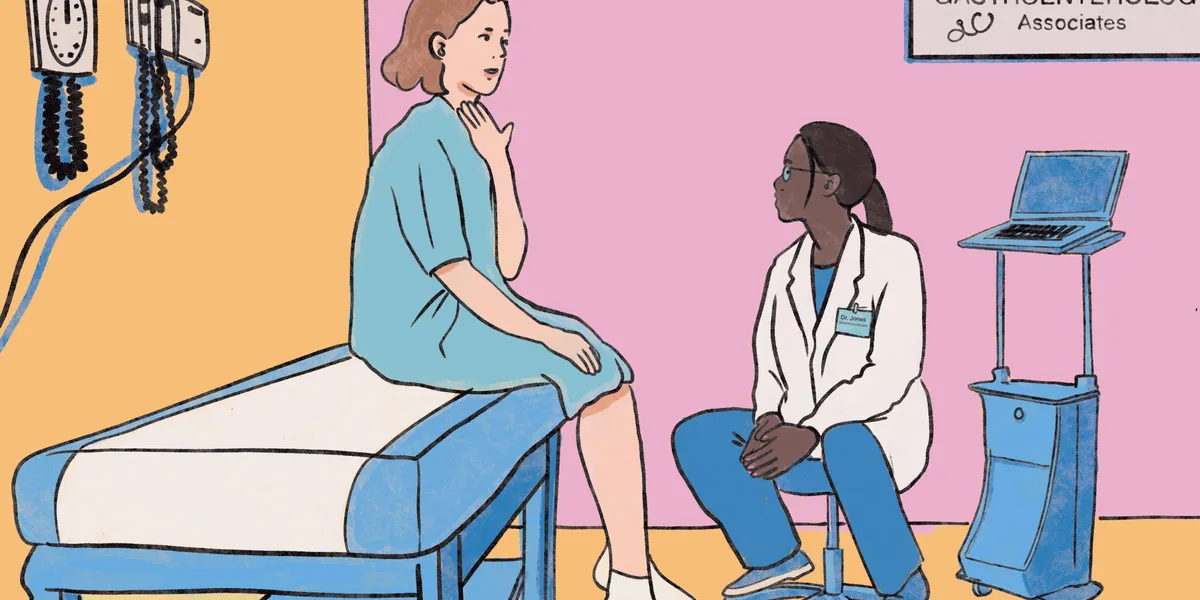
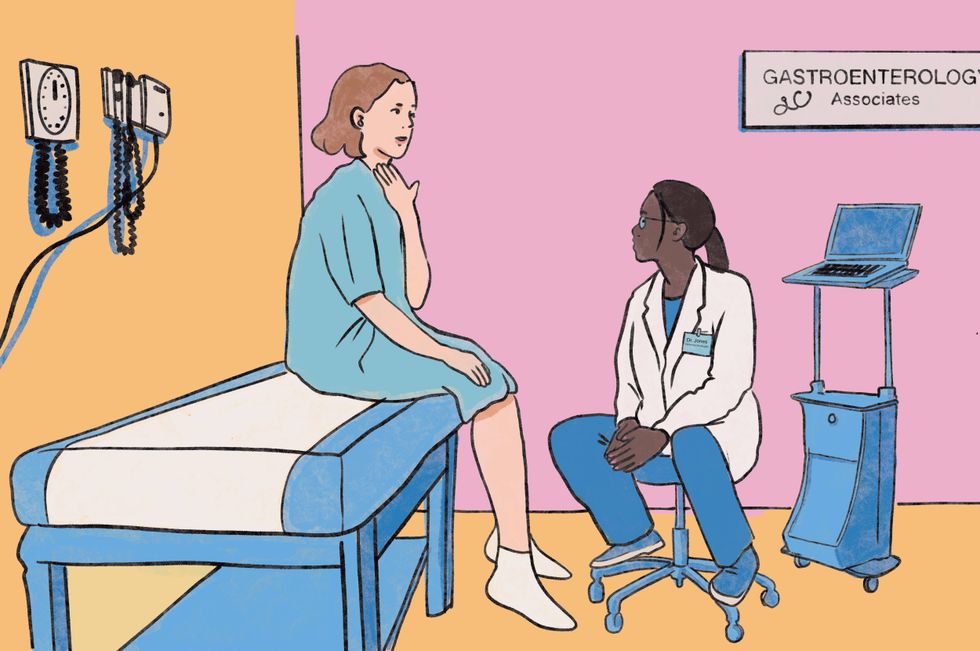
Edna is sitting on the examination table at her doctor’s office.
Edna: It’s been happening a lot lately. At brunch yesterday, my granola bar this morning, the sandwich I ate in the car on the way over here … It hurts when I swallow, and it feels like food’s getting stuck.
Edna’s doctor is nodding and responding to her.
Doc: That sounds like it could be your esophagus. It may be inflamed or a condition like GERD or eosinophilic esophagitis, which we call EoE for short. You only have one esophagus, so let’s make sure we get that checked out. I’m going to order an upper endoscopy.
Edna looks uncomfortable. Still talking to the doctor.
Edna: That sounds a little scary.
The doctor is explaining the procedure to Edna, using a model of the human throat. She could also pull up literature on her computer to illustrate the process.
Doc: It may sound scary, but it’s a pretty simple procedure.
GRAPHIC – ENDOSCOPY TUBE
Doc: It’s performed with a long, flexible tube with a camera and a light on the end that allows us to take a look at your upper digestive system.
Doc and Edna talking
Edna: Will I be awake for this?
Doc and Edna talking
Doc: We’ll give you some medication through an IV to help you relax — it’s not general anesthesia. You’ll be sleepy and likely won’t remember the procedure.
Edna looks at doctor and responds to her
Edna: Okay. That doesn’t sound too bad.
The doctor responds
Doc: You’ll feel a little groggy from the medication afterward, so you’ll want to make sure you have someone to drive you home.
Edna asks the doctor
Edna: What happens if they find EoE?
Doctor answers her and hands her an order to get the test performed
Doc: There are a variety of things we can do, like medication or dietary changes. And you would need regular endoscopies and biopsies to monitor your esophagus to see how you’re responding to treatment.
The most important thing is to get you feeling better so this doesn’t keep happening and possibly damage your esophagus.
[SUPER] At the hospital …
Edna is now at the hospital where a nurse is preparing her for the procedure and explaining what is going on. They are attaching some monitors to her chest.
The nurse sprays some numbing spray in Edna’s throat.
Nurse: This will help us monitor your heart rate, blood pressure and breathing.
This is a little spray to help numb your throat before the procedure and make you more comfortable.
The doctor performing the exam enters the room.
Doc: Hi, Edna. Looks like you’re prepped. I’m going to use a flexible gastroscope with a light and lens to look into your throat to check for inflammation or narrowing. I might take a quick biopsy to send to the lab. The whole process should take around 15 to 30 minutes.
[SUPER] In the operating room …
The doctor is looking at the tissue of Edna’s esophagus on a TV monitor and is performing the exam. She’s talking to the nurse who is assisting the procedure.
Doc: I see a little inflammation in here.
The doctor, addressing colleagues, takes a quick biopsy.
Doc: I’m going to take a quick biopsy. Hand me the forceps.
[SUPER] An hour later …
Edna wakes up in the recovery room. A nurse checks in on her and brings her a cup of water to sip from.
Nurse: Hi, Edna. You did great. We’re all done. You might feel a little sleepy or lightheaded for a few hours. You may also experience a little bloating from the air and a mild sore throat, but you shouldn’t be feeling any pain. Give us a call if any other symptoms pop up.
Edna replies. She is lying down on a recovery bed.
Edna: Sounds good. Thank you.
Nurse replies
Nurse: You’ll want to take it easy the rest of the day. Curl up on the couch with some good TV. I may be biased, but I like Nurse Jackie!
[Both laugh.]
Optional – image of Edna curled up at home on couch watching TV (of course curled up with a cat), if that seems to work.
For more information, please visit HealthyWomen.org/EoE
This resource was created with support from Sanofi and Regeneron.