As told to Nicole Audrey Spector
My very first period, which I got at 13, was, to put it very mildly, a real doozy. There was so much nausea, so much fatigue, so much pain. And so much blood. No menstrual pad was thick enough to absorb the flood spilling out of me, and my attempts at inserting a tampon were too excruciating. I wore diapers.
Every period that followed the first was just as bad. My periods could last well over 10 days with no relief. It took a heavy toll on me. I had always been a sporty and joyful kid. That girl was gone. I was in bed more than I was in gym class, and when I could make it to school on my period, I was anxious and self-conscious because I often bled through my clothing.
I wondered if something was wrong with my body and if my periods were abnormal. But everyone, including doctors, told me I was fine.
By the time I was 19 and a sophomore in college, I was barely hanging on. By this point my periods would sometimes last not only weeks, but months. Everything I ate I threw up, and I was constipated to the point of seriously never being able to poop. I was wasting away. I went from being healthy, athletic 127 lbs. to sickly and frail. I’d been an A student, but now I was barely able to make it to class. My grades plummeted along with my weight.
I was extremely proactive in advocating for myself and determined to get a diagnosis. But nobody else was. Over the span of five months, I saw about 25 doctors across three states, all of whom said I was physically fine while watching me writhe in agony on the exam table. One doctor took my mother into the hall and suggested she contact a psychiatric hospital, noting that I was at the age where mental illnesses often begin to present. My mom wanted to admit me but couldn’t because I posed no threat to myself or others.
Clinicians, my family, even my best friend: They all thought my torment was something psychological or, worse, a masquerade to get attention.
My health continued to nosedive. Later that year, my boyfriend found me passed out on the floor. I was burning up, with a temperature of 104°. After trying to cool me down in the shower, he rushed me to the ER, where doctors diagnosed me with a kidney infection. They said it was caused by an ignored UTI. I was insulted and knew this was a misdiagnosis. As a competitive swimmer, I was all too familiar with UTIs. All these years of torment had nothing to do with a bladder infection.
What would it take to get people to listen to me and to see that my body was being destroyed?
Turns out I would have to die.
After being thrown on antibiotics and discharged from the hospital, I was too weak to walk. My boyfriend carried me to the car. My last memory is of picking up and then dropping my phone.
I woke up two days later in a children’s ICU. I was told by doctors that I’d been brought into the emergency room DOA: dead on arrival. They managed to revive me, but then I coded two more times. My fever was so high that the doctors feared I would sustain brain damage. I was in septic shock and my kidneys were struggling to the point where I nearly needed dialysis. To have any chance of recovery, I was put in a medically induced coma.
It took all that for me to get what I’d been begging for since I was 13 years old: the time of day — and a diagnosis.
A doctor told me I had endometriosis.
“Endo what now?” I said. I’d never heard that word.
He went on to explain that the endometriosis had created lesions along my pelvic cavity. The lesions were growing so aggressively that they had ripped out tissue and formed new clusters of scar tissue called adhesions. Adhesions can be like cobwebs and attach to nearby organs. That’s what was happening inside me. They were strangling my ureters and my rectum.
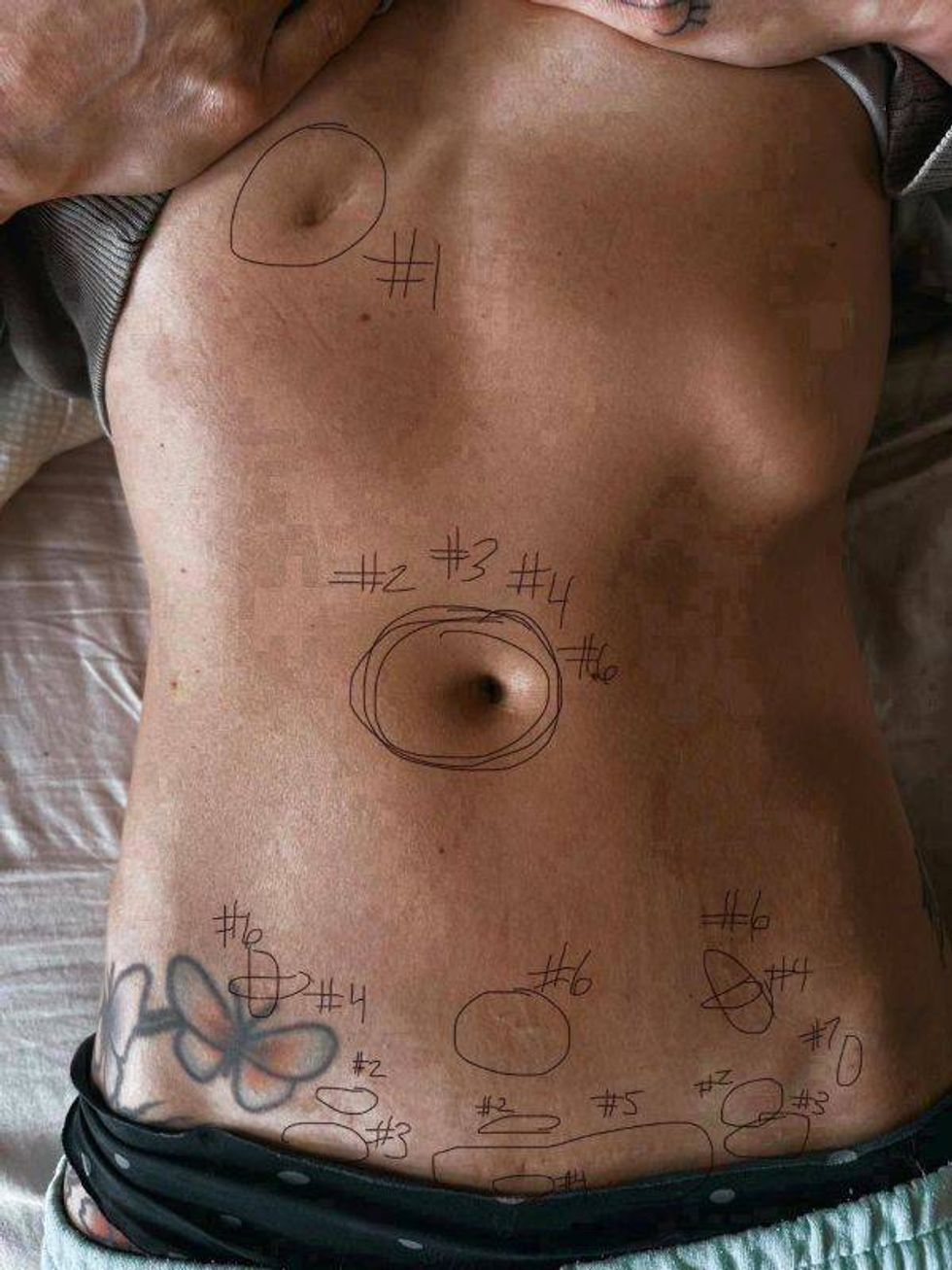 Surgery scars
Endometriosis is a full-body disease for which there is no cure. But there are effective treatments including specialized excision surgery which aims to cut out endometriosis lesions from their roots. Getting the root out is crucial and very challenging for surgeons, because often the roots are deeply hidden.
Over the more than 20 years since I was finally diagnosed, I’ve had six endometriosis-related surgeries. I’ve had organs removed including my cervix, my fallopian tubes and my uterus.
Each of these procedures has been hard on me, but the hysterectomy was uniquely difficult to endure. I have strong maternal instincts and always imagined myself as a mother. I was incredibly angry to have lost the ability to bear children, an ability that might have been preserved had doctors believed me when I was younger.
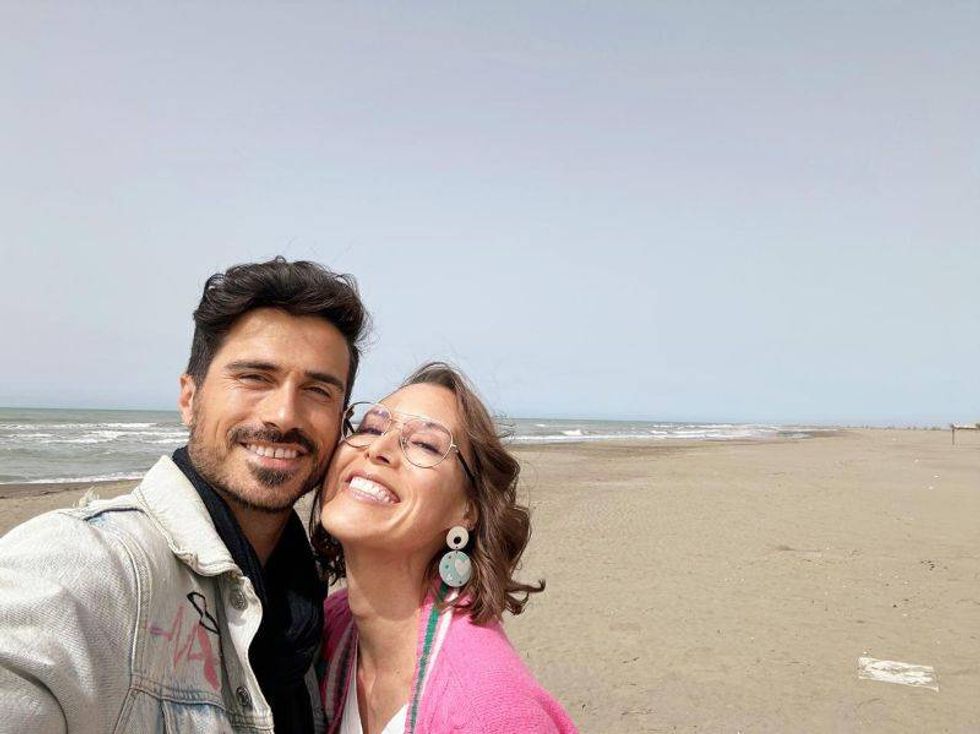 Allison and her boyfriend
Given how much endometriosis has hurt me, it would make sense for me to have nothing but hate for it. But hatred is a trap that keeps you from experiencing the beauty of being alive. This is why, when I think of what endometriosis has done to me, I choose to feel love.
I can say honestly that I cherish the gifts endometriosis has given me. I’ve become more self-aware, more accepting, more compassionate and more free. This condition has inspired me to create art I never would have created without it. It pushed me to write and publish a book for girls about endometriosis, the very book I wish I had when I was a girl. I’ve learned how to channel my maternal instincts in ways I never thought would suffice. (I lean big into my cats!)
To live with endometriosis — even if you’re in full remission as I thankfully am now — is to live with a black hole of grief inside of you. You may feel like you’re going to be sucked into its negative void. The trick isn’t to hide from the black hole, but to hug it. This doesn’t mean dismissing or burying your sorrow and rage. It means letting yourself feel the full extent of your feelings without resistance and trusting that none of that darkness can exist without light.
I often think of how other creatures deal with fear and threat. Did you know that when bison see a storm coming, they collectively turn and walk through it? They instinctively know that trying to outrun disaster will only promise their death. And we’re really no different. To survive the storm, we must walk through it.
Have your own Real Women, Real Stories you want to share? Let us know.
Our Real Women, Real Stories are the authentic experiences of real-life women. The views, opinions and experiences shared in these stories are not endorsed by HealthyWomen and do not necessarily reflect the official policy or position of HealthyWomen.
From Your Site Articles
Related Articles Around the Web