
September 10, 2026
2 min read
Key takeaways:
- The risk for inflammatory bowel disease is heightened among patients with hidradenitis suppurativa.
- Findings showed that IL-17 inhibitor therapy did not add to that risk.
Interleukin-17 therapy for hidradenitis suppurativa was not associated with an increased risk for inflammatory bowel disease, according to a study published in JAMA Dermatology.
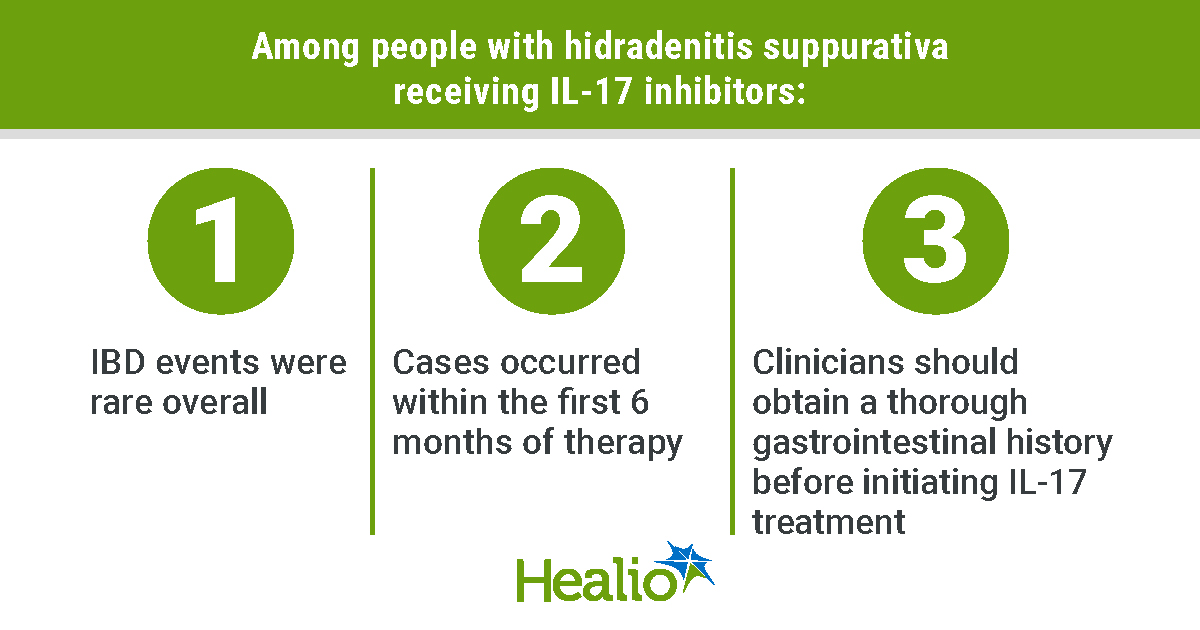
Of the 2,572 patients with HS who were treated with an IL-17 inhibitor across 10 randomized clinical trials, only six experienced new-onset IBD, according to the researchers.

Data derived from Cutrona M, et al. JAMA Dermatol. 2026;doi:10.1001/jamadermatol.2026.3373.
“In this systematic review and meta-analysis, IBD events during IL-17 inhibitor therapy for HS were uncommon, with higher incidence rates in nonrandomized studies compared with RCTs, although events remained rare overall,” Marley Cutrona, BS, a medical student in the department of dermatology at Icahn School of Medicine at Mount Sinai, and colleagues wrote. “Although HS is associated with IBD, an additive risk with IL-17 inhibitor treatment was not observed.”
Of the three approved biologics for HS, two are IL-17 inhibitors: secukinumab (Cosentyx, Novartis) and bimekizumab (Bimzelx, UCB). According to the authors, both biologics have demonstrated superior efficacy for the treatment of HS in the respective BE HEARD and SUNRISE clinical trial programs. Despite their overall safety profiles, dermatologists remain concerned about a potential association between IL-17 inhibitor therapy and IBD based on previous findings, according to the researchers.
In this study, the researchers evaluated 11 cohort studies, 10 randomized clinical trials and three case series comprising a total of 3,015 patients receiving an IL-17 inhibitor for HS.
Results from the analysis of randomized controlled trials showed that new IBD cases occurred in 0.23% of patients receiving an IL-17 inhibitor vs. 0% receiving placebo through week 16. The risk difference between the treatment and placebo groups was .002 (95% CI, 0.003 to 0.007).
In the nonrandomized studies, there were seven cases of new-onset IBD among 469 patients who received an IL-17 inhibitor, for a crude incidence rate of 1.49% and a pooled incidence rate of 3.9% (95% CI, 2.3% to 6.5%).
Across all trials included in the analysis, researchers observed 17 new-onset IBD cases and four flares. Cases often occurred within the first 6 months of therapy, suggesting that the period of the greatest risk for new-onset IBD among patients with HS is during the first few months of treatment, the researchers wrote.
The researchers noted that statistical power was limited due to the small number of IBD events, follow-up across studies was inconsistent and IBD was not a primary endpoint for most studies. However, researchers concluded IL-17 therapy for HS is unlikely to increase the IBD risk.
“The findings of our study support a low risk of IBD in patients with HS treated with IL-17 inhibitors,” the researchers wrote. “However, current guidelines recommend avoiding IL-17 inhibitors in patients with concomitant active IBD. For patients with HS without known IBD, a thorough gastrointestinal history should be obtained before treatment with IL-17 inhibitors and patients should be monitored for gastrointestinal symptoms.”

Ask a clinical question and tap into Healio AI’s knowledge base.
- PubMed, enrolling/recruiting trials, guidelines
- Clinical Guidance, Healio CME, FDA news
- Healio’s exclusive daily news coverage of clinical data