
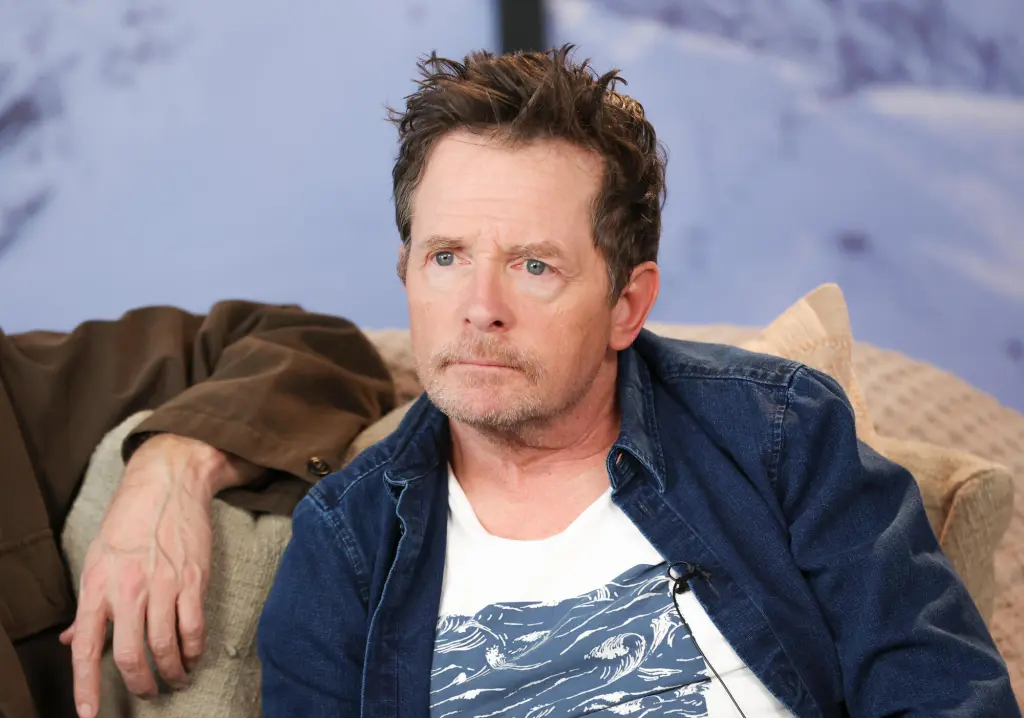
Michael J. Fox is reflecting on his 35-year journey with Parkinson’s disease after receiving major recognition for his advocacy work.
The 65-year-old actor was named a recipient of the prestigious Lasker-Bloomberg Public Service Award (often referred to as “America’s Nobels”) for his tireless efforts in funding medical research. Since launching the Michael J. Fox Foundation in 2000, his organization has raised over $3 billion to find a cure for the neurodegenerative condition.
“When we launched the Foundation, our goal was simple, yet ambitious — cure Parkinson’s,” Fox said in a statement following the announcement. “I am humbled to be recognized by the Lasker Foundation and jury. I accept this honor on behalf of everyone living with Parkinson’s and everyone with us in our shared mission to end the disease.”

Related story
Sharon Stone Reveals Bizarre ‘Orb’ Visions Following Near-Fatal 2001 Stroke
A Humbling Honor and Family-Backed Mission
The Back to the Future star first began experiencing Parkinson’s symptoms in 1990 at age 29, eventually making his diagnosis public years later to help eliminate the stigma around the disease.
He credited his ongoing advocacy to the support of his wife, Tracy Pollan, and their four children, who have stood by him through decades of health challenges.
While he admitted that managing his symptoms has naturally become more difficult over time, he hasn’t let it affect his mission.
“Of course, things have gotten harder over the years,” Fox shared in an exclusive interview with People. But “I’m privileged to commit my time and energy to bringing everything I’ve got to help cure this disease.”
Balancing Acting and the Fight for a Cure
Fox recently returned to acting with a guest-starring role on the Apple TV+ comedy Shrinking.
He stepped back from full-time acting in 2020 when memorizing dialogue became difficult, but the relaxed schedule on Shrinking offered a welcome return to the screen. Playing a character who also lives with Parkinson’s gave him the chance to perform authentically while sharing scenes with Harrison Ford.
His foundation is now launching a new campaign aiming to raise an additional $2.5 billion for research. “Science is hard… But as long as we stay focused, we stay hopeful, we’ll get there,” Fox told People. “And the science is showing we’re getting close.”