
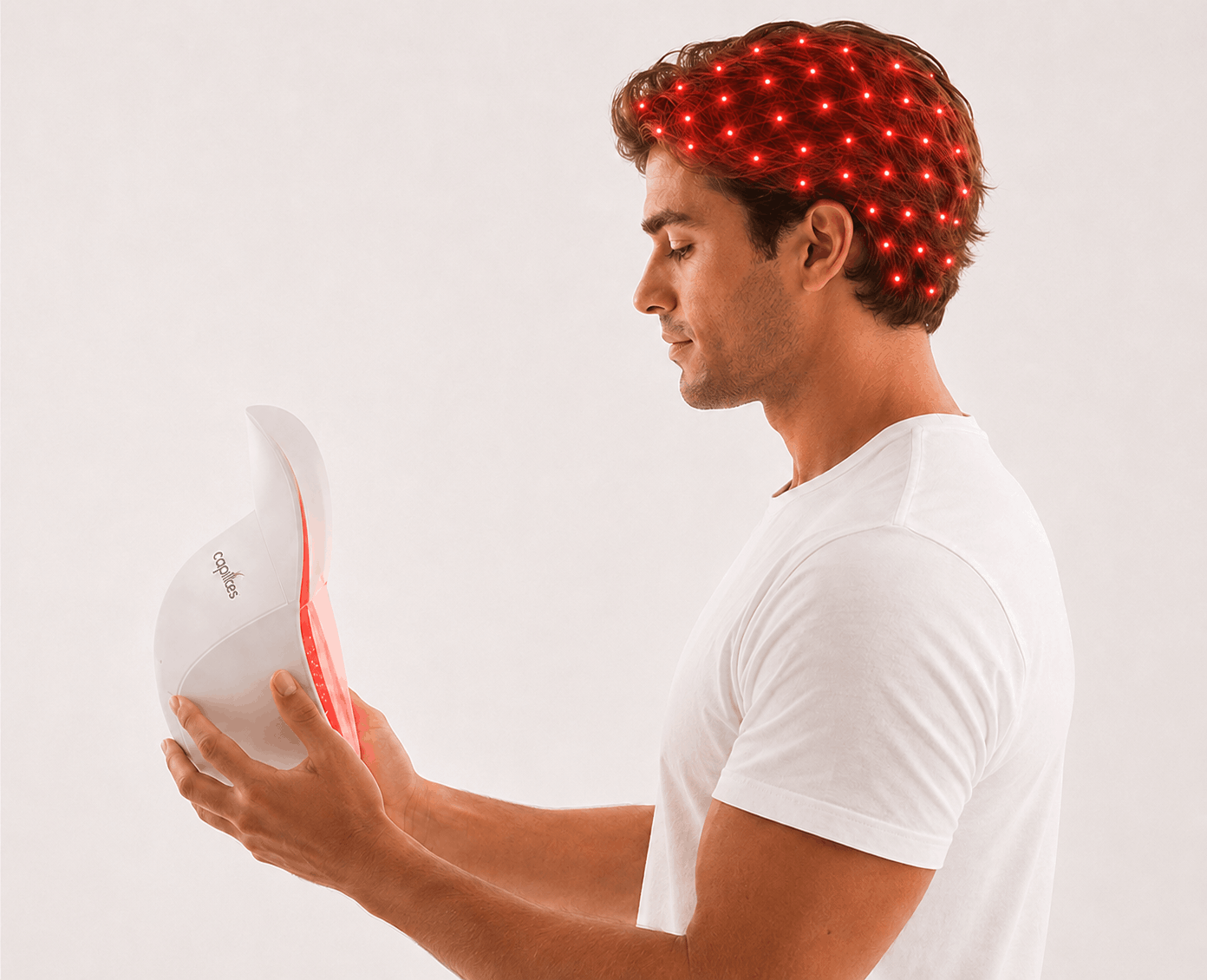
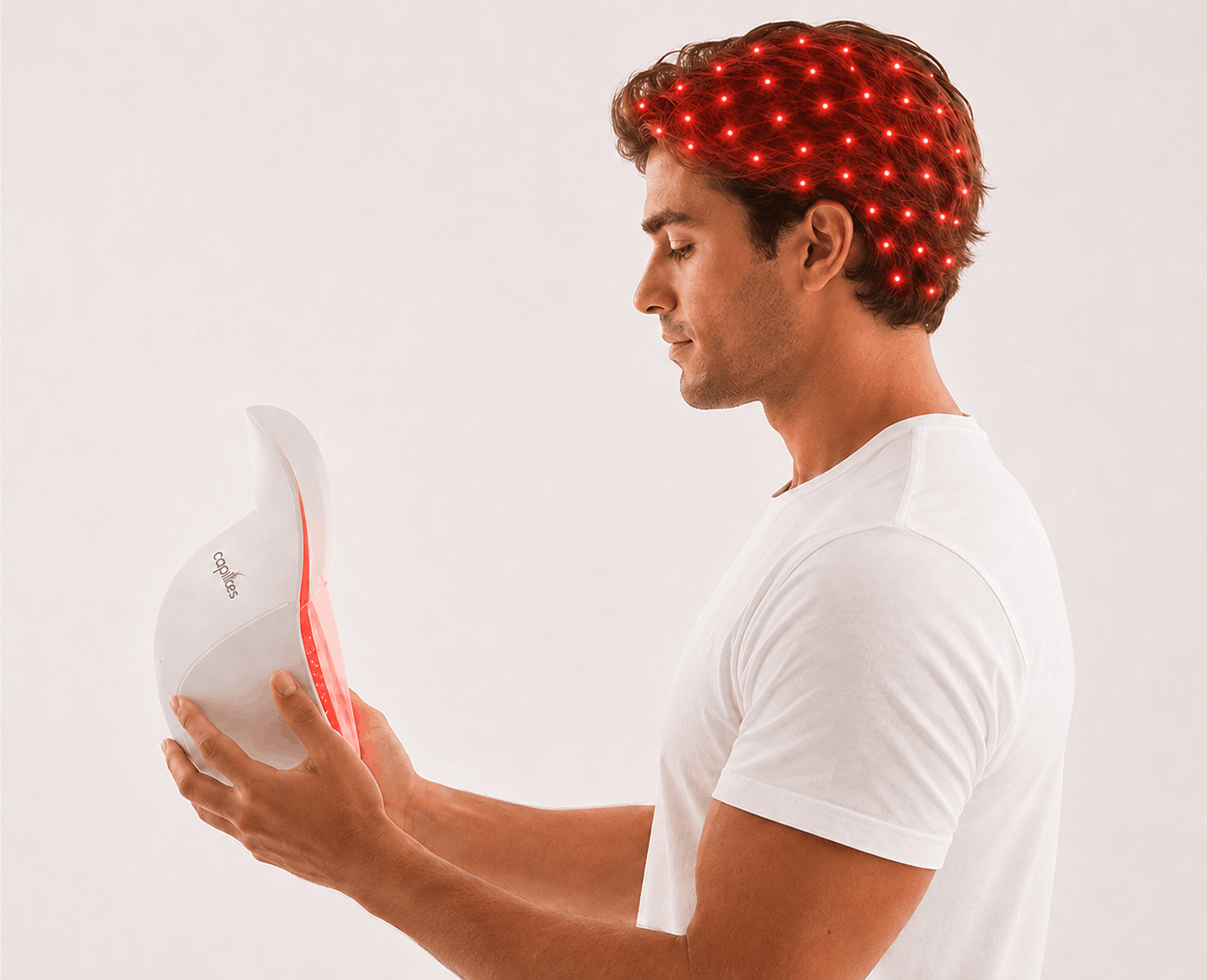
You have probably seen the device, or read the frequency guide. Here is the part most people actually want to know: what will you see, and when.
Red light therapy for hair loss, sometimes called low level laser therapy or LLLT, has become one of the most searched at home treatments for thinning hair, and one of the most misunderstood. Most of what is written about it covers how often to use a device or which one to buy. Fewer resources answer the question people actually care about: if I stick with this, what will I actually see, and on what timeline.
How It Works, Briefly
Red and near infrared light at specific wavelengths, typically in the 630 to 660 nanometer range for red light devices, is absorbed by mitochondria inside hair follicle cells. That energy transfer is believed to stimulate cellular activity in follicles that have miniaturized but not yet died, encouraging them back into an active growth phase. It will not create new follicles where none exist, but it can meaningfully support follicles that are still alive but underperforming.
What the Research Shows
A systematic review and meta analysis of randomized controlled trials evaluating low level laser therapy for androgenetic alopecia found consistent improvements in hair density across pooled studies compared to sham treatment, supporting it as a legitimate, evidence backed option rather than a wellness trend without substance.
Device quality matters significantly, which is why a separate systematic review focused specifically on FDA cleared, home use devices is useful reading before buying anything. Wavelength, power output, and treatment area coverage vary widely between products, and those differences affect real world results.