
September 24, 2026
4 min read

Key takeaways:
- Food recalls have remained relatively on par compared with previous years.
- However, the FDA investigated significantly more foodborne outbreaks this past summer than in 2024 and 2025.
It was a summer of headline-grabbing foodborne outbreaks — the diarrhea-inducing iceberg lettuce, the jalapeños with Salmonella, and the class 1 recall of 19 million eggs, to name a few.
But was this past summer really worse for outbreaks than in previous years, or a case of media hysteria?

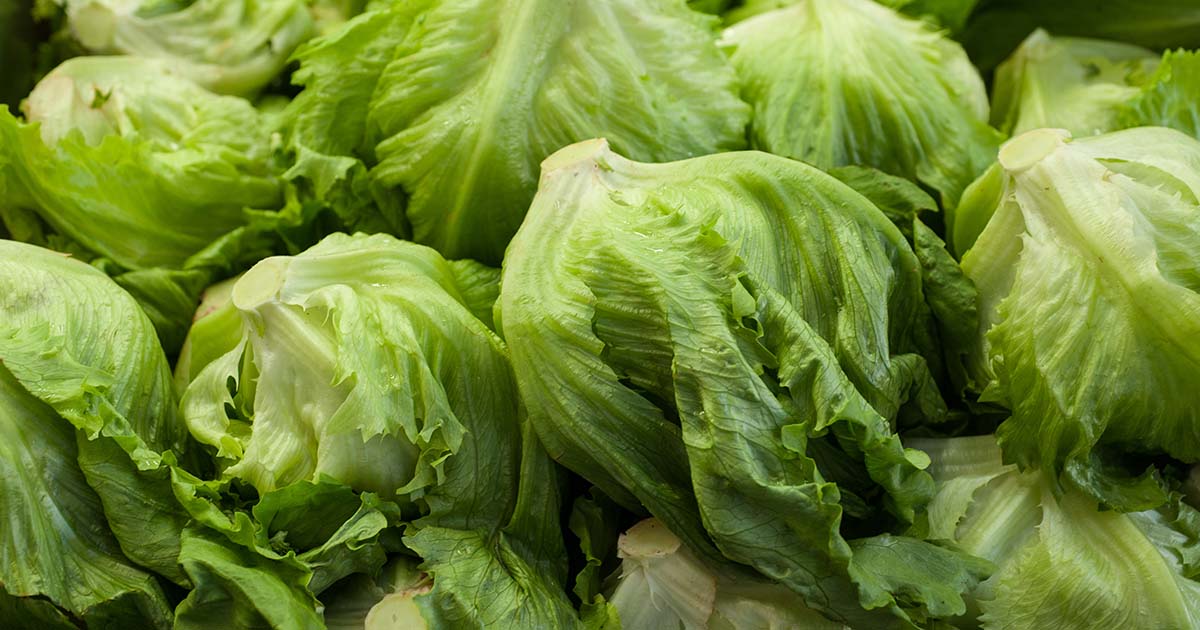
A historic multistate Cyclospora outbreak linked to iceberg lettuce lasted throughout most of the summer. Image: Adobe Stock
“When multiple outbreaks are in the news, it may seemthatfoodborne illnesses are increasing, but increased media attentiondoesn’tnecessarily mean they are on the rise overall,” said Elizabeth R. Daly, DrPH, MPH, the director of infectious disease programs at the Council of State and Territorial Epidemiologists, a national nonprofit that represents epidemiologists at state, local, tribal and territorial levels in the United States.
Different perspectives
Daly noted that the total number of food recalls was “generally average”for the entire year, according to data from the FDA and U.S. Department of Agriculture (USDA). In fact, the FDA posted a year-over-year chart on X showing that the number of recalls declined in 2026, with an accompanying message that said, in part: “Don’t believe the fake news. Our data tell the true story of public health protection.” (The chart, posted on Aug. 21, showed recall totals for fiscal years running from Oct. 1 through Sept. 30.)
However, a closer look at FDA data tells a different story. The FDA initiated 16 foodborne outbreak investigations this past summer, compared with nine in 2025 and seven in 2024.
So far this calendar year, the agency has reported 22 outbreak investigations — an annual pace of roughly 30 — which would represent a moderate increase over previous years. In both 2024 and 2025, the FDA investigated 26 outbreaks. It averaged 25 yearly investigations from 2021 to 2025.
Meanwhile, one massive event — the Cyclospora outbreak linked to iceberg lettuce — has skewed the FDA’s total-illness data. According to the agency, there were 12,883 laboratory-confirmed illnesses in the largest Cyclospora outbreak in U.S. history, accounting for nearly 90% of the 14,404 illnesses for all foodborne outbreaks this year.
As a result, the confirmed illness count for all 2026 outbreaks is about 1,500% greater than in 2025 and about 700% greater than in 2024.
“A significant Cyclospora outbreak can contribute to an increase in reported illnesses during a particular period,” Daly said, “but it doesn’t necessarily mean foodborne illness overall is increasing at the same rate.”
‘A deceptive thing’
Outbreaks aren’t everything, according to Healio | Infectious Disease News Editorial Board Member J. Glenn Morris Jr., MD, MPH&TM.
“Outbreaks are, in many ways, a deceptive thing,” he said. “They get everybody’s attention and the news media gets involved. … What’s really important are the rates of ongoing sporadic disease.”
Morris said sporadic foodborne disease is likelier to erupt into outbreaks after the Trump administration scaled back FoodNet last year, removing six pathogens from the program’s core monitoring list, including Cyclospora, the parasite that can live on fruits and vegetables and is responsible for the cyclosporiasis outbreak.
“What’s going to start happening is we’re going to get more and more sporadic disease because we’re taking away a lot of the barriers that we’ve put in place to minimize the rate of sporadic disease, and FoodNet is one such operation that was designed to monitor sporadic disease,” he said.
Morris, who helped establish FoodNet in 1995 during his tenure at the USDA, also said the administration’s personnel cuts to the FDA and USDA have compromised food safety.
“The FDA has substantial problems in terms of food safety because it doesn’t have adequate inspectors,” he said, adding in jest, “The thing about inspections: If you don’t do them, then there’s no problem.”
‘A perfect storm’
HHS defended the administration’s foodborne outbreak response and surveillance this past summer.
“The Trump administration has mounted a robust response to each outbreak, working closely with health departments in all 50 states and leading the public health response by promptly identifying known sources and providing Americans with the information they need to protect themselves,” an HHS spokesperson told Healio.
The spokesperson said the CDC laboratory “supporting foodborne outbreak investigations was not impacted by reductions in force, and the agency maintains a dedicated team investigating foodborne outbreaks and working closely with state and local health departments.”
Morris said an inherent flaw of the country’s food-safety system is that multiple agencies track and respond to foodborne illnesses, calling it “not optimal.”
“There’s not a single agency responsible for what happened,” Morris said of the cyclosporiasis outbreak.
Combined with surveillance and personnel reductions at government food-safety agencies, Morris said Americans dealt with the consequence this past summer: “It was a perfect storm,” he said.
For more information:
Elizabeth R. Daly, DrPH, MPH, and J. Glenn Morris Jr., MD, MPH&TM, can be reached at infectiousdisease@healio.com.
Sources/Disclosures
Source:
Healio Interviews
References:
- About FoodNet. https://www.cdc.gov/foodnet/about/index.html. Published April 28, 2026. Accessed July 15, 2026.
- CDC. Cyclospora case data. https://www.cdc.gov/cyclosporiasis/cases/index.html. Updated Sept. 15, 2026. Accessed Sept. 23, 2026.
- CDC. Salmonella outbreak linked to shell eggs. https://www.cdc.gov/salmonella/outbreaks/shell-eggs-07-26/index.html. Updated Sept. 3, 2026. Accessed Sept. 23, 2026.
- FDA. Investigation of multistate outbreak of Cyclospora illnesses: Iceberg lettuce (July 2026). https://www.fda.gov/food/outbreaks-foodborne-illness/investigation-multistate-outbreak-cyclospora-illnesses-iceberg-lettuce-july-2026. Updated Sept. 11, 2026. Accessed Sept. 23, 2026.
- FDA. Investigations of foodborne illness outbreaks. https://www.fda.gov/food/outbreaks-foodborne-illness/investigations-foodborne-illness-outbreaks. Updated Sept. 23, 2026. Accessed Sept. 23, 2026.
- FDA. Outbreak investigation of Salmonella: Eggs (July 2026). https://www.fda.gov/food/outbreaks-foodborne-illness/outbreak-investigation-salmonella-eggs-july-2026. Sept. 3, 2026. Accessed Sept. 23, 2026.
- FDA. Outbreak investigation of Salmonella: Jalapeño (August 2026). https://www.fda.gov/food/outbreaks-foodborne-illness/outbreak-investigation-salmonella-jalapeno-august-2026. Published Aug. 21, 2026. Accessed Sept. 23, 2026.
- FDA. Recalls. https://datadashboard.fda.gov/oii/cd/recalls.htm. Accessed Sept. 23, 2026.
- USDA. Recalls and public health alerts. https://www.fsis.usda.gov/recalls. Accessed Sept. 23, 2026.
Disclosures:
Daly and Morris report no relevant financial disclosures.

Ask a clinical question and tap into Healio AI’s knowledge base.
- PubMed, enrolling/recruiting trials, guidelines
- Clinical Guidance, Healio CME, FDA news
- Healio’s exclusive daily news coverage of clinical data