
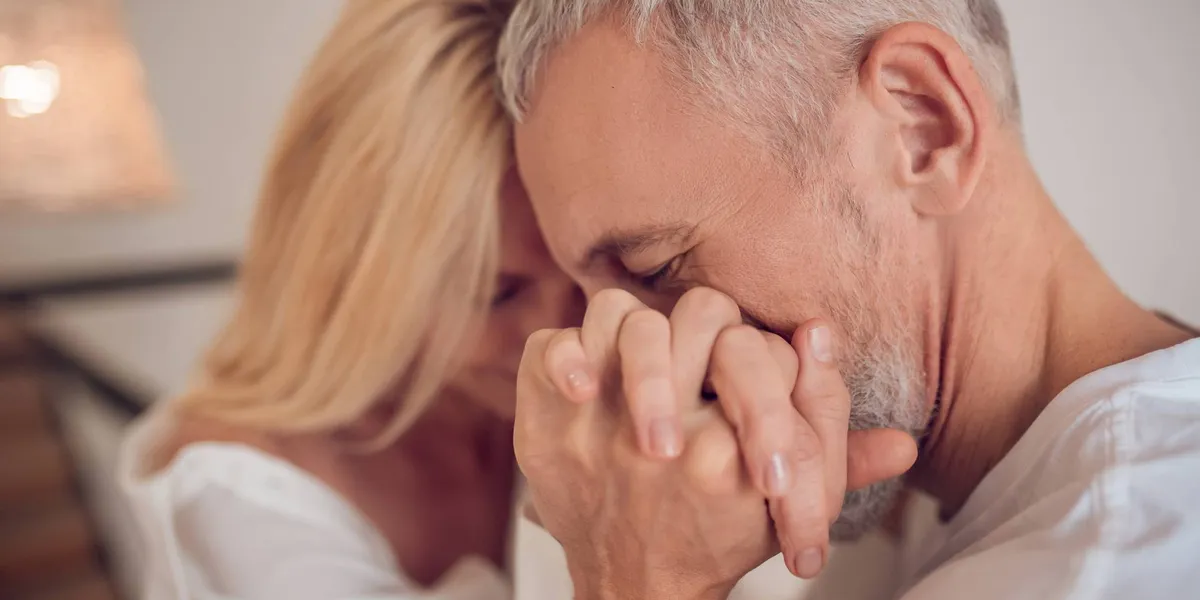

When RoseMary’s* husband was diagnosed with prostate cancer 22 years ago, the couple faced a lot of uncertainty, and they knew the diagnosis could change their lives.
What they couldn’t fully anticipate was how much treatment might change their sex life, or how they would eventually learn to redefine intimacy together.
Her husband, first went to the doctor because he was urinating more frequently. Testing eventually led to a biopsy and a prostate cancer diagnosis.
After considering his treatment options, he chose surgery — a full removal of his prostate. RoseMary said they went into the procedure knowing there was a possibility of side effects, including urinary incontinence and erectile dysfunction.
Her husband experienced both.
More than two decades later, he still has urinary incontinence, and his erectile function never returned. But he remains cancer-free and has no regrets about his decision.
“The dignity and grace of this man despite what he went through,” she said. “This is a Marine who never complained once.”
For RoseMary, however, being the partner of someone going through prostate cancer meant learning that surviving cancer is only one part of the story. Couples may also have to figure out what comes next, including how to navigate changes in sex, intimacy and their relationship.
Prostate cancer treatment can affect sexual health
Sexual changes after prostate cancer treatment are relatively common, according to Nazanin Moali, Ph.D., a clinical psychologist and sex therapist who has worked in the field for 15 years. Depending on the person and treatment, whether it be surgery, chemotherapy or hormone therapy, changes can include erectile dysfunction, erectile unpredictability, loss of libido, changes in desire and difficulty experiencing orgasm.
Some people may discover that the type of stimulation that worked before treatment no longer works afterward.
That can require couples to rethink what sex looks like.
“You can still have a healthy, fulfilling sex life regardless of the outcome,” Moali said.
The key, she explained, is being willing to communicate about what feels good, what has changed and what each partner needs, and to seek professional help from a sex therapist when necessary.
There can be grief on both sides
The physical effects of treatment happen to the person with prostate cancer, but the emotional, relational and sexual effects can involve both partners.
Moali said some women and partners she’s worked with feel enormous gratitude that their partner survived cancer while simultaneously grieving the sex life they had before treatment. Others become sexually frustrated but feel guilty acknowledging it.
There can be complicated dynamics around initiating sex, too. A man experiencing erectile dysfunction as the result of treatment may feel shame or anxiety about sexual performance. His partner, meanwhile, may avoid initiating intimacy because she doesn’t want to pressure him or make him feel uncomfortable.
And when a woman has also taken on a caregiving role, the transition back to being romantic or sexual partners may be challenging.
Those seemingly contradictory emotions — gratitude, sadness, frustration, grief, guilt and desire — can exist at the same time, Moali said. Rather than suppressing them, she encourages couples to acknowledge, understand and accept the various layers of emotions, express what they’re feeling, and talk about what sex and intimacy mean to them now.
RoseMary remembers experiencing some of those complexities herself.
Her husband still had sexual desire after surgery, she said, but erectile dysfunction changed how he saw his ability to perform sexually. She sensed his frustration and sadness, even if he didn’t always talk about them directly.
“There was a need for some encouragement on my side,” RoseMary said. “We developed a different way that we could couple.”
Over time, they learned to communicate differently and became more inventive about intimacy.
Read: Prostate Cancer Taught My Husband and Me What Real Intimacy Is >>
Expanding the definition of sex
For RoseMary and her husband, adjusting meant taking the emphasis off intercourse and finding other ways to give and receive pleasure.
“We became inventive,” she said.
Massage, touch and other forms of sexual stimulation became a more integral part of their relationship. So did something much simpler: kissing.
“I could devour him right now,” RoseMary laughed, and said of her husband today.
She said they also relied on openness, communication and even humor as they figured out what worked for them.
That flexibility is something Moali regularly encourages with her clients. She said engaging in “sexual exploration” is important.
“There are different ways of experiencing an orgasm,” Moali explained. “Instead of defining sex solely as penetrative intercourse, couples can consider a much wider range of sexual and sensual experiences, including kissing, touching, sensual massage, oral sex, mutual masturbation and sex toys.”
She encourages couples to think about the underlying meaning of sex in their relationship. Is it about pleasure? Feeling desired? Connection? Sensuality? Once couples identify what they’re actually seeking from sex, they may find there are multiple ways to achieve it.
Read: Good Sex with Emily Jamea: Reclaiming Sexual Intimacy After Prostate Cancer >>
Preparing for changes before treatment
For Samantha Karcher, these questions are still largely about what might happen.
Her husband was recently diagnosed with prostate cancer after his PSA, or prostate-specific antigen test levels, which had been gradually increasing over several years, prompted further testing and a biopsy.
The couple ultimately decided on surgery, expected to happen in October of this year. Although her husband hasn’t experienced sexual changes yet, they’ve already talked with his surgeon about the possibility that his sexual function could be different afterward.
Kartcher admitted she’s nervous.
Her husband has always had a high libido, and while their surgeon offered some reassurance, there are no guarantees about exactly how his body will respond to treatment.
For now, Karcher is trying to support him without letting her own anxiety add to his.
“I just plan on being there to support him,” she said.
Moali said having these conversations before treatment can help couples prepare. She encourages patients to ask their clinicians about potential sexual side effects and available treatments and resources rather than waiting until a problem occurs.
If sexual difficulties do develop, couples can also ask about referrals to clinicians who specialize in sexual medicine or sexual health. Sex therapy can help couples work through communication, desire and intimacy concerns, while medical providers can discuss treatment options for physical changes.
Communication may be one of the most important tools
RoseMary wishes couples going through prostate cancer knew they didn’t have to navigate these changes silently.
Counseling wasn’t something she and her husband pursued specifically for his prostate cancer, but looking back, she believes it can be valuable for couples who are struggling to communicate.
Her advice after 22 years is simple: Don’t blame yourself. Don’t blame your partner. And don’t pretend everything is fine when it isn’t.
“Try to be open and honest, and true to what you need,” she said.
That may mean saying you miss sexual intimacy. It may mean asking your partner what feels good now instead of assuming. And it may mean accepting that intimacy after prostate cancer doesn’t look exactly the way it did before.
Today, RoseMary says that their sex life has changed, but affection and intimacy remain part of their marriage.
After everything they’ve experienced, RoseMary doesn’t describe prostate cancer’s effect on their relationship as a hurdle. She prefers another word.
“Change.”
For women whose partners are just beginning this journey, that distinction may matter. A changing sex life isn’t necessarily a disappearing one. With communication, flexibility and support, couples can discover new ways of being close and new definitions of what satisfying intimacy means to them.
*Last name withheld for privacy.
This educational resource was created with support from Bayer.
From Your Site Articles
Related Articles Around the Web