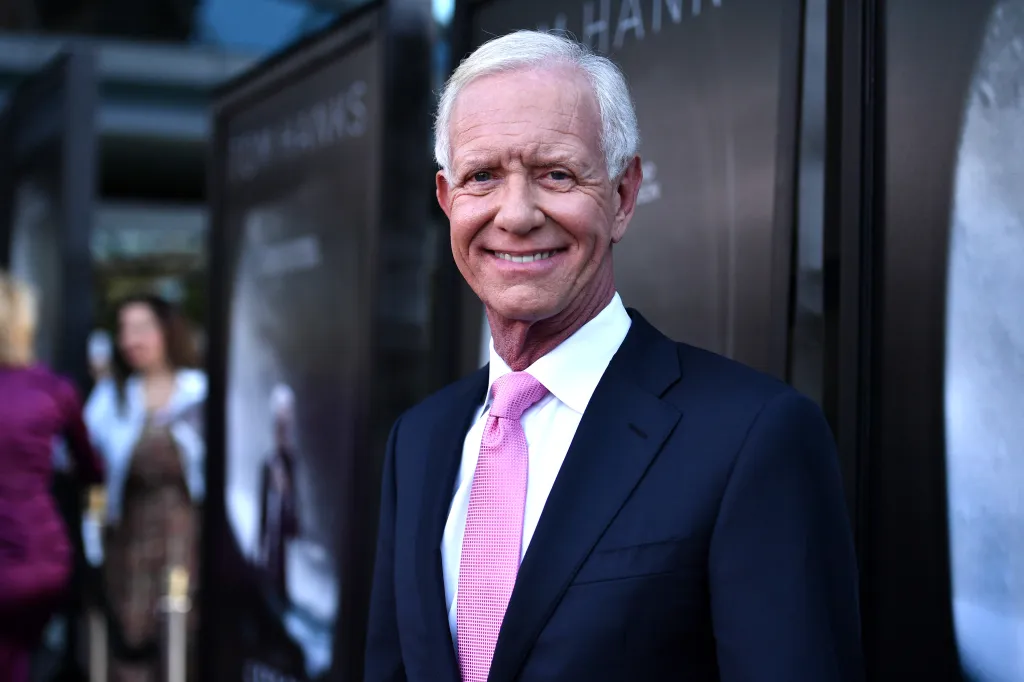
Capt. Chesley “Sully” Sullenberger III is speaking out about his early-stage Alzheimer’s diagnosis to help other families catch the early warning signs of the disease.
The 75-year-old retired pilot became a national hero after saving 155 people in 2009 in what became known as the “Miracle on the Hudson”. This week, Sullenberger and his wife of 37 years, Lorrie, sat down with Good Morning America this week to discuss their new reality.
After initially planning to keep his August 2025 diagnosis a secret, the couple decided to share their experience publicly so others going through the same thing wouldn’t feel isolated. “Initially, like a lot of families, we were not going to tell,” Lorrie told Good Morning America co-anchor Robin Roberts. “And I said to Sully one day, ‘This is a disease, not a character flaw. I think we need to talk about it more openly, and maybe other people can do the same.’”

Related story
The Touching Way Kaia Gerber Honored Late Brother Presley’s Mental Health Advocacy Before His Death
Catching the Early Signs
The first indicators of his cognitive decline were so minor that the couple almost brushed them off.
“One of the first things I noticed was that it was harder and harder to remember people’s names, even people we knew,” Sullenberger said. “That’s still an issue. Just forgetting things that I normally wouldn’t. Or repeating myself, not realizing that I just said that an hour ago.”
Lorrie explained that most people expect to see severe memory loss when they think of dementia, making these small behavioral shifts easy to overlook. “They were so little that it was easy to dismiss in the beginning,” she said. Lorrie advised families to watch for tiny changes in routine and pay close attention to any behavior that feels out of the ordinary for their partner.
“If you have doubts, get tested,” he added. “Because the sooner you act, the more options there are.”
Facing the Future Together
Sullenberger said he views his treatment as a strict plan that requires him to cut out distractions and focus solely on what matters most.
“We’re focusing clearly on the highest-priority items first, and we are ignoring everything we don’t have time to do as being only distractions and unimportant,” he said.
Despite his pragmatic approach, he openly worries about the “inevitable” toll his decline will take on Lorrie as she steps into the role of primary caregiver.
“I do worry about you as the caregiver,” he told her during the interview. “And I know what a burden caregivers have. I know it’s going to be a thing, and I’m very aware of it.”
Sullenberger hopes his transparency can help destigmatize the disease. Just as he pushed for flight safety after the Hudson River crash, he wants to use his public platform to advocate for families dealing with dementia.
“I felt like after the 2009 flight that [co-pilot] Jeff Skiles and I and others had made a difference,” he said. “And I think in this regard, with this issue, maybe we can make a difference in this way also.”