
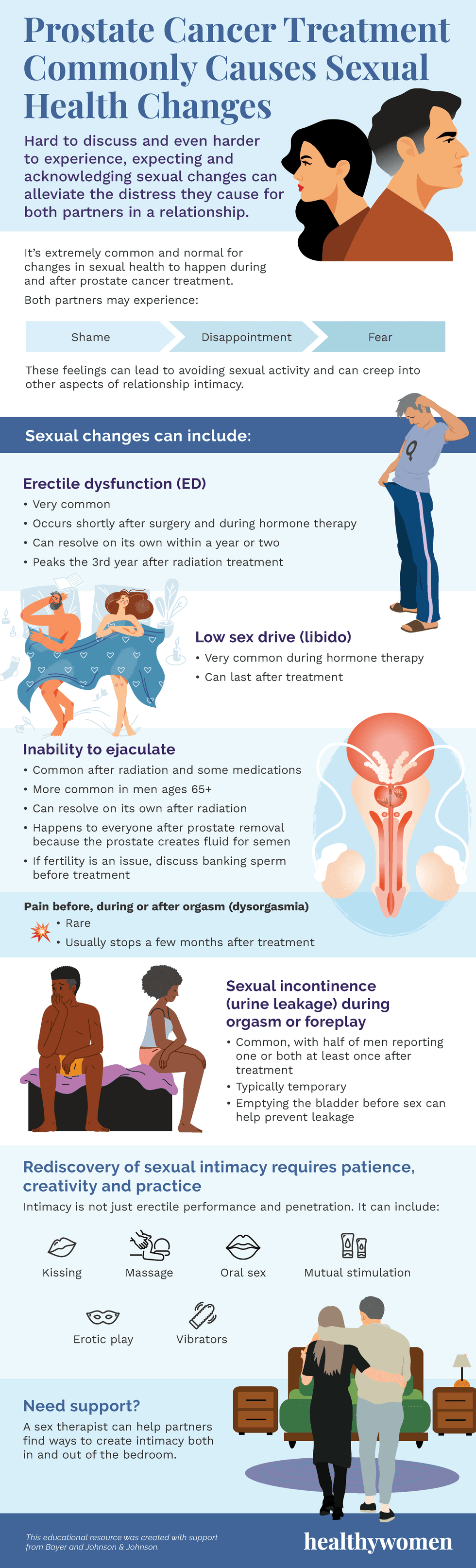
It’s extremely common and normal for changes in sexual health to happen during and after prostate cancer treatment .
Both partners may experience:
- Shame
- Disappointment
- Fear
These feelings can lead to avoiding sexual activity and can creep into other aspects of relationship intimacy.
Sexual changes can include:
Erectile dysfunction (ED)
- Very common
- Occurs shortly after surgery and during hormone therapy
- Can resolve on its own within a year or two
- Peaks the 3rd year after radiation treatment
Low sex drive (libido)
- Very common during hormone therapy
- Can last after treatment
Inability to ejaculate
- Common after radiation and some medications
- More common in men ages 65+
- Can resolve on its own after radiation
- Happens to everyone after prostate removal because the prostate creates fluid for semen
- If fertility is an issue, discuss banking sperm before treatment
Pain before, during or after orgasm (dysorgasmia)
- Rare
- Usually stops a few months after treatment
Sexual incontinence (urine leakage) during orgasm or foreplay
- Common, with half of men reporting one or both at least once after treatment
- Typically temporary
- Emptying the bladder before sex can help prevent leakage
Rediscovery of sexual intimacy requires patience, creativity and practice
Intimacy is not just erectile performance and penetration. It can include:
- Kissing
- Massage
- Oral sex
- Mutual stimulation
- Erotic play
- Vibrators
Need support?
A sex therapist can help partners find ways to create intimacy both in and out of the bedroom.
This educational resource was created with support from Bayer and Johnson & Johnson.