October 08, 2026
2 min read

Key takeaways:
- A healthy lifestyle at ages 1 and 3 years was linked to lower risk for developing IBD.
- Crohn’s disease was a key driver of the association between risk for IBD and lifestyle in early childhood.
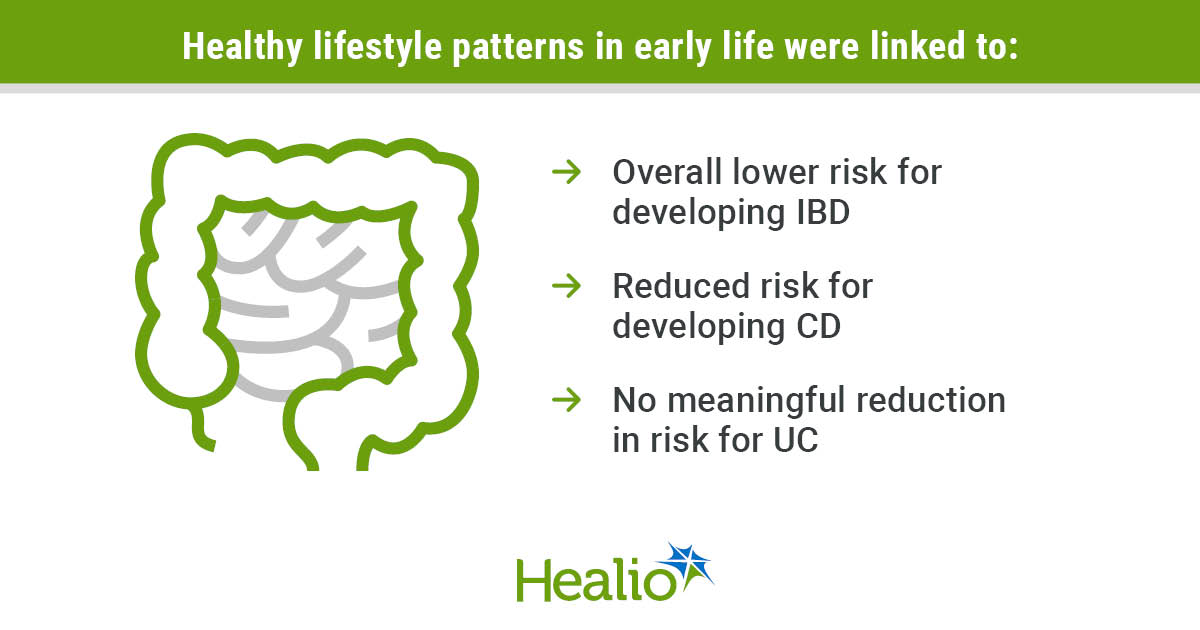
Children with healthier lifestyle patterns appear less likely to develop inflammatory bowel disease than those with unhealthier lifestyles, study results showed.
This association between modifiable lifestyle factors — such as diet quality, physical activity and exposure to environmental hazards — and IBD development was largely driven by reduced risk for Crohn’s disease.

Data derived from Guo A, et al. J Crohn’s Colitis. 2026;doi.org/10.1093/ecco-jcc/jjag114.

Annie Guo
“Many patients are struggling with [IBD] and are wondering if they could have done anything to prevent it,” Annie Guo, PhD, RD, a postdoctoral researcher at University of Gothenburg in Sweden, told Healio.
Prior research suggests that adherence to a healthy lifestyle may play a role in IBD development among adults, according to study background. Studies also have indicated early-life development of the gut microbiome and immune system may impact lifelong IBD risk.
Guo and colleagues investigated the relationship between modifiable lifestyle factors in early life and risk for IBD in a prospective, binational cohort study. They analyzed data on 117,487 children (49% girls) from two Scandinavian birth cohorts that enrolled participants between 1997 and 2009. Mean age of participants at the end of follow-up was 20 years.
The researchers evaluated adherence at ages 1 and 3 years to several health-related lifestyle factors with established connections to IBD — including prenatal and postnatal smoking exposure, mode of delivery, breastfeeding duration, antibiotic use, diet, BMI and physical activity — using the Modifiable Health-related Lifestyle Score (MHLS).
This score, along with a weighted optimal risk score at ages 1 and 3 years, determined risk for developing IBD.
During the study period, 293 participants developed CD, 283 ulcerative colitis and 156 unclassified IBD.
The researchers observed a lower risk for developing IBD among children with healthier lifestyle patterns and a higher MHLS score (adjusted HR = 0.77; 95% CI, 0.61-0.98), compared with those with lower scores and unhealthier lifestyle patterns.
Among IBD subtypes, this association was most pronounced in CD (aHR = 0.57; 95% CI, 0.38-0.86).
Optimal risk score analyses at ages 1 and 3 years showed the same association between high adherence to a healthy lifestyle and lower risk for IBD (aHR = 0.77; 95% CI, 0.63-0.95) and CD (aHR = 0.68; 95% CI, 0.49-0.94) when compared with individuals who had unhealthier lifestyle factors.
“Consistent with adult data indicating that healthy habits may prevent IBD, our findings further underscore the importance of adopting lifestyle modifications early,” Guo and colleagues wrote. “Interventions that focus on lifestyle choices during childhood may be especially beneficial, given the tendency for early-formed behaviors to endure.”
The researchers did not observe an association between MHLS or optimal risk score and risk for developing UC.
“Different etiologies have been suggested for CD and UC,” Guo said. “However, more research is warranted before drawing different conclusions about associations between early-life lifestyle factors and later risk for CD and UC.”
Findings were consistent across sex, parental IBD status and sociodemographic factors.
Guo and colleagues acknowledged study limitations, including modifiable risk factors that may influence IBD development beyond those considered in MHLS, as well as reliance on parent-reported data from questionnaires that varied in wording between the two cohorts.
“Since this is only based on observational data, more research is needed before the findings can be translated into any clinical interpretation,” Guo told Healio.
Additional research should “confirm environmental exposures with biological data; [for example] whether there is any difference in microbiome composition between those with different adherence to healthier lifestyle behaviors,” she added.
For more information:
Annie Guo, PhD, RD, can be reached at gastroenterology@healio.com.

Ask a clinical question and tap into Healio AI’s knowledge base.
- PubMed, enrolling/recruiting trials, guidelines
- Clinical Guidance, Healio CME, FDA news
- Healio’s exclusive daily news coverage of clinical data