October 13, 2026
2 min read

Key takeaways:
- Pooled analysis did not confirm superiority of the two-dose HepB-CpG regimen over three doses of aluminum-based vaccines.
- A third dose of HepB-CpG vaccine may improve immunoprotection among individuals with HIV.
NASHVILLE, Tenn. — Two doses of hepatitis B virus vaccine with CpG adjuvant may not be sufficient for people with HIV who do not respond to an initial vaccination series, according to a poster presentation at ACG Annual Scientific Meeting.
Data from pooled analysis did not show statistically significant superiority between two doses of HepB-CpG (Heplisav-B, Dynavax) compared with three doses of HBV vaccine with an aluminum-based adjuvant (Engenrix-B, GSK; Recombivax HB, Merck).

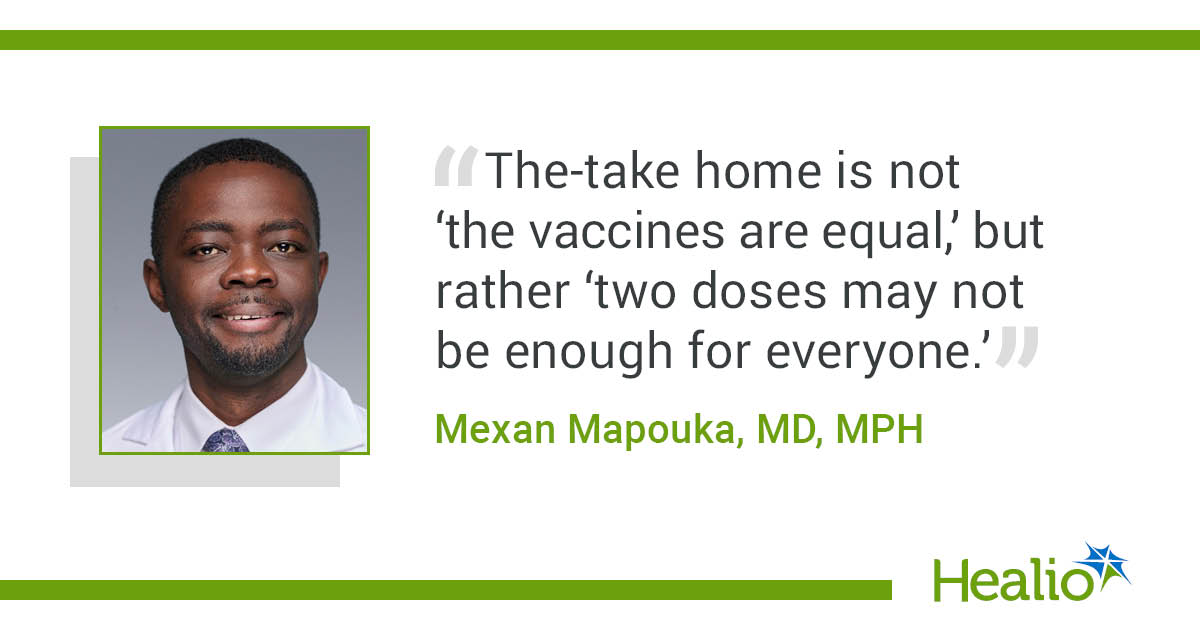
“For a person with HIV who did not respond to a prior hepatitis B series, HepB-CpG is the preferred revaccination choice over the old alum vaccines, and a third dose is worth considering when durable, high-level protection is the goal,” Mexan Mapouka, MD, MPH, an internal medicine resident at University of Maryland Capital Region Health, told Healio. “The take-home is not ‘the vaccines are equal,’ but rather ‘two doses may not be enough for everyone.’ So check titers and consider a third dose, which lines up with what current HIV and opportunistic-infection guidelines already recommend.”
People with HIV are less likely to achieve serologic response to conventional HBV vaccines, according to study background. Two or three doses of HepB-CpG have been recommended for nonresponders in this patient population.
However, it remains relatively unknown whether three doses of HepB-CpG, rather than two, provide adequate protection compared with the three doses of the aluminum-based vaccines.
“Guidelines now point toward the newer adjuvanted vaccine HepB-CpG for these patients, but they were not settled on whether two doses is enough for prior nonresponders or whether a third dose is needed to match or beat the old three-dose alum vaccines,” Mapouka said. “The study set out to pool the available data and try to answer that practical, everyday question.”
Mapouka and colleagues conducted a systematic and meta-analysis comprised of research published through Jan. 24.
Analysis included 493 individuals (mean age, 45 years; 46% white), most of whom were men. The group was balanced in receipt of HepB-CpG (n = 248) and HepB-alum (n = 245) vaccines.
Pooled analysis did not show a statistically significant difference in seroconversion with the two-dose HepB-CpG regimen, with no clear superiority observed (RR = 1.35; 95% CI, 0.97-1.87), even with high heterogeneity (I2 = 86.5%).
Seroprotection was lower than the 90% threshold among those with diabetes (70.2%) and smokers (84%), according to subgroup analyses. Optimizing CD4 levels could boost HBV antibody response in these subgroups, the researchers noted.
“The most useful future studies would be larger head-to-head trials that enroll more patients with low CD4 counts, who are underrepresented so far; follow antibody titers for several years to measure real durability rather than early response; and look at host factors like diabetes, smoking and inflammation to see who needs an extra dose or other help,” Mapouka told Healio. “Measuring T-cell responses, not just antibodies, would also add value, since T-cell immunity is impaired in HIV even when antibodies look adequate.”
For more information:
Mexan Mapouka, MD, MPH, can be reached at mexan.mapouka@umm.edu.
Sources/Disclosures
Source:
Mapouka M, et al. Two dose Hep-B-CpG vs three dose HEP-B-Alum among people with HIV and prior vaccine nonresponse: A systematic review and meta-analysis. Presented at: ACG Annual Scientific Meeting; Oct. 12-14, 2026; Nashville, Tenn. (hybrid meeting).
Disclosures:
Mapouka reports no relevant financial disclosures. Please see the study for all other authors’ relevant financial disclosures.

Ask a clinical question and tap into Healio AI’s knowledge base.
- PubMed, enrolling/recruiting trials, guidelines
- Clinical Guidance, Healio CME, FDA news
- Healio’s exclusive daily news coverage of clinical data