October 14, 2026
3 min read
Key takeaways:
- Experts say prediction markets could hurt trials’ equipoise and validity.
- Clinicians should be prepared to answer patients’ questions about probabilities tied to trials on marketplaces.
Prediction marketplaces are taking their first steps into the pharmaceutical field — a move that some experts say may threaten the integrity of clinical trials.
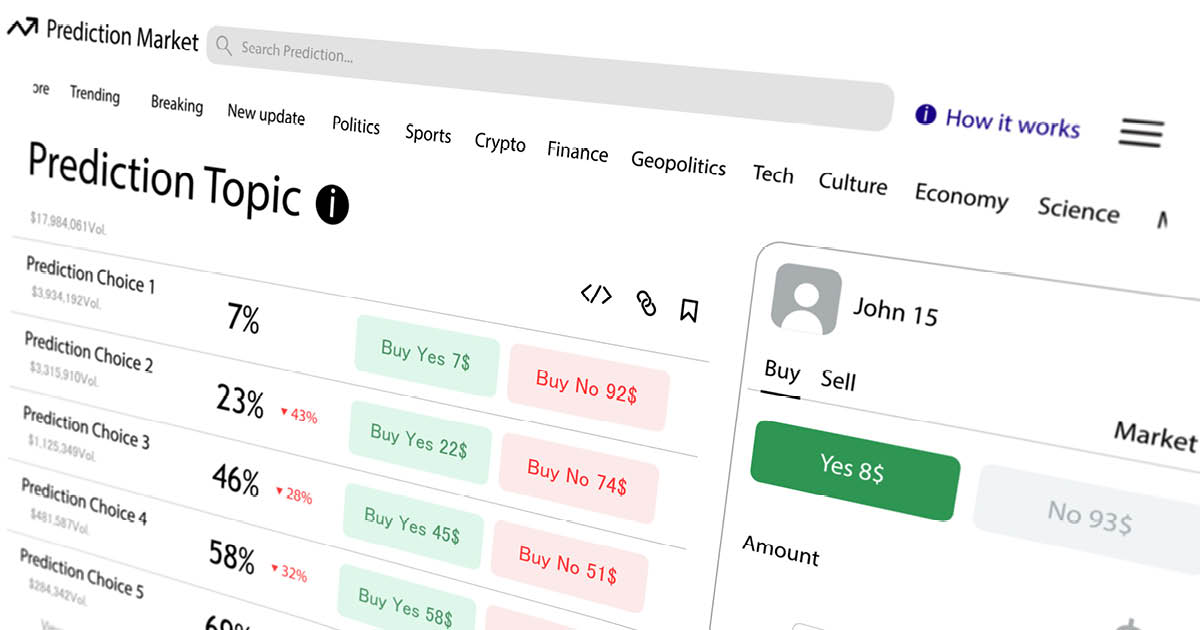
Prediction markets are platforms where users buy and sell shares on the future outcomes of events across a variety of subjects, like entertainment, sports, politics and technology.

Prediction marketplaces like Polymarket could adversely impact trials’ validity and participation. Image: Adobe Stock
According to Matthew Vogel, MBA, a professor of health policy at Brown University, and colleagues, online prediction markets like Kalshi and Polymarket are introducing betting on drug development outcomes such as “whether POLARIS-AD, a phase 3 trial of the experimental Alzheimer’s drug AR1001, will meet its primary endpoint.”
Kalshi in particular has “contracts on endpoints in large, late-stage trials but is considering broadening its scope to include earlier-phase trials and additional outcomes, such as the number of reported adverse events for a drug,” Vogel and colleagues wrote in a perspective in The New England Journal of Medicine.
Prediction marketplaces are seeing rapid growth, generating $50 billion in trading in 2025, according to the authors.
“It’s an unknown territory,” Vogel told Healio. “We’ve never had anything like it before.”
Concerns about prediction markets
Vogel said there is real concern about how prediction markets could affect the processes and results of clinical trials. One worry, of course, is the manipulation of trials in order to profit.
The stakes of betting on a clinical trial are much higher than those of football games or daily temperatures, Vogel said, as participants and researchers may influence trial results by changing their behavior based on the odds.
“You want to have real equipoise for a clinical trial, and also perceived equipoise,” he said.
For example, high or low probabilities early in a trial could affect perceptions of whether a treatment will work, potentially drawing people toward some trials and away from others.
The amount of information in a market, which influences the accuracy of probabilities, can play a role as well.
“If you have a market that’s trading on good information, where there’s a lot of liquidity, the price is going to be more accurate,” he said.
For a clinical trial, Vogel cautioned that people with limited knowledge on the drug or intervention could influence public predictions, which patients may encounter online when deciding whether to join a trial.
Thus, clinicians may need to explain to patients why probabilities “shouldn’t be mistaken for an individual patient’s likelihood of having a response to a drug,” Vogel and colleagues wrote.
Although accurate probabilities could potentially speed the development of effective drugs “and redirect resources away” from unsuccessful drugs, inaccurate predictions could mislead patients and affect trial participation, adherence, dropouts and crossovers, Vogel said.
Prices are not scientific measures
Vogel said prediction-market prices reflect what traders are willing to pay based on their knowledge and expectations in the moment. Although these prices can be interpreted as probabilities, “it’s important to understand these are not a scientific measure,” he said.
Prediction markets have historically performed well, Vogel added, but their accuracy must be evaluated against other forecasting methods.
“These markets will not necessarily be right,” he said. “At best, the strongest claim you can make about them is that they will be more accurate than the next best alternative.”
To address concerns about how betting can influence clinical trials, Vogel and colleagues said regulators, including the U.S. Commodity Futures Trading Commission and the FDA, could establish a “transparent rulemaking process focused on risks to clinical trial integrity.”
“Clinical trial contracts should be reviewed individually by regulators before being traded on betting platforms,” they wrote. “For each trial, platforms could be required to identify all people with access to nonpublic information about the trial and prevent them from trading.”
The authors also recommended restricting betting on small trials, “in which trading could more readily influence trial-related conduct or outcomes.”
“In addition, contracts shouldn’t be tied to measures that are easy to manipulate,” they wrote. “For example, Kalshi’s proposal to allow users to bet on whether a certain number of drug-specific reports are made to the FDA’s Adverse Event Monitoring System is problematic, since anyone can submit such a report.”
For more information:
Matthew Vogel, MBA, can be reached at primarycare@healio.com.

Ask a clinical question and tap into Healio AI’s knowledge base.
- PubMed, enrolling/recruiting trials, guidelines
- Clinical Guidance, Healio CME, FDA news
- Healio’s exclusive daily news coverage of clinical data