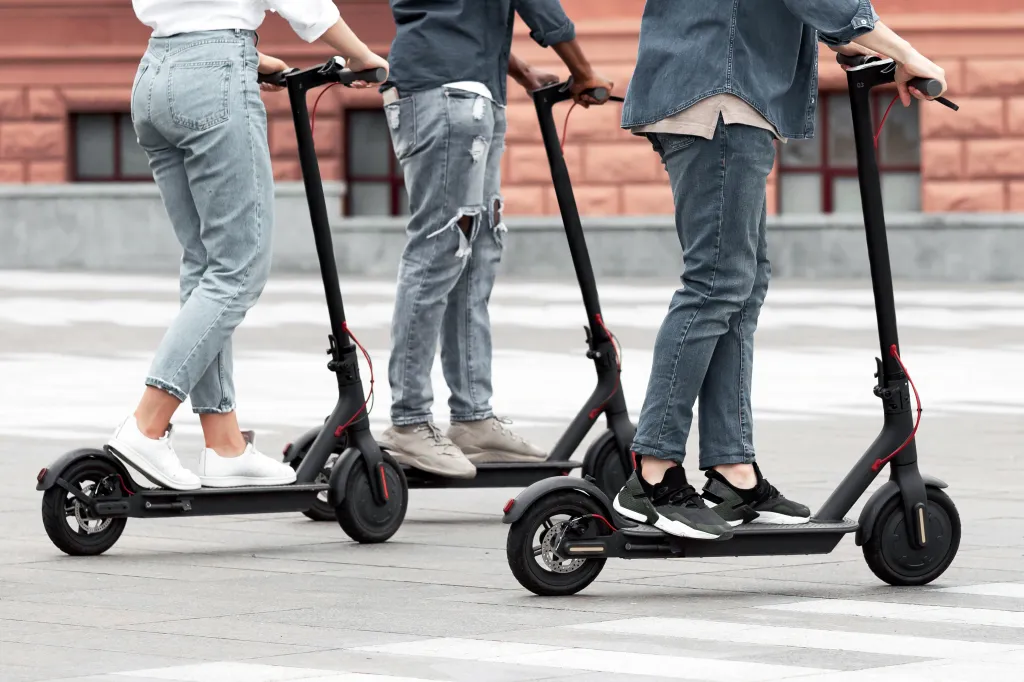
It’s no secret why e-scooters and e-bikes are so popular, especially with kids and teens. Easy-to-ride, convenient, quick — you won’t get bogged down in traffic jams or lose your breath pedaling up a hill, and there’s no driver’s license required. And now that they’re rentable through companies like Citi Bike and Lime, hitching a ride is as easy as picking a bike or scooter off the street.
But as e-bikes and e-scooters get more popular, more kids and teens are getting hurt on them. Since 2023, the rate of e-bike and e-scooter injury-related visits to the emergency room increased 7.5-fold among children and adolescents, according to research from health data and analytics company Truveta.

Related story
An Opioid That’s ’10 Times More Potent Than Fentanyl’ Is Showing Up on College Campuses
For Dr. Brian Coates, it’s a concerning trend. “The barrier to entry to these devices was quite significant when they first came out, and now they’re ubiquitous,” says Coates, the Service Line Medical Director of Trauma & Surgical Services at Saint Alphonsus Health System, a member of Trinity Health. “Every kid has a smartphone, easily can download the app, and typically afford the price of the entry.”
And while Coates says he does see many minor injuries — fractures, cuts, scrapes and bruises — he also treats a large number of head and neck injuries. “There is a significant portion of them that do turn into major injuries that require prolonged hospitalizations, procedures, and can actually lead to devastating, negative lifelong outcomes,” he says.
The numbers back that up. The Truveta data found that more than one-third of e-bike and e-scooter injury-related ER visits among children and adolescents resulted in a head or neck injury diagnosis. In particular, traumatic brain injuries represented 7 percent of the ER visits.
“What we’re seeing are not necessarily traditional bike type of injuries,” Coates says. “We’re seeing injuries that are more consistent with what we would see in motorcycle crashes.” That means more fractures and more significant head injuries. Coates calls these “high-energy injuries,” because e-bikes and e-scooters go faster than traditional bikes or scooters, with top speeds range from 20 to 28 miles per hour.
While speed is one reason for the uptick in injuries, Coates says unfamiliarity is another. “They’re not used to navigating these devices,” he says. “They’re not used to how quickly they accelerate. They’re not used to stopping them.”
Not wearing helmets is another major issue. Helmet use on e-bikes has declined over recent years, even as e-bike use has surged. As Coates points out, the convenience of rentable e-bikes and e-scooters might be part of the problem. Kids and teens might leave their house not knowing they’re going to grab an e-bike or e-scooter later, so they don’t bring a helmet on the way out.
For the most part, Coates says the kids and teens he treats for e-bike or e-scooter injuries were using substances and lose control of the their device. Other riders may be struck by motor vehicles. Pedestrians can also be hit and injured by e-bikes or e-scooters. Coates points to the fact that many people ride these devices in the middle of busy streets or sidewalks in areas without bike lanes, increasing the risk of injury.
For parents, Coates says, the important thing is education — making sure your kids know how to ride e-bikes and e-scooters safely. Here are some key safety tips to pass along:
- Always wear a helmet
- Don’t ride with another friend on the e-scooter or e-bike
- Ride in bike lanes as much as possible
- Obey traffic laws and yield to pedestrians
- Use front and rear lights at night and wear bright, reflective clothing
- Don’t use your phone or wear earbuds or headphones while riding
- Don’t ride an e-bike or e-scooter if you’ve been drinking or using other substances
“The discussion that I have with my children is to be transparent with the risks of utilizing these devices, and to make sure that they understand that there is danger involved,” Coates says. “As parents, I think it’s important to make sure that we have that open line of communication with our kids, and always encourage them to, if they’re going to use these devices, to do so in a safe manner.”