October 19, 2026
3 min read

Click here to read the Healio Exclusive, “Practice good ergonomics early in career to avoid work-related injuries.”
Now that I am in the middle of my career and approaching 51 years old, I feel like my body does not bounce back as well as it used to.

I feel more tension in my back and sometimes in my shoulders. I used to be able to see patients all week, operate and feel great. I would not say I feel terrible at the end of the week, but I also know there has been a change over the last couple of years.
As I have gotten more established in my career, I have gotten busier. I am doing longer surgery days and more cases, and that certainly plays a role. When I first started out, especially as someone in an academic setting, I was not super busy, and I had more time between cases. Now, I am jumping between rooms and always on the go on a surgical day.
I have come to understand that ergonomics cannot be something I think about only during surgery. It has to be something that I am aware of all week long when I am seeing patients at the slit lamp, doing YAG lasers or performing other tasks. That all requires being mindful of ergonomics.
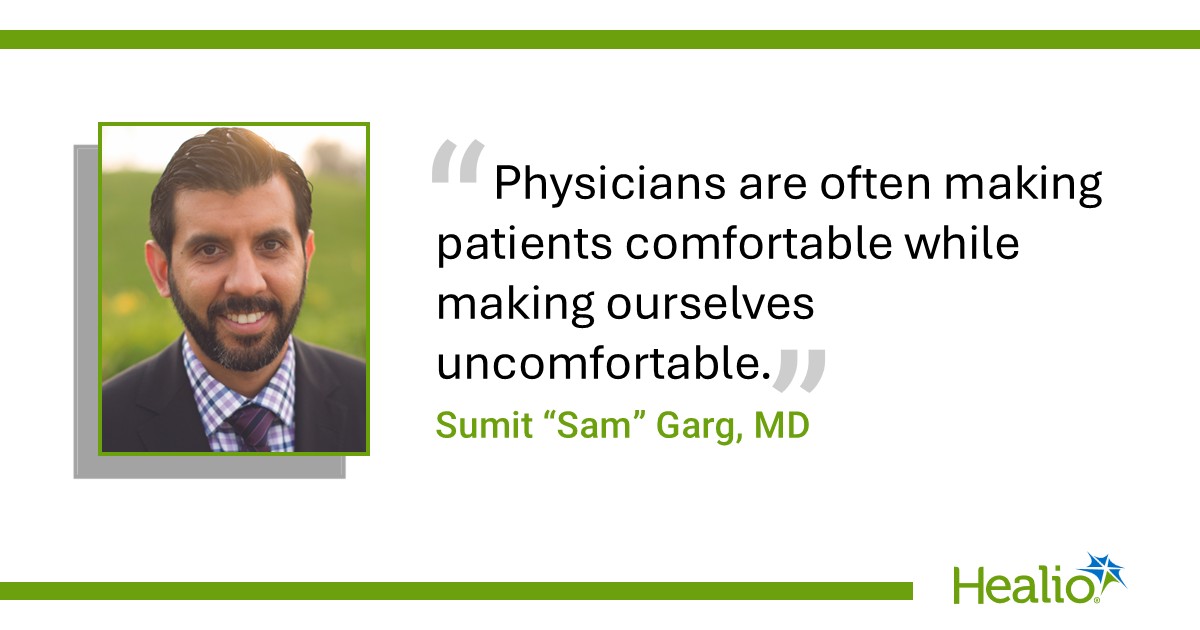
Physicians are often making patients comfortable while making ourselves uncomfortable, but it is important to have a happy medium. I often ask patients to meet me in the middle and say, “Let’s make sure you’re as comfortable as you can be and I’m as comfortable as I can be so I can help you.” If they have trouble accommodating you, you can have family or a staff member help them sit up at the slit lamp so you are not overextending your neck and back.
I try to be consistent with setup during surgery, including bed height, distance from me to the patient and distance from the oculars, but it can be a challenge. Not every patient can accommodate that. Recently, I had a patient whose cervical spine was completely fused, and in order to get him partially flat, we had to put him into the Trendelenburg position so his feet were up and his head was low. I was sitting low, and it was an awkward surgery to get through. Being more cognizant of my ergonomic habits in routine cases helped me to get through that case.
One of the things that has made the biggest difference is finding out where the pain is coming from. A good friend is a physical therapist, and I had the chance to ask him why I was having so much lower back soreness and tightness. He told me it was my hips and gave me tips for stretches I could do. This helped me open up my hips and alleviate some of the tension. I should be doing this every day, and I try to do it at least a few times a week. There are some days that I come home and I will stretch while I am sitting and talking to my wife or watching a ball game. I will get on the floor in front of the TV and just do some stretches. Making that change has made a big difference in my lower back discomfort.
I have also been trying to be more mindful as I get a little older by transitioning my exercise routine from more cardio to more strength training. I wanted to see if that helped me be a little more resilient, not just for work but for all aspects of life. As we get a little bit older, incorporating strength training is a way to maintain good health and longevity.
When I work with young doctors, I try to impart that they have to develop these habits because it is not easy to fix the damage that can come from repetitive movements.
For more information:
Sumit “Sam” Garg, MD, a Healio | OSN Cataract Surgery Board Member, can be reached at gargs@hs.uci.edu.
Sources/Disclosures
Source:
Healio Interviews
Disclosures:
Garg reports no relevant financial disclosures.

Ask a clinical question and tap into Healio AI’s knowledge base.
- PubMed, enrolling/recruiting trials, guidelines
- Clinical Guidance, Healio CME, FDA news
- Healio’s exclusive daily news coverage of clinical data