October 20, 2026
2 min read
Key takeaways:
- Studies indicate associations between PPI use and adverse events.
- There was no difference in all-cause mortality between users and nonusers.
- Long-term acid suppression may be a modifiable risk factor.
PHOENIX — Adults with asthma who used proton pump inhibitors had greater risks for exacerbations and other negative outcomes than those who did not, according to an abstract presented at the CHEST Annual Meeting.
However, the difference in mortality between patients who did or did not use proton pump inhibitors (PPIs) was not statistically significant, Joshua P. Le, MD, resident, Allegheny Health Network, and colleagues wrote.

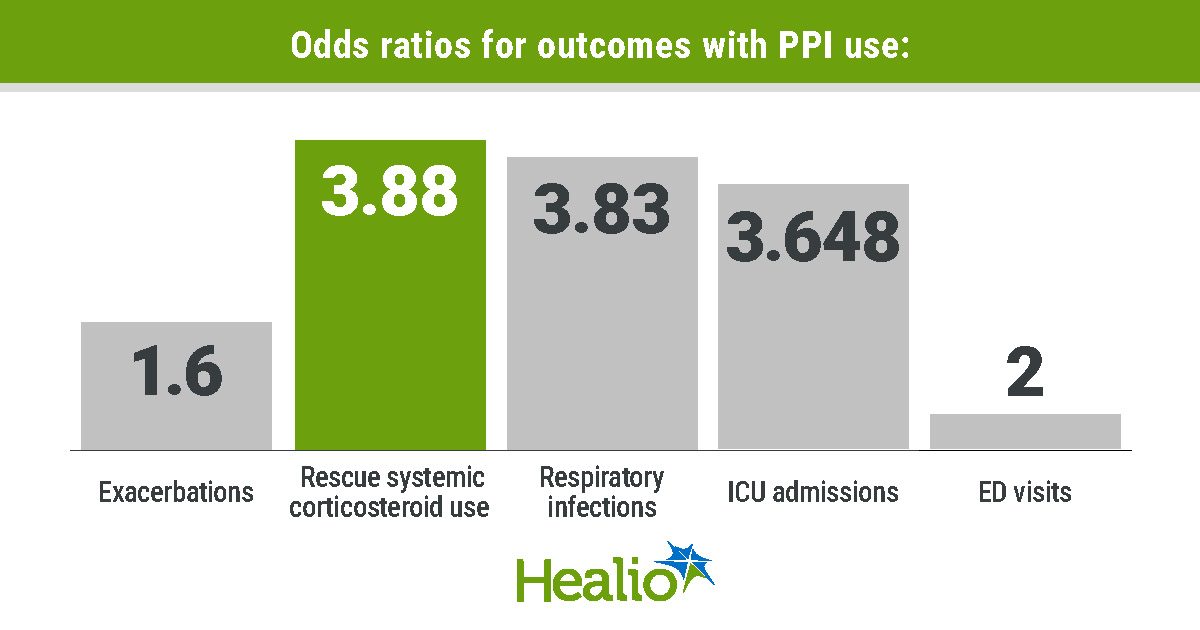
Data derived from Le JP, et al. Empiric chronic proton pump inhibitor use is associated with increased exacerbations in biologic-treated difficult-to-treat asthma: A propensity-matched US cohort study. Presented at: CHEST Annual Meeting; Oct. 18-21, 2026; Phoenix.
Although some patients with nocturnal symptoms of asthma and coexisting reflux have benefited from PPI treatment, the researchers said, evidence for associations between PPI use and infectious and systemic adverse events has been growing.
The retrospective study included adults with asthma treated with biologics between 2014 and 2025 in the TriNetX U.S. Collaborative Network. Treatment included benralizumab (Fasenra, AstraZeneca), dupilumab (Dupixent; Sanofi, Regeneron), mepolizumab (Nucala, GSK), omalizumab (Xolair; Genentech, Novartis), reslizumab (Cinqair, Teva) and tezepelumab (Tezspire; AstraZeneca, Amgen). The researchers defined persistent exposure to PPIs as repeated prescriptions from 3 to 6 months and from 6 to 12 months.
Prior to matching, the PPI group vs. no PPI group was older (58.3 years vs. 48.1 years) and had a greater proportion with comorbidities (21.1% vs. 13.9%) and diabetes (10.8% vs. 13.9%). Matching yielded 1,228 patients in each group with “well-balanced baseline characteristics,” according to the researchers.
At 1 year, a significantly greater proportion of patients in the PPI group vs. the no PPI group had asthma exacerbations (31.9% vs. 22.6%; OR = 1.6; 95% CI, 1.34-1.92), required rescue systemic corticosteroids (72% vs. 40%; OR = 3.88; 95% CI, 3.27-4.59), had respiratory infections (8.4% vs. 2.3%; OR = 3.83; 95% CI, 2.52-5.82), had ICU admissions (4.3% vs. 1.2%; OR = 3.648; 95% CI, 2.04-6.5) and had ED visits (15.6% vs. 8.4%; OR = 2; 95% CI, 1.56-2.58).
The researchers did not note any statistically significant differences in all-cause mortality between patients with vs. without PPI use.
Based on these findings, the researchers concluded that patients who used biologics for asthma that was difficult to treat as well as PPIs were at greater risk for negative outcomes with no benefits in mortality rates.
The researchers attributed these risks to the impact of long-term acid suppression on the microbiome, making these patients more vulnerable to respiratory pathogens, which would be a modifiable risk factor.
“Clinicians should carefully reassess the necessity of chronic PPI therapy in biologic-treated asthma patients without clear ulcer-related indications,” Le said in a press release.
Patients often continue PPI use after their symptoms have resolved and there is no longer an objective need for it, he continued.
“Proactive medication reconciliation, clear documentation of indication, and structured deprescribing strategies may reduce unnecessary long-term exposure and help mitigate preventable morbidity in this vulnerable population,” Le said.
Sources/Disclosures
Source:
Le JP, et al. Empiric chronic proton pump inhibitor use is associated with increased exacerbations in biologic-treated difficult-to-treat asthma: A propensity-matched US cohort study. Presented at: CHEST Annual Meeting; Oct. 18-21, 2026; Phoenix.
Reference:
Disclosures:
Healio could not confirm relevant financial disclosures at the time of publication.

Ask a clinical question and tap into Healio AI’s knowledge base.
- PubMed, enrolling/recruiting trials, guidelines
- Clinical Guidance, Healio CME, FDA news
- Healio’s exclusive daily news coverage of clinical data