October 21, 2026
2 min read

Key takeaways:
- Antidrug antibodies to IV infliximab can compromise reintroduction after treatment interruption.
- Favorable outcomes were observed with subcutaneous delivery, regardless of antidrug antibody status.
NASHVILLE, Tenn. — Antidrug antibodies did not appear to negatively affect outcomes in patients with inflammatory bowel disease after initiation of subcutaneous infliximab following a “drug holiday,” according to a presenter.
Results of a post-hoc analysis presented at ACG Annual Scientific Meeting also showed serum infliximab (Zymfentra, Celltrion) concentrations increased over time after subcutaneous initiation, regardless of antidrug antibody (ADA) status.

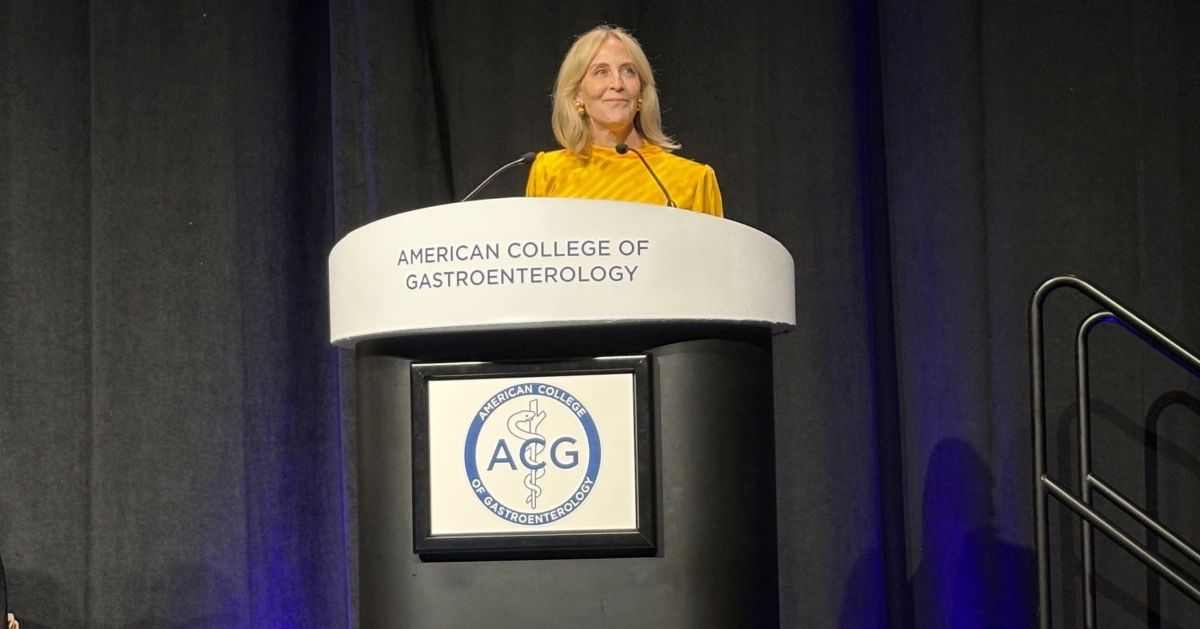
Marla C. Dubinsky, MD, speaks at the podium during ACG Annual Scientific Meeting. Photo: Heather Biele.
Patients with IBD may need to halt treatment — also called a “drug holiday” — for a number of reasons. While the impact of reintroducing IV infliximab is well documented, little is known about the effects of subcutaneous delivery.
“A drug holiday for anti-TNF when given IV can be associated with increased immunogenicity and less efficacy after attempted reintroduction, impacting the likelihood of success of this strategy,” Marla C. Dubinsky, MD, chief of pediatric gastroenterology and nutrition at Mount Sinai Kravis Children’s Hospital and codirector of the Susan and Leonard Feinstein Inflammatory Bowel Disease Clinical Center at Icahn School of Medicine, told Healio.
“The purpose of this analysis was to explore whether the reintroduction of anti-TNF delivered subcutaneously, not intravenously, improved the likelihood of success and improved efficacy outcomes,” she added.
Dubinsky and colleagues analyzed data from LIBERTY-CD and LIBERTY-UC trials, in which patients who responded to IV infliximab induction at 10 weeks were randomly assigned to biweekly subcutaneous infliximab 120 mg or placebo through week 54. Failure to respond at week 22, as well as physician discretion, could prompt escalation to 240 mg subcutaneously through week 102.
Detection of ADAs at least once from the start of maintenance at week 10 to initiation of subcutaneous infliximab at weeks 22 to 54 was deemed a positive ADA status.
Results showed nearly three-quarters (72.5%) of patients who received placebo and initiated subcutaneous infliximab 240 mg in LIBERTY-CD were ADA positive, as were 92.2% of those in LIBERTY-UC.
The median interval from last IV infusion to subcutaneous maintenance initiation was 16 weeks for ADA-positive and ADA-negative individuals in both trials.
The researchers reported similar outcomes among patients with CD and UC, regardless of ADA status.
Clinical response was achieved by approximately 8 weeks and maintained through weeks 78 to 80 in ADA-positive (93.3%) and ADA-negative (90.3%) patients with CD, as was clinical remission (86.7% and 81.8%, respectively).
Partial clinical response was achieved by ADA-positive and ADA-negative participants with UC at the same timepoints (96.2% and 100%), as was partial clinical remission (69.2% and 100%).
Clinical response and remission rates were 79.3% and 62.1%, respectively, among ADA-positive patients with UC compared with 100% and 66.7% among ADA-negative ones.
“Many people who received subcutaneous infliximab after IV induction recaptured response, and both drug concentrations and efficacy were not impacted by antidrug antibodies pre- or post-reintroduction after a drug holiday,” Dubinsky said.
In both trials, C-reactive protein levels fell at approximately week 8 and were sustained through weeks 78 to 80, regardless of ADA status, as did fecal calprotectin levels, which were initially measured at week 32. Serum levels of infliximab increased in ADA-positive and ADA-negative patients.
The proportion of ADA-positive individuals declined over time after the introduction of subcutaneous infliximab 240 mg, dropping to 66.7% in CD and 65.5% in UC at weeks 78 to 80.
“Infliximab is an excellent therapy,” Dubinsky told Healio. “Patients may have cycled through many other drugs but report they felt the best on infliximab. We now may have a more effective and safer way to reintroduce the drug to patients.”
For more information:
Marla C. Dubinsky, MD, can be reached at gastroenterology@healio.com.
Sources/Disclosures
Source:
Dubinsky MC, et al. Impact of prior anti-drug antibody status on clinical outcomes following subcutaneous infliximab initiation after intravenous infliximab interruption: A post hoc analysis of LIBERTY‑CD and ‑UC studies. Presented at: ACG Annual Scientific Meeting; Oct. 12-14, 2026; Nashville, Tenn. (hybrid meeting).
Disclosures:
Dubinsky reports consulting roles with AbbVie, Abivax, AstraZeneca, Boehringer Ingelheim, Bristol Myers Squibb, Celltrion, Eli Lilly & Co, Janssen, Johnson & Johnson, Merck, Pfizer, Prometheus Labs, Sanofi, Spyre and Takeda Pharmaceuticals; grant or research support from AbbVie and Janssen; and a licensing agreement with Takeda. Please see the study for all other authors’ relevant financial disclosures.

Ask a clinical question and tap into Healio AI’s knowledge base.
- PubMed, enrolling/recruiting trials, guidelines
- Clinical Guidance, Healio CME, FDA news
- Healio’s exclusive daily news coverage of clinical data