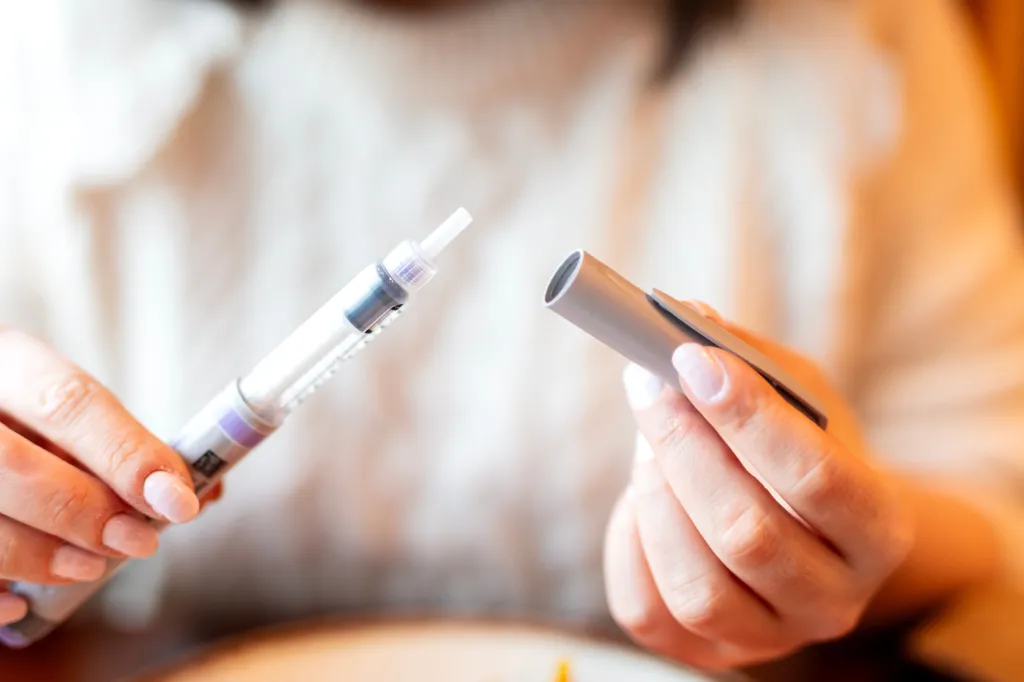
Weight-loss drugs like GLP-1’s have boomed in popularity over the last few years, despite the very real side effects, which range from hair to severe gastrointestinal distress. Now, a new class of medications —amylin-based weighty loss drugs — are showcasing a different path forward.
A new international study found that people taking one such drug, petrelintide, lost weight while avoiding the type of digestive side effects (like nausea, vomiting, constipation and diarrhea) that can often derail treatment for those using GLP-1s. For those of us who are interested in the benefits of a weight-loss drug but not so jazzed about the GI distress that comes with options like Ozempic, Wegovy, or Mounjaro, it’s welcome news — but the study found that amylin-based drugs may not be quite equal when it comes to the amount of weight coming off.

Related story
John Goodman Opens Up About Weighing Nearly 400 Pounds and the ‘Vicious Cycle’ of Drinking
What are amylin-based obesity drugs, and what is petrelintide?
Amylin-based obesity drugs use an analogue of a hormone, amylin, released by the pancreas alongside insulin, per Yale Medicine. Amylin regulates your blood sugar and gives you a feeling of fullness by slowing down the rate at which food leaves your stomach, which helps to suppress your appetite. The effects are similar to a GLP-1 medication, but they work via different mechanisms: amylin-based drugs use an analogue of the pancreatic hormone amylin, while GLP-1s mimic or amplify the effect of glucagon-like peptide-1, which is released by your liver.
Petrelintide is a once-weekly injectable amylin analogue drug highlighted in the new study, a medication developed by Zealand Pharma in partnership with Roche. While reporting around the study highlighted how its side effects and weight loss matched up against GLP-1 drugs, the drugs haven’t been compared in a head-to-head trial. Still, we’re able to draw a few tentative conclusions from the research.
What did the study find?
The recent study on petrelintide, ZUPREME-1, was released in September as a randomized, double-blind, placebo-controlled Phase 2 dose-finding trial (funded by Zealand Pharma, the makers of petrelintide). It was conducted at 32 sites internationally, including public hospitals and private clinics in countries like the US, Poland, and Romania, and included 485 participants with obesity, with a mean BMI of 36.7 to 37 kg/m2, and a mean body weight of about 107 kg (235 pounds). The participants’ mean age was 48.
The study found that after 42 weeks on petrelintide, participants had lost about 10% of their starting weight, on average, compared to just 1.7% for those participants on the placebo. Specifically, participants on the smaller, one-milligram dose lost 8.7% of their bodyweight, versus 10.5-10.7% on the seven-milligram dose. All participants (including those on the placebo) also received counseling on weight loss through diet and at least 150 minutes of exercise per week.
The weight loss is lower than what patients on GLP-1’s typically lose. Per Drugs.com, people on semaglutide (like Ozempic and Wegovy) often lose, on average, 15-19% of their bodyweight; for people on tirzepatide (like Zepbound), it’s around 20-21%. But notably, the study participants on pertrelintide lost this weight without experiencing some of the grueling side effects that often come with GLP-1s. The less significant weight loss might be the tradeoff for lighter side effects.
So what were the side effects of petrelintide?
The study found that petrelintide’s most common side effect was nausea, which was experience by 20% of participants on the drug (versus 6% on the placebo). Other side effects included vomiting (3% of petrelintide users) and diarrhea (7% of petrilintide users). But the researchers also found that at the maximally effective dose of pertrelintide (that seven-milligram mark), there was no vomiting reported at all — and none of the participants had to discontinue treatment due to GI side effects.
“Rates of nausea with petrelintide are less than half of those observed with GLP-1 medications,” noted lead researcher Timothy Garvey, MD, of the University of Alabama at Birmingham, in an interview with HCPLive. “Rates of constipation, diarrhea, and vomiting roughly approximated those observed in placebo,” he continued. “This is a well-tolerated medication.”
The side effect conversation is an important one. The gastrointestinal side effects caused by GLP-1’s lead to 41% of users to suffer in silence, self-adjust the medications, or even stop taking them altogether, according to a national survey from Oshi Health.
What happens next?
Petrelintide isn’t yet approved by the FDA, so it’s not available yet in the US, and these results still need to be reproduced in further trials. But the news is looking positive: in phase 2b trial results released earlier this month, 220 people with overweight or obesity and type 2 diabetes reported losing up to 9.5% of their bodyweight over 28 weeks, compared to 2% with placebo. The next step is to test the drug again in a Phase 3 trial.
It’s also worth noting again that we don’t know how petrelintide performs in a head-to-head trial versus a GLP-1 drug — we can only compare studies of both drugs done separately. Still, if a weight-loss drug with potentially less intense side effects than a GLP-1 is piquing your interest, it’s worth keeping an eye on petrelintide and talking to your doctor if it does become available.