October 27, 2026
2 min read

Key takeaways:
- Medicaid expansion did not markedly lower IBD mortality, despite a smaller increase in expansion states.
- Improved specialist access and biologic drug availability may be needed to reduce IBD mortality.
NASHVILLE, Tenn. — Medicaid expansion did not appear to reduce inflammatory bowel disease-specific mortality over a 26-year period, according to a presenter at ACG Annual Scientific Meeting.
However, researchers noted these findings should not minimize the benefits Medicaid coverage provides patients with IBD.

“What stood out to me was the importance of interpreting that result within the outcome we measured,” Daniyal Raza, MD, assistant professor of medicine at LSU Health Shreveport, told Healio. “Mortality is a consequential endpoint, but it captures only one part of living with IBD. Our study does not tell us whether patients experienced better symptom control, fewer hospitalizations, more consistent treatment or improved quality of life.
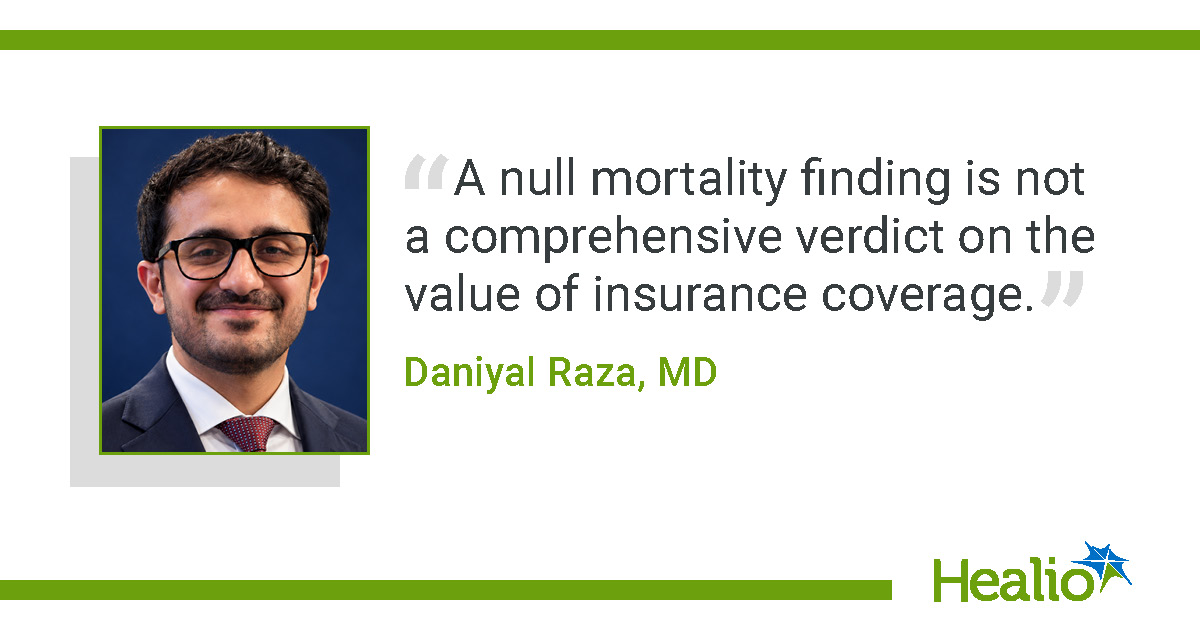
“A null mortality finding is not a comprehensive verdict on the value of insurance coverage,” he added.
Raza and colleagues conducted a retrospective, state-level difference-in-differences (DiD) analysis to determine whether Medicaid expansion was linked to change in IBD-related mortality over time. They used CDC death certificate data attributed to Crohn’s disease or ulcerative colitis and included all ages in the analysis.
“The question grew out of a practical concern: Patients with IBD need sustained access to care, but obtaining insurance does not necessarily end the difficulties they face getting treatment,” Raza said. “Prior authorization denials, appeals and delays in starting medications can remain obstacles.”
Analysis included 21 states, which were grouped by those that expanded Medicaid coverage by January 2016 (n = 14) and those that had not through 2024 (n = 7).
The researchers compared mean age-adjusted IBD mortality per 100,000 deaths between the two groups prior to expansion (1999-2013) and after expansion (2017-2024), excluding years 2014 to 2016 to allow for stabilization in Medicaid enrollment and use.
Results showed states that expanded Medicaid coverage had a smaller increase in IBD mortality compared with states that did not expand coverage (relative change, +1% vs. +4.9%), but the difference was not statistically significant (DiD = 0.005; 95% CI, –0.022 to 0.031).
A secondary analysis of individuals aged 15 to 64 years, using data pooled from 2007 to 2013 and from 2018 to 2024, also showed a smaller increase in IBD mortality in expansion states (+1.2% vs. +17.5%), which did not reach statistical significance.
The researchers acknowledged study limitations, including use of state-level data rather than patient-level data, and differences in pre-expansion trends.
“Our study did not demonstrate a mortality difference associated with Medicaid expansion, but it should not be interpreted as evidence that coverage is unimportant,” Raza told Healio. “For GI practices, the practical focus remains identifying where care gets interrupted: an authorization awaiting approval, an unaffordable prescription or difficulty arranging follow-up.
“The question I would bring back to clinic is: Once a patient has coverage, what is still preventing them from receiving effective care?” he added.
For more information:
Daniyal Raza, MD, can be reached at daniyal.raza@lsuhs.edu.
Sources/Disclosures
Source:
Raza D, et al. Medicaid expansion and IBD mortality: A state-level difference-in-differences analysis, 1999-2024. Presented at: ACG Annual Scientific Meeting; Oct. 12-14, 2026; Nashville, Tenn. (hybrid meeting).
Disclosures:
Raza reports no relevant financial disclosures. Please see the study for all other authors’ relevant financial disclosures.

Ask a clinical question and tap into Healio AI’s knowledge base.
- PubMed, enrolling/recruiting trials, guidelines
- Clinical Guidance, Healio CME, FDA news
- Healio’s exclusive daily news coverage of clinical data