October 28, 2026
2 min read
Key takeaways:
- Over 65% of women in one of the three phases of menopause have bloating and gas above the normal severity range.
- In the study’s next steps, researchers will look at the correlation between GI symptoms and anxiety.
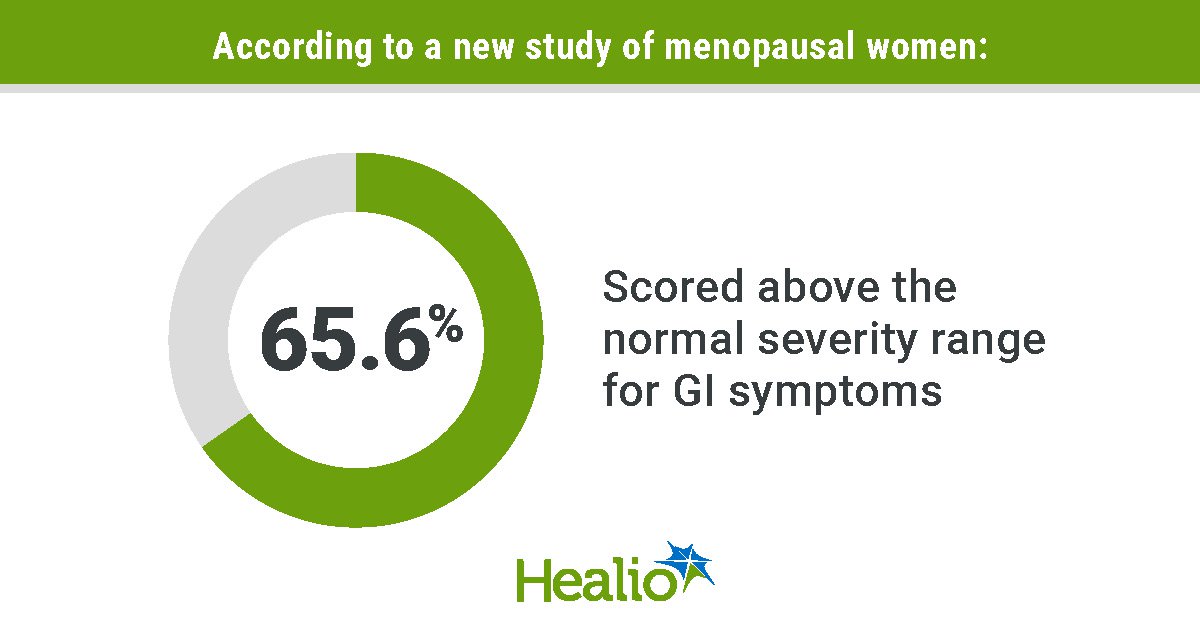
Excessive bloating and gas are prevalent gastrointestinal symptoms in women throughout the menopause trajectory, with 65.6% of participants in a new study scoring above the normal severity range.
The study, conducted by a research team at the University of Calgary in Alberta, Canada, is aimed at better understanding the relationship between GI issues and anxiety for women in premenopause, perimenopause and postmenopause.

“Essentially, [menopausal women] have more severe bloating and gas compared with the normal value that we usually consider,” Sanjana Solomon, the study’s lead author, told Healio. “This was prevalent across all stages, meaning it included premenopause, perimenopause, and postmenopause, so this is something that is seen throughout and not just in a particular stage.”
The study included a cohort of 1,832 women aged 40 to 60 years and were premenopausal to postmenopausal. Participants filled out self-reported questionnaires, provided stool and blood samples, underwent physical and cognitive assessments, and participated in qualitative interviews.
The researchers analyzed the GI burden in the women and found that 65.6% scored above the normal severity range for bloating and gas, and this result was consistent throughout the menopause trajectory. They found that significantly fewer women scored above the normal range for other GI symptoms like constipation (23.3% above normal), diarrhea (13.6%), pain (19.6%) and nausea (10.2%).
Researchers also analyzed anxiety scores in the women, finding that 17.5% of the participants reported moderate to severe anxiety. The study showed that 14.6% of those women were in premenopause, and the prevalence of anxiety rose to around 19% during perimenopause and postmenopause.
This is the first phase of a multiyear study to further examine the association of GI symptoms and anxiety in the women in the cohort, according to Solomon.
“We hope to bring them in over the subsequent years to repeat these tests to understand how these changes occur in them individually long term and be able to make broader conclusions from that,” Solomon said, noting that is study is meant to establish a “baseline.”
The researchers believe there needs to be more investigation to fully understand the underlying mechanisms for GI symptoms and anxiety. The cohort is currently in its second year of testing, and the research team will continue its analysis by investigating the gut microbiota profiles of the study’s participants.
“We are trying to understand if these more severe gut symptoms are potentially attributed to more anxiety, or if more anxiety in individuals causes these bloating and gut symptoms,” Solomon said.
For more information:
Sanjana Solomon can be reached at primarycare@healio.com.
Sources/Disclosures
Source:
Solomon S, et al. Gastrointestinal symptoms are associated with anxiety across the menopause trajectory: Findings from the MOMENTUM Canadian menopause cohort. Presented at: Annual Meeting of the Menopause Society; Oct. 20-24; 2026; San Diego.
Disclosures:
Solomon reports funding from the Joan Synder Fund for Excellence in Kinesiology Research and the Canadian Institutes of Health Research.

Ask a clinical question and tap into Healio AI’s knowledge base.
- PubMed, enrolling/recruiting trials, guidelines
- Clinical Guidance, Healio CME, FDA news
- Healio’s exclusive daily news coverage of clinical data