October 30, 2026
4 min read
Key takeaways:
- Up to 2.4 million Americans are living with chronic HBV infection, but 70% are not aware.
- Only 30% of adults are vaccinated against HBV, and there have been recent substantial declines in the birth dose.
For this Liver Cancer Awareness Month, we must remember to universally administer the hepatitis B virus vaccine to newborns, children and adults to prevent liver cancer.
The hepatitis B virus (HBV) vaccine was the first anti-cancer vaccine to be developed, and universally administering the vaccine prevents liver cancer, particularly when given at birth.

Up to 2.4 million people in the United States are currently living with chronic HBV infection, which is a major risk factor for developing liver cancer, since up to one in four individuals with chronic HBV will develop cirrhosis, liver cancer and/or liver failure. However, 70% of people living with chronic HBV are not aware they are infected. Further, HBV infection can cause liver cancer to develop without the presence of cirrhosis, making regular liver cancer screening for those living with chronic HBV even more important, particularly since the 5-year survival rate for liver cancer is only 22%.
HBV is a highly transmissible virus, causing up to 90% of newborns who are exposed to HBV at birth to develop chronic HBV, and up to 25% of those with chronic HBV will die early due to complications from the virus, according to the American Academy of Pediatrics.
Universal administration of the safe and highly effective HBV vaccine at birth and during infancy has reduced childhood HBV infections by 99%. However, only 30% of adults are vaccinated against HBV, and there have been recent substantial declines in the birth dose of the HBV vaccine.
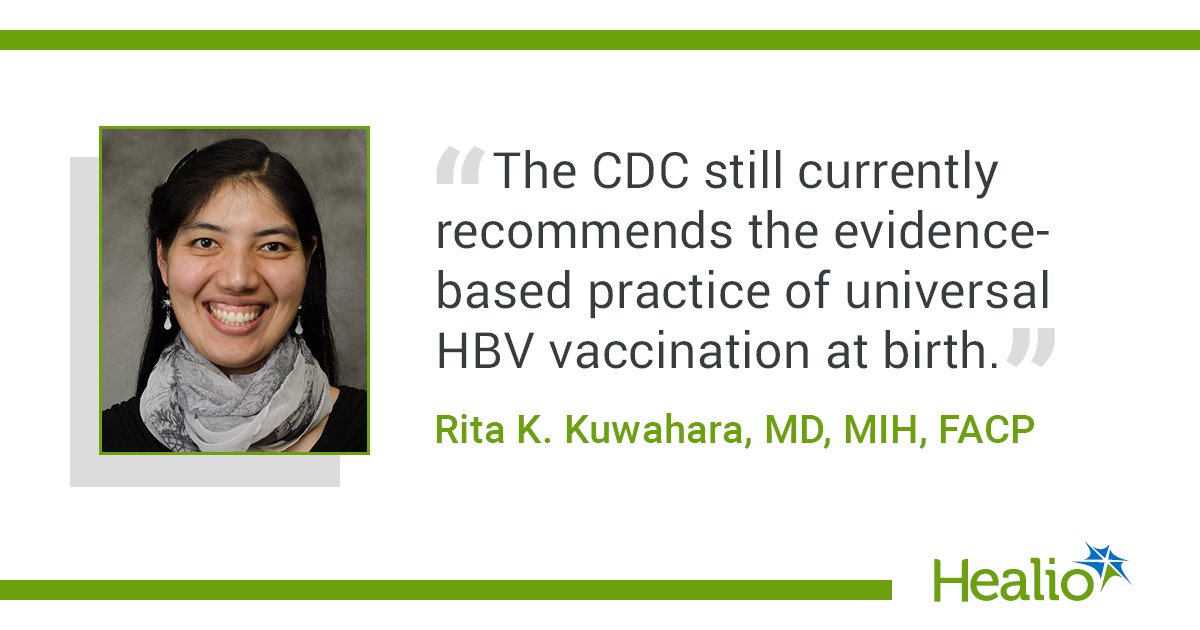
While there have been recent attempts to change the birth dose and childhood HBV vaccine schedule, it is important to know that the CDC still currently recommends the evidence-based practice of universal HBV vaccination at birth, as well as universal childhood and adult HBV vaccination in the United States.
The universal birth dose of HBV vaccination serves as a safety net to ensure all newborns are protected from developing HBV and associated liver cancer. This is a particularly important moment in the United States, since many individuals are experiencing loss of health insurance coverage due to changes in Medicaid eligibility and inability to afford the Affordable Care Act or other health insurance plans. Rural hospitals and birthing centers across the country are also closing or restricting services due to funding cuts. Together, these changes will prevent, fragment or interrupt access to prenatal care, and many pregnant individuals will not be able to access all aspects of clinically recommended prenatal care.
This loss of access to continuity of prenatal care can subsequently result in pregnant individuals not being appropriately screened for HBV during pregnancy or the HBV test results not being shared with the birthing facility. As a result, there will be a markedly higher risk for HBV transmission to infants at birth if they do not receive the HBV vaccine, highlighting the importance of universal birth dose of HBV vaccination.
In addition, certain populations are disproportionately affected by HBV and significantly benefit from universal HBV vaccination. For example, Asian Americans, Native Hawaiians and Pacific Islanders account for over half of chronic HBV cases in the United States, and approximately 60% of all liver cancer cases in the United States are among people of Asian descent. Further, Asian Americans were nearly five times more likely to die from HBV and Native Hawaiians and Pacific Islanders were nearly 10 times more likely to die from HBV infection than the overall population in the United States, according to the CDC. As a result, universal HBV vaccination ensures that all populations are provided protection from HBV infection to close gaps in disparate health outcomes.
Therefore, clinicians should continue to provide HBV vaccination to all newborns, children and adults, as recommended by the CDC and professional medical societies, including the American Academy of Pediatrics, the ACP and the American Academy of Family Physicians. For infants born to mothers with known HBV infection or unknown HBV status, clinicians should also administer HBV immune globulin and perform follow-up testing, as recommended by the CDC. In addition, clinicians should universally screen adults for HBV, as recommended by the CDC, and appropriately link all those who test positive for HBV to follow-up care.
Prioritizing universal HBV vaccination and screening will allow us to close gaps in care, prevent HBV infection and associated liver cancer through vaccination, ensure all those living with chronic HBV know their HBV status and are appropriately linked to care, and bring us closer to finally eliminating HBV in the United States.
For more information:
Rita K. Kuwahara, MD, MIH, FACP, is a primary care internal medicine physician and a member of the Healio Primary Care Peer Perspective Board. She can be reached at primarycare@healio.com.
Sources/Disclosures
Source:
Expert Submission
References:
- Bixler D, et al. Public Health Rep. 2023;doi:10.1177/00333549231175548.
- Clinical overview of perinatal hepatitis B. https://www.cdc.gov/hepatitis-b/hcp/perinatal-provider-overview/. Accessed Oct. 30, 2026.
- Clinical overview of viral hepatitis. https://www.cdc.gov/hepatitis/hcp/clinical-overview/index.html. Accessed Oct. 30, 2026.
- Committee on Infectious Diseases; Committee on Fetus and Newborn. Pediatrics;2017:doi.10.1542/peds.2017-1870.
- Conners EE, et al. MMWR Recomm Rep. 2023;doi:10.15585/mmwr.rr7201a1.
- Hepatitis B Foundation. https://www.hepb.org/prevention-and-diagnosis/vaccination/commonly-asked-questions. Accessed Oct. 30, 2026.
- Hepatitis B vaccination coverage among adults in the United States, 2023. https://www.cdc.gov/adultvaxview/publications-resources/adult-hepb-vaccination-coverage-2023.html. Published Feb. 26, 2026. Accessed Oct. 30, 2026.
- Hepatitis B vaccination is an essential safety net for newborns. https://publichealth.jhu.edu/2025/why-hepatitis-b-vaccination-begins-at-birth. Published Sept. 24, 2025. Accessed Oct. 30, 2026.
- Liver cancer survival rates. https://www.cancer.org/cancer/types/liver-cancer/detection-diagnosis-staging/survival-rates.html. Accessed Oct. 30, 2026.
- Liver disease and why it’s a concern for Asian Americans and Pacific Islanders. https://www.cuimc.columbia.edu/news/liver-disease-and-why-its-concern-asian-americans-and-pacific-islanders. Published Nov. 15, 2022. Accessed Oct. 30, 2026.
- Viral hepatitis and Asian populations. https://minorityhealth.hhs.gov/hepatitis-and-asian-americans. Accessed Oct. 30, 2026.
- Vyas Y, et al. Hawaii J Health Soc Welf. 2024 Feb;83(2):48–53.
Disclosures:
Kuwahara reports no relevant financial disclosures.

Ask a clinical question and tap into Healio AI’s knowledge base.
- PubMed, enrolling/recruiting trials, guidelines
- Clinical Guidance, Healio CME, FDA news
- Healio’s exclusive daily news coverage of clinical data