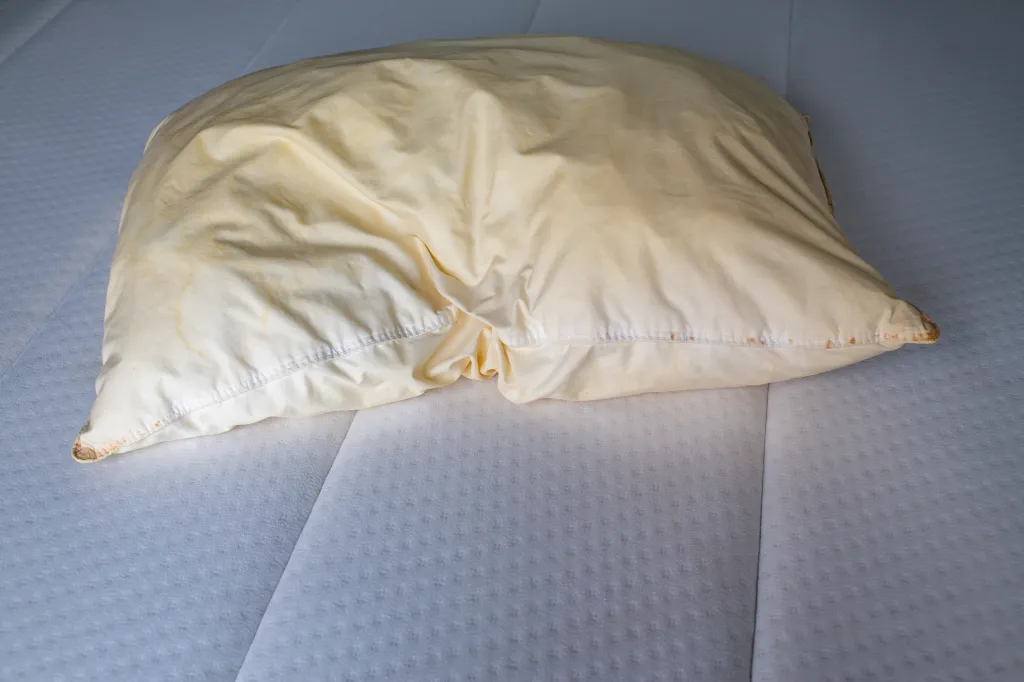
Your pillow can look pretty different once the case comes off.
Even if you’re consistent about washing your bedding, sweat, skin oils, and your nighttime moisturizer can make their way through the pillowcase. Over time, that buildup can leave yellow patches. It’s common, but those patches are a reason to give the pillow itself some attention, especially if you can’t remember when you last cleaned or replaced it.
What Causes Yellow Pillow Stains?
“Sweat, natural skin oils, saliva, dead skin cells, and moisture from wet hair gradually soak through the pillowcase and into the pillow, creating that familiar yellow discoloration over time,” board-certified dermatologist Dr. Shamsa Kanwal told Tom’s Guide.

Related story
Teen Screen Time Spikes in Summer. Here’s How to Bring It Down in Time for School
Sweat and sebum (your skin’s natural oils) oxidize when exposed to air, which contributes to yellowing. If you tend to get hot while you sleep, the extra sweat can make stains worse. Face creams, makeup, and leave-in conditioners can also leave residue, so a freshly washed pillowcase won’t necessarily keep everything from reaching the pillow itself.
As for how much moisture we lose overnight, ear, nose, and throat (ENT) surgeon Dr. Shawn Nasseri told The Healthy that we lose an estimated half a liter to a liter of water during eight hours of sleep, roughly one to two U.S. pints, through breathing and perspiration. The amount varies depending on factors like body size, metabolism, and room temperature.
Can Your Pillow Affect Your Skin and Allergies?
Your leave-in conditioner could be doing more than staining the fabric. According to the American Academy of Dermatology (AAD), oils in some conditioners and styling creams can clog pores and cause breakouts along the hairline, forehead, and neck. That residue can stick to bedding, too. When a hair-care formula is causing acne, the AAD recommends washing pillowcases and sheets and discontinuing the formula.
If you have eczema, the balance of bacteria on your skin can affect your symptoms. Research reviewed by the National Eczema Association found that higher levels of Staphylococcus aureus, a type of staph bacteria, were associated with more severe flares. That doesn’t mean a yellow pillow is to blame, but it helps explain why bacteria are part of the conversation about eczema.
Allergies are another reason to look after the pillow underneath the case. Dust mites thrive in warm, humid bedding, and their allergens can trigger sneezing, congestion, and asthma symptoms. If you’re allergic to dust mites, the American Academy of Allergy, Asthma & Immunology advises washing bedding weekly and using dust-mite-proof pillow covers. Look for that specific protection if you have a dust mite allergy; a standard washable protector isn’t necessarily allergen-proof.
How to Keep Your Pillow Cleaner
“I would wash pillowcases at least once a week, and more often if you sweat heavily, have oily or acne-prone skin, or use a lot of hair and skincare products,” Kanwal said. Let your skin, sweat, and bedtime routine guide whether you need to change it sooner.
She also recommends a washable pillow protector to help keep moisture and residue from reaching the filling. For skincare, she advises applying it at least an hour before bed.
“Products that have not fully absorbed before bed can transfer onto the pillowcase and eventually seep into the pillow,” Kanwal said. If moisturizer is usually your last step before climbing into bed, try applying it earlier in the evening.
Let your hair dry before bed when possible, too. Dampness trapped against the pillow can encourage bacterial growth and yellowing. Wash the pillow itself according to its care label — some can go in the machine, while others need spot-cleaning. Make sure it’s dry throughout before putting the case back on.
When Should You Replace Your Pillows?
According to the Sleep Foundation, most pillows should be replaced every one to two years, depending on material and care. Check yours sooner if the filling has become uneven or flattened and you’re waking with neck discomfort or struggling to get comfortable. Add noticeable yellowing to those support problems, and there’s a stronger case for replacing it.
There’s no universal stain cutoff that makes a pillow unsafe. Yellow patches usually reflect sweat, oils, and residue that have worked through the case, so start with weekly pillowcase washing and a washable protector. If the pillow still supports you and can be cleaned according to its label, discoloration alone doesn’t mean you need to buy a new one today.