November 03, 2026
3 min watch

Key takeaways:
- AMA sent a letter to the FDA urging more regulation of botanical products.
- Risks related to kratom usage should be taken “seriously.”
AMA wants the FDA to hold botanical products derived from substances such as cannabis and kratom to the same scientific standards they maintain for approving other conventional drugs.
In a letter to the FDA, John J. Whyte, MD, MPH, AMA CEO and executive vice president, noted AMA is “deeply concerned” about the widespread use of these “natural” products without research-based evidence, and “strongly recommends” the FDA regulate them and determine their efficacy through research and clinical trials.


Willie Underwood III
“As botanical manufacturers develop increasingly potent products in everything from gummies and powders to oils and injections, consumers are becoming the real-world guinea pigs — and suffering tragic consequences, including dependence, substance use disorders, overdose, and death,” AMA President Willie Underwood III, MD, MSc, MPH, said in a press release. “Calling something ‘natural’ doesn’t make it safe. We need science, not social media hype, to determine what belongs in our medicine cabinets.”
AMA “supports innovation in drug design and development,” but also “urge extreme caution” when products are marketed outside of the scientific process, including botanical health products, Whyte wrote.
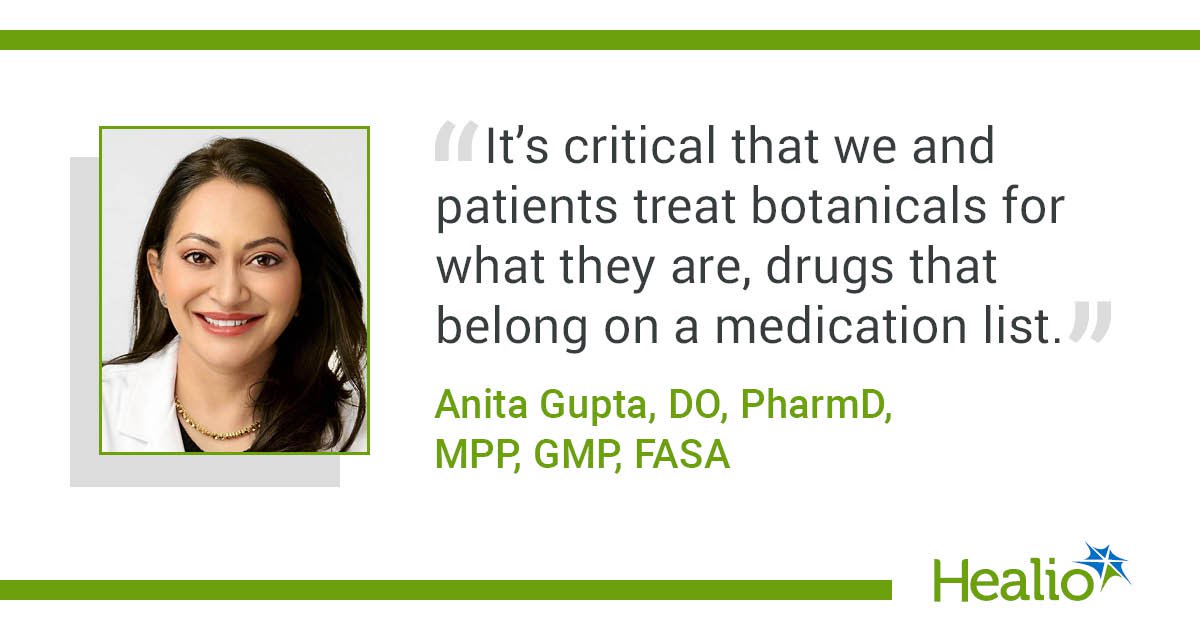
Anita Gupta, DO, PharmD, MPP, FASA, adjunct assistant professor of anesthesiology and pain medicine at Johns Hopkins School of Medicine, applauded AMA’s insistence on holding botanical drugs “accountable.”
“We need better standards across the board to ensure that we’re proving safety and efficacy for all ingested products,” she told Healio. “Day in, day out, patients come in to see their doctor, and they don’t routinely mention these products, herbal, botanical, natural, however you want to describe them, because they don’t think of them as drugs. That needs to change. These products can impact bleeding, blood pressure and metabolism of certain drugs. It’s critical that we and patients treat botanicals for what they are, drugs that belong on a medication list.”
For instance, products made from kratom, a tropical tree from Southeast Asia, have been frequently used to self-treat various conditions, including anxiety, coughing, depression, diarrhea and pain, according to FDA.
Healio previously reported the number of poison control calls related to kratom exposure increased 1,200% between 2015 and 2025.
Whyte described AMA as “pleased” with the Drug Enforcement Agency emergency action against kratom compounds mitragynine pseudoindoxyl, commonly known as MGPI, MGM-15 and MGM-16.
“The AMA supports legislative and other efforts banning synthesized, purified, or derivative products from kratom for marketing, distribution, promotion, and sale, including but not limited to unregulated mitragynine along with the 7-hydroxymitragynine [7-OH] and MGM-15 market,” Whyte said. “Accordingly, the AMA has worked with multiple medical societies to support new laws protecting consumers from kratom and 7-OH products within their states.”
Gupta emphasized the dangers of kratom should be taken “seriously.”
“People often self-treat with kratom when other medications for pain are not working appropriately, or their treatments have failed in some way,” she explained. “Kratom has morphine effects, and 7-OH, which is a known compound derivative of kratom, has morphine effects. This is a red flag. Uncontrolled products are not the answer to pain treatment failure. There are rigorous trials for approved medications that we have very clear understanding how to dose, and we really need to have patients understand the risk.”
Gupta noted the same type of research that has been put into cannabis is needed for kratom.
Healio has reported on multiple investigations into cannabis, healthcare and outcomes, including:
AMA continues to support “adequate and well-controlled” studies investigating cannabis and related cannabinoids, and “encourage expanded research,” Whyte wrote.
He added AMA wants “sufficient funding” and supply of products and placebos for studies, and “safeguards for cannabis clinical research protocols and the development of a model informed consent form for institutional review board evaluation.”
Whyte implored the FDA to “not” allow political interests to “overrule scientific evidence.”
Gupta described the current time as historic for the number of nonregulated products individuals take for their health, and emphasized “natural is simply a marketing word, not a safety standard.”
“If a product is potent enough to really help someone for a medical condition, it is also potent enough to cause harm,” she said. “It should have to prove itself the same way every other drug does on the market.”
For more information:
Anita Gupta, DO, PharmD, MPP, FASA, can be reached at www.anitagupta.com.
Sources/Disclosures
Source:
Reference:
Disclosures:
Gupta reports serving as a former US FDA special government employee, senior advisor to Milken Institute, advisor to Gates Foundation and member expert to World Economic Forum.

Ask a clinical question and tap into Healio AI’s knowledge base.
- PubMed, enrolling/recruiting trials, guidelines
- Clinical Guidance, Healio CME, FDA news
- Healio’s exclusive daily news coverage of clinical data