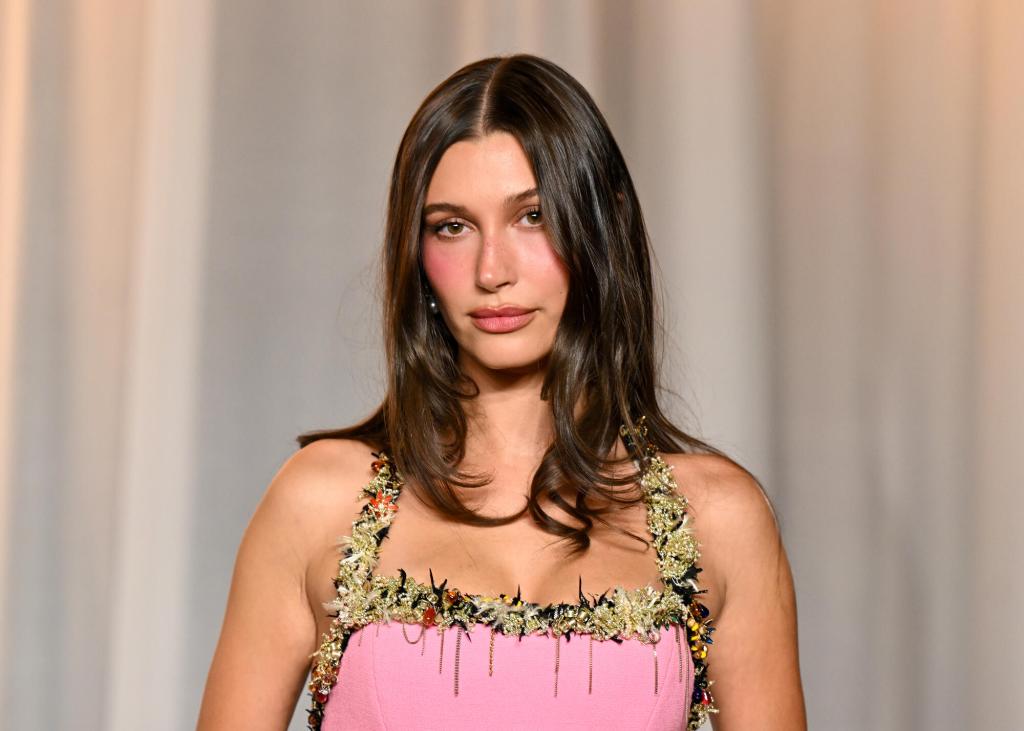
Hailey Bieber is sharing her postpartum experience to help other moms feel less alone.
In a recent interview with Women’s Wear Daily, the Rhode founder discussed experiencing premenstrual dysphoric disorder, or PMDD, after welcoming her son, Jack Blues.
“After I had my son, I struggled with that a bit, and there’s just not a lot of conversation or research around it,” she said. “Conversation, for me personally, makes me feel less alone.”

Related story
She Was 2 Weeks Postpartum. Then She Found a Lump in Her Breast
When Her Symptoms Started
Bieber previously described her experience during a March appearance on the SHE MD podcast. She said she was diagnosed with PMDD about six months after giving birth.
“I was like, ‘This just feels way more intense than before,’ like the lead-up to getting your period,” she said. “You’re like, ‘Why does it feel like my whole entire life is gonna end? Like, I don’t understand.’ You just have all these swirling thoughts and feelings, and just everything feels like the biggest deal in the world.”
According to the Office on Women’s Health, PMDD can cause intense irritability, depression, or anxiety in the week or two before a period. Other symptoms can include trouble concentrating, low energy, sleep changes, or feeling out of control.
Physical symptoms can include cramps, bloating, headaches, and breast tenderness. Symptoms usually go away within two to three days after the period starts.
Why Women’s Health Is Personal to Her
Bieber’s interest in women’s health also comes from watching people close to her navigate their own conditions. In the WWD interview, she spoke about her sister’s experience with polyendocrine metabolic ovarian syndrome (PMOS) and friends who are dealing with endometriosis.
“I feel really drawn to women’s health,” she said. “I have a sister who struggles with PMOS. I have lots of friends that struggle with it, with endometriosis, with a lot of different, very specific women’s health issues. As a woman, I feel frustrated by the lack of research, the lack of awareness, the lack of certain conversation around it.”
Bieber’s beauty brand, Rhode, has also committed $5 million over three years to the Foundation for Women’s Health to support research, education, and care in areas including pregnancy, postpartum health, and autoimmune conditions.
“When we can identify with each other and have conversations relating to each other and talking about the things we’re dealing with and struggling with,” she told WWD, “I do think it makes it feel like less of a lonely journey.”