November 06, 2026
2 min read

Physicians prescribing peptides that have not been FDA approved continue to face a myriad of potential legal and regulatory risks.
While prescribing FDA-approved semaglutide (Ozempic and Wegovy, Novo Nordisk) and tirzepatide (Zepbound and Mounjaro, Eli Lilly) for their approved uses presents few regulatory issues for physicians, many other unapproved peptides prescribed and promoted for various uses are currently being produced by compounding pharmacies.

Physicians who prescribe, source, promote or administer peptides that are not FDA approved or have not been included in FDA’s bulk substances lists face significant potential regulatory, civil and even criminal risks.
Regulatory and licensing risks
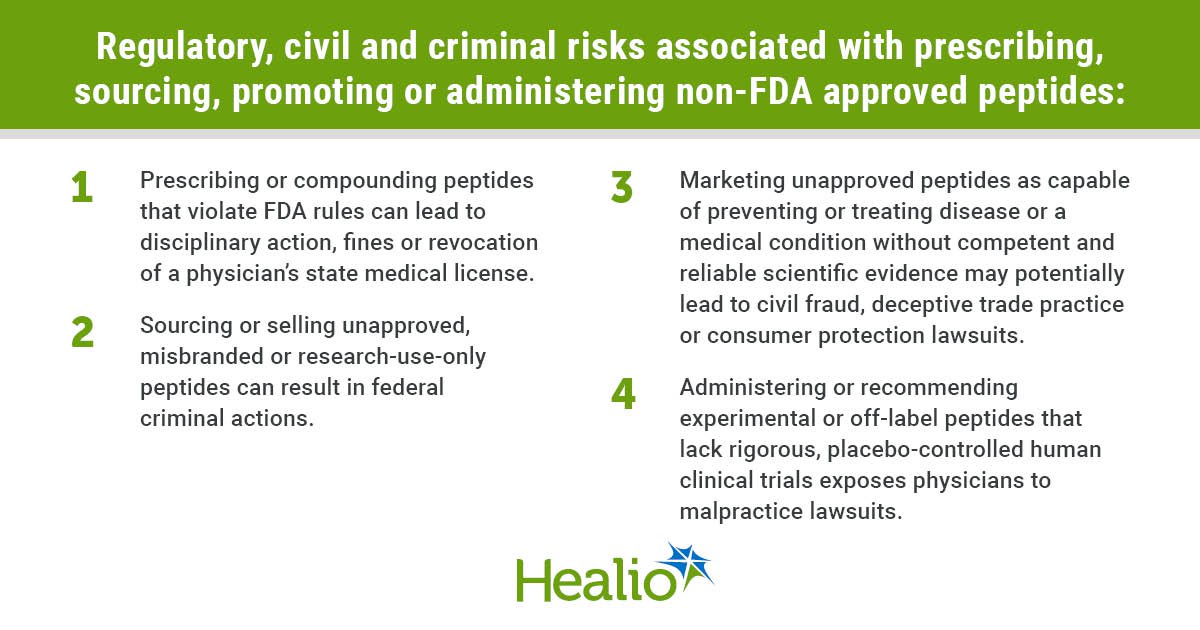
Prescribing or compounding peptides that violate FDA rules, such as utilizing bulk drug substances that FDA has not deemed safe and placed into FDA’s bulk substances list, can lead to disciplinary action, fines or revocation of a physician’s state medical license by the state medical board where he or she practices.

Gary W. Herschman

Mark Yacura
In July 2026, the FDA’s Pharmacy Compounding Advisory Committee (PCAC) voted to recommend adding six peptides to the FDA’s Section 503A bulk substances list, which would enable compounding pharmacies to compound these peptides under strict parameters without concern for current FDA enforcement action. The FDA is, however, not legally bound to follow these recommendations as the PCAC recommendations are only advisory, and the FDA can accept, reject or take substantial time to act on them.
On Oct. 14, 2026, FDA issued an interim policy statement to the White House stating it intends to use “enforcement discretion” and would pause enforcing against pharmacies sourcing these six bulk peptide substances for compounding. On Oct. 27, 2026, the White House Office of Management and Budget affirmed the FDA policy proposal. On Oct. 30, the formalized policy was published by the Federal Register. FDA’s enforcement discretion regarding these six peptides will remain in force until final rulemaking regarding their inclusion in FDA’s bulk drug substance list is completed or if and until safety issues regarding any of these peptides becomes apparent to the FDA.
Nevertheless, many state boards of pharmacy and state attorneys general have authority under their state’s laws to take independent enforcement actions against unapproved compounded peptides regardless of federal committee recommendations or any FDA policy.
Misbranding and distribution
Beyond state administrative action risks to physicians, federal prosecutors have presented evidence to grand juries who have indicted licensed physicians for prosecution for ordering peptides that have not been approved by the FDA from overseas or unverified third-party intermediaries and dispensing them to patients.
Sourcing or selling unapproved, misbranded or research-use-only peptides can result in federal criminal actions against physicians who prescribe or dispense such peptides or promote them for clinically unproven uses. Thus, purchasing peptides from unverified online vendors or research-only suppliers — rather than licensed, compliant compounding pharmacies — places legal liability on the prescriber for any product contamination, mislabeling or purity failures.
Fraud, misrepresentation claims
If a physician markets unapproved peptides as capable of preventing or treating disease or a medical condition without competent and reliable scientific evidence, the physician is potentially subject to civil fraud, deceptive trade practice or consumer protection lawsuits at both the federal and state level.
Medical malpractice
Administering or recommending experimental or off-label peptides that lack rigorous, placebo-controlled human clinical trials exposes physicians to malpractice lawsuits if patients experience serious adverse reactions, unexpected side effects or death.
Further, physicians have a legal duty to inform patients if a therapy is experimental and the prescribed or dispensed peptide is not approved by the FDA, lacks long-term human safety data or the physician fails to disclose all potential side effects.
Failing to adequately document and secure proper informed consent exposes a physician to legal claims if untoward side effects or serious or life-threatening adverse events materialize.
For more information:
Gary W. Herschman, JD, and Mark Yacura, JD, are members of Baker Donelson and can be reached at www.bakerdonelson.com.
Sources/Disclosures
Source:
Expert Submission
Disclosures:
Herschman reports being a healthcare transaction attorney for more than 30 years and being co-chair of the healthcare transactions group at Baker Donelson. Yacura reports no relevant financial disclosures.

Ask a clinical question and tap into Healio AI’s knowledge base.
- PubMed, enrolling/recruiting trials, guidelines
- Clinical Guidance, Healio CME, FDA news
- Healio’s exclusive daily news coverage of clinical data