November 09, 2026
2 min read

Key takeaways:
- The steatosis-associated fibrosis estimator score demonstrated the most benefit for predicting incident cirrhosis.
- Available risk scores could not reliably predict 10-year risk for HCC.
Among nine available risk scores for steatotic liver disease, none were able to reliably predict elevated risk for hepatocellular carcinoma and one appeared most beneficial for cirrhosis risk, analysis showed.
“Steatotic liver disease is very common; it affects about a third of American adults,” Catherine Mezzacappa, MD, PhD, MPH, assistant professor of medicine at Yale School of Medicine and associate director of population health at Yale Liver Center, told Healio. “However, the vast majority of these individuals will not develop advanced liver diseases.

“The goal of this study was to assess whether available risk scores can identify which patients are most likely to develop cirrhosis or hepatocellular carcinoma — the most common form of liver cancer — and whether these scores can help inform screening for these advanced liver diseases,” she added.
Mezzacappa and colleagues analyzed data from 853,131 patients (median age, 61 years; 92.7% men; median BMI, 31.3 kg/m2) with imaging-verified steatotic liver disease in the U.S. Veterans Affairs health system, of whom nearly a third (32.3%) also had diabetes. Data were collected between 2008 and 2020.
Over median follow-up of 8.5 years, 3.96% of patients developed cirrhosis and 0.35% developed HCC.
The researchers observed that Fibrosis-4 index, aspartate aminotransferase-to-platelet ratio and steatosis-associated fibrosis estimator (SAFE) scores were associated with the greatest predictive value for cirrhosis risk, with SAFE outperforming the others in predictive ability at higher score thresholds.
For every 100 high-risk patients, the SAFE score identified an additional 1.9 individuals who would develop cirrhosis within 10 years. Specifically, a SAFE score of 29.5 was associated with a 10-year cirrhosis risk of 2.5%.
As most patients in the Veterans Affairs health system are men, the investigators performed a second analysis including only women.
“A higher SAFE score of 65.4 correlated to the same risk of cirrhosis among women with steatotic liver disease,” Mezzacappa said.
Analysis also showed that SAFE, Tate and FIB-4 scores were most accurate at predicting 10-year HCC risk, but “none identified patients with high enough risk of hepatocellular carcinoma to initiate screening based on current guidelines,” Mezzacappa said.
“This gives us a benchmark of how far we still need to go to identify patients with noncirrhotic steatotic liver disease at the highest risk of hepatocellular carcinoma who may benefit from screening,” she added.
None of the other risk scores evaluated — albumin-bilirubin; age-male-albumin-bilirubin-platelet; BMI, age, alanine aminotransferase-to-aspartate aminotransferase ratio and diabetes, or BARD; and nonalcoholic fatty liver disease fibrosis — had significant predictive value for cirrhosis or HCC.
The researchers acknowledged study limitations, including the exclusion of six risk scores due to lack of data.
Additional research is needed to explore these additional risk prediction modalities, including several that rely on gamma-glutamyl transferase (GGT) measurement, according to Mezzacappa.
“Most practice settings in the United States don’t include a GGT on a routine liver panel, though, and so GGT is measured in a small minority of patients, typically to follow up other abnormal liver testing,” she said.
“Strong evidence” indicates GGT may have predictive value for liver diseases, she added.
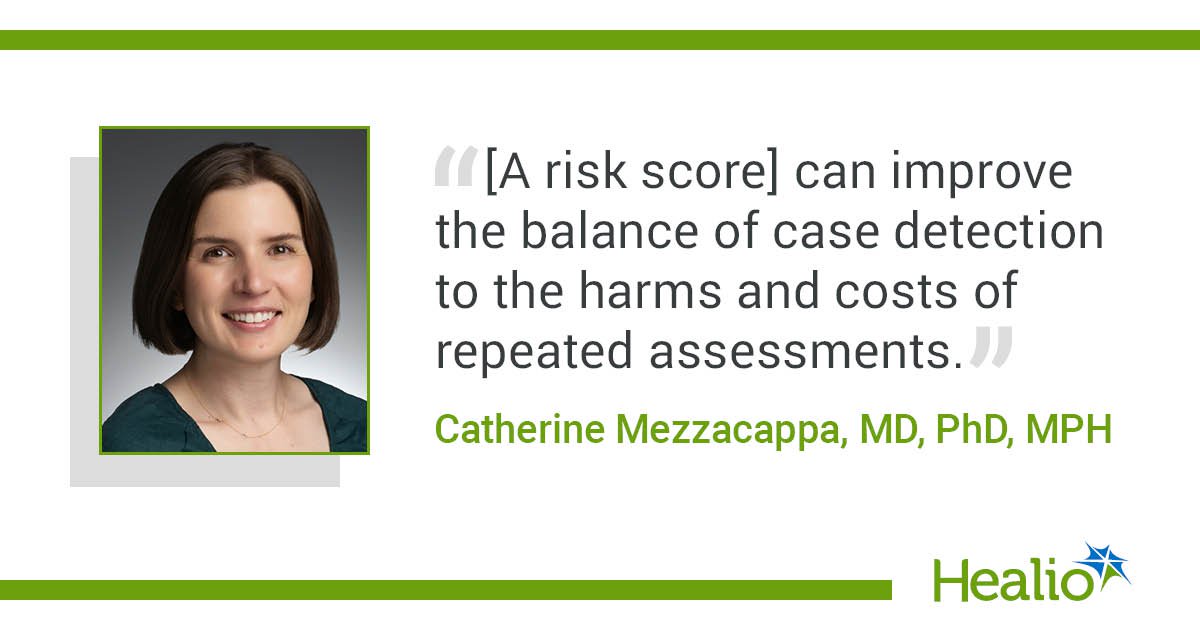
“For patients with steatotic liver disease who don’t already have advanced liver disease, risk scores can help providers and patients understand their risk for developing cirrhosis in the future,” Mezzacappa told Healio. “Targeting repeated testing to identify cirrhosis using a risk score, such as the SAFE score, can improve the balance of case detection to the harms and costs of repeated assessments.”
For more information:
Catherine Mezzacappa, MD, PhD, MPH, can be reached at gastroenterology@healio.com.

Ask a clinical question and tap into Healio AI’s knowledge base.
- PubMed, enrolling/recruiting trials, guidelines
- Clinical Guidance, Healio CME, FDA news
- Healio’s exclusive daily news coverage of clinical data