November 10, 2026
5 min read
Key takeaways:
- Emergency medicine physicians are uniquely positioned to make a difference in the media.
- An expert described his experiences and offered advice for messaging with integrity.
LAS VEGAS — Sometimes trading in a stethoscope for a microphone can make a meaningful impact on patients that healthcare providers never even meet, according to a speaker here.
Christopher M. Colbert, DO, LTC, FAAEM, FACOEP, FACEP, an emergency medicine physician and medical media contributor, discussed the unique opportunity that media presents and how to navigate that journey while maintaining integrity.

Healio spoke with Colbert to learn more about his experiences with media, his advice for providers who want to get involved and more.
Healio: Why is this an important topic for healthcare providers to know about? How can various types of media affect the healthcare profession?
Colbert: Patients no longer obtain their medical information exclusively from their physicians. They’re learning about medicine through TikTok, podcasts, television, news outlets and shows like ‘The Pitt.’ And that’s not necessarily a bad thing!
Programs like “The Pitt” provide a unique opportunity to introduce the public to the complexity, humanity and sometimes absolute chaos of emergency medicine. They can highlight overcrowding, physician burnout, nursing shortages, healthcare disparities and the difficult decisions we make every day.
However, entertainment and journalism also shape patient expectations. What someone watches on television tonight may influence what they expect from their emergency physician tomorrow.
My perspective: Media doesn’t just report on medicine. It influences how patients perceive medicine, how they trust us and, ultimately, how they interact with our healthcare system.
Healio: How can providers get involved in the media to ensure they have a role in how the general public sees and understands the system, its flaws, what it gets right, etc.?
Colbert: First, recognize that you don’t need to be Dr. Sanjay Gupta to make a difference. You need three things: credibility, communication and consistency.
Start locally. Reach out to your hospital’s communications department, local television stations, radio programs or community publications. Offer your expertise on topics relevant to the public. Seasonal illnesses, emergency preparedness, public health concerns or even correcting misinformation can be excellent starting points.
My own transition began in early 2020, when I helped organize and moderate a national virtual emergency medicine conference. That experience helped me recognize that the communication skills we develop as educators and physicians can translate directly to the media. The same skills we use to explain a complicated diagnosis to a patient can help us explain a complicated healthcare issue to thousands of viewers.
And remember, the goal isn’t to become famous. The goal is to become useful.
Healio: What can emergency medicine physicians uniquely contribute to the media?
Colbert: I often describe emergency medicine physicians as the canaries in the coal mine of American healthcare.
We see the consequences of healthcare policy, public health failures, misinformation, and gaps in access to care before many other specialties.
We see patients who cannot afford their medications, patients without primary care, families struggling to navigate insurance, and people who waited too long to seek medical attention.
And unlike many other specialties, we treat everyone, regardless of age, income, insurance or background.
Emergency physicians also possess something particularly valuable in media: the ability to communicate complex information quickly, accurately and under pressure. Our unique contribution is perspective. We don’t just understand the science of medicine; we witness the human consequences of healthcare decisions.
Healio: What has your experience been like as someone who has had conversations like this on a big stage?
Colbert: It’s been an incredibly rewarding and sometimes humbling experience.
I’ve spent much of my career in academic emergency medicine, teaching residents, medical students, and physicians at national and international conferences.
I’ve also had the privilege of serving as a lieutenant colonel in the United States Army Reserve, practicing medicine across multiple countries and experiencing healthcare systems under very different circumstances.
But transitioning from academic lectures and peer-reviewed publications to television, radio and publications such as GQ and Men’s Health taught me something important: Being knowledgeable about medicine and being able to communicate about medicine are two very different skills. In academics, I may have 45 minutes and 40 PowerPoint slides to explain a concept. On television, I might have 45 seconds.
What I’ve enjoyed most is the opportunity to reach people who might never attend a medical conference or read a medical journal. I’ve discussed topics ranging from infectious diseases and vaccination to healthcare access, military medicine, and public health. The audience may change, but the responsibility remains the same.
Healio: What is your advice for anyone who wants to get involved in media as a healthcare professional?
Colbert:
- Be yourself. Authenticity matters. Don’t try to imitate another physician or media personality. Your experiences and personality are what make your perspective valuable.
- Know your audience. You’re not presenting grand rounds. Avoid excessive medical terminology and explain concepts in language that patients can understand.
- Be accurate, not sensational. Credibility takes years to establish and seconds to lose. If you don’t know something, say so. Stay within your expertise and distinguish evidence from opinion.
- Start small and remain consistent. A local radio interview, community podcast or short educational video can be just as meaningful as national television. Build relationships with journalists and producers.
- Remember your responsibility. You’re representing more than yourself. You’re representing your profession, your colleagues and the patients who trust us.
And one additional piece of advice: learn to communicate in sound bites without sacrificing the science. If you cannot explain your message in 30 seconds, you may need to simplify the message — not the medicine.
Healio: What is the take-home message here?
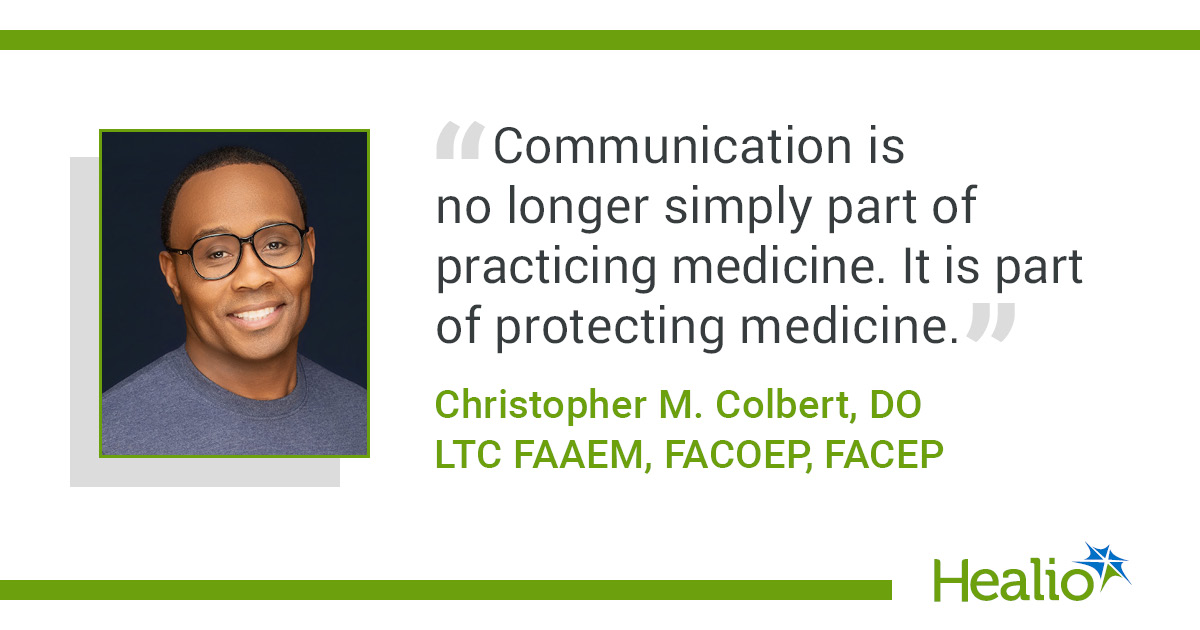
Colbert: Physicians must recognize that communication is no longer simply part of practicing medicine. It is part of protecting medicine. We spend years learning how to diagnose disease, interpret research and treat patients. Yet increasingly, our patients are making healthcare decisions based on information they encounter before they ever meet us. That creates both a challenge and an extraordinary opportunity.
We can complain about misinformation, unrealistic expectations and the public’s changing trust in healthcare — or we can become part of the solution. We need more credible physician voices in journalism, television, podcasts and digital media. Not because every physician needs a television appearance, but because every patient deserves access to trustworthy medical information.
The future of healthcare communication should not happen without healthcare professionals participating in it.
Healio: Is there anything else you would like to add?
Colbert: One of my favorite expressions is, “All roads lead to the ER.” Whether we’re discussing infectious diseases, healthcare legislation, social determinants of health, mental health, or even something someone saw on TikTok, eventually many of those conversations find their way into an emergency department. And that’s why emergency physicians have such an important voice.
Throughout my career, from Chicago emergency departments to military deployments around the world, I’ve learned that proximity gives perspective. When you’re close enough to see how healthcare decisions affect real people, you develop a responsibility to share what you’ve learned. I’ve also learned that we often gain as much insight into humanity from our patients as they gain medical knowledge from us.
My hope is that more physicians recognize that their expertise doesn’t have to end when they remove their white coats or finish their shifts. Sometimes, the most meaningful contribution we can make is helping someone we’ve never met better understand their health. And if that means trading my stethoscope for a microphone every once in a while, I’m more than happy to do it!
For more information:
Christopher M. Colbert, DO, LTC, FAAEM, FACOEP, FACEP, can be reached on Instagram @Drchris.er.
Sources/Disclosures
Source:
Healio Interviews
Reference:
- Colbert C. From trauma bays to TV bays: How ED physicians can thrive in media without compromising medical integrity. Presented at: OMED; Oct. 23-25, 2026; Las Vegas.
Disclosures:
Colbert reports no relevant financial disclosures.

Ask a clinical question and tap into Healio AI’s knowledge base.
- PubMed, enrolling/recruiting trials, guidelines
- Clinical Guidance, Healio CME, FDA news
- Healio’s exclusive daily news coverage of clinical data