November 13, 2026
3 min read

Key takeaways:
- Liability remains a concern with AI use in healthcare, but decisions will likely be determined by a court of law.
- Understanding where AI output data came from is important to protect patients and users.
ORLANDO — Developers, hospital systems and clinicians may be liable when AI makes a mistake, although the ultimate decision about legal accountability will be determined in court, according to experts at AIMed26.
In a panel discussion, Leo Anthony Celi, MD, MSc, MPH, clinical research director and principal research scientist for the laboratory of computational physiology at Massachusetts Institute of Technology, asked participants about how clinicians can identify an AI mistake and who is liable when a mistake occurs.

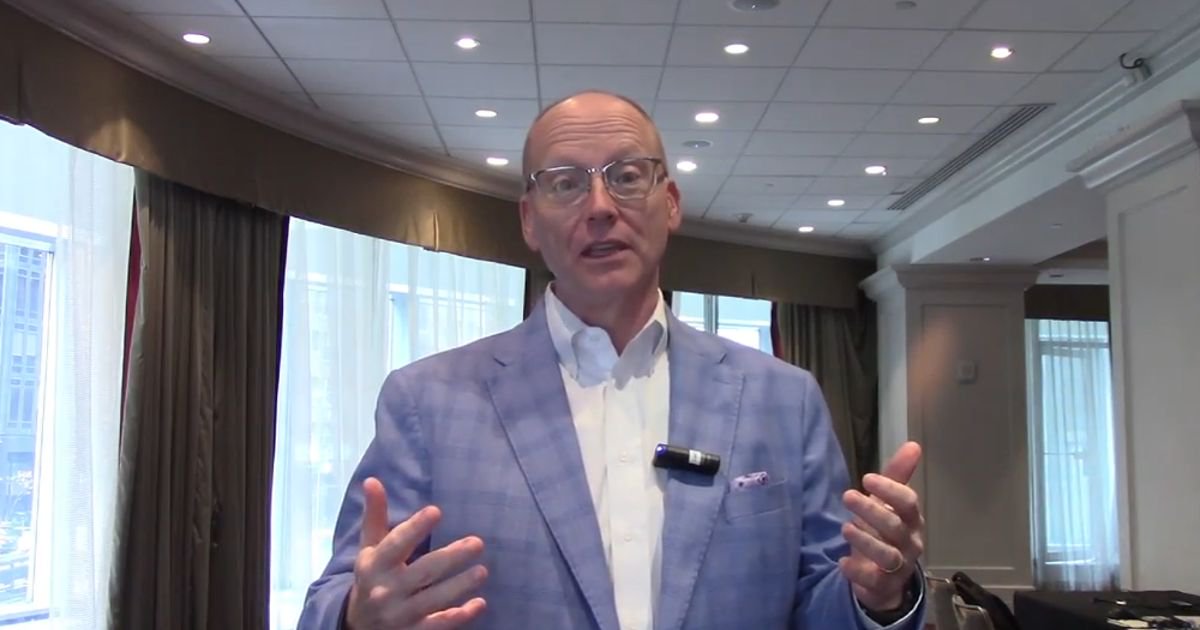
“Today, liability lands mostly on the clinician who acted on the output and the hospital that deployed the tool,” Celi told Healio. “Developers are rarely held to account, and I think that is backward. The clinician at the bedside usually had no say in buying the system and could not see how it was trained. Responsibility should be shared with the developer and the health system, in proportion to what each party could have known and controlled.”
During the panel discussion, participants responded to a question about identifying mistakes made by an AI tool.
“One of the problems we have right now with AI and healthcare is that we tend to sort of hold it to this extremely high standard of performance because it’s a computational intervention,” Philip Payne, PhD, chief health AI officer at for BJC Healthcare and Washington University Medicine, said during the discussion. “We need to be careful not to assume that anything short of perfection is a failure of AI.”
Ruhy Patel, MBBS, surgeon and global lead, medical affairs, at Olympus Corp., said during the discussion that holding AI to perfection makes identifying errors more difficult.
“What we should be looking at is where should we improve?” Patel said. “Where can AI deliver upon standardization and consistency? Where does AI augment us?”
Clear guidelines around liability in AI use are also needed, but establishing them in real-world scenarios will be difficult, according to Payne.
“The likely best-case scenario from an ethical and moral standpoint … [is] we share responsibility around these tools and capabilities,” Payne said. “Then there’s the reality … that it will almost exclusively be dictated by case law, and we’ll sort of emerge from cases that we’ve not yet seen.”
“What happens is going to happen at the court of law,” Nina Kottler, MD, MS, chief AI officer at Mosaic Clinical Technologies, said during the panel discussion. “The decision’s being made there. And frankly, probably everyone gets sued.”
Kottler proposed a different question, looking at who should be accountable when AI makes a mistake.
“The accountability question is one that we can answer and we should answer,” she said. “That is our responsibility as clinicians, and that is not a single person, because AI has a life cycle.”
For clinicians using AI tools, understanding where the data come from is important, according to Celi.
“Ask what data the tool learned from, whether patients like yours were in that data and how it has performed at your own hospital,” Celi told Healio. “The patients most likely to be harmed by an AI error are the ones who were poorly served before AI arrived, because the models learn from records of that care.”
Celi said hospitals should make reporting potential errors “easy and free of blame” to “protect clinical judgment.”
“When an error happens, the patient should be told and the event should go through the same safety review as a medication error,” Celi said. “That review should ask whether the error was a one-off or part of a pattern affecting a particular group of patients. The findings should go back to the developer and to other hospitals using the same tool. Many clinical AI tools fall outside any shared adverse event reporting system; and we need one.”
Patients and community members should also be involved in evaluating AI tools before clinical use, Celi said.
“They are the ones who live with its mistakes,” he said.
For more information:
Leo Anthony Celi, MD, MSc, MPH, can be reached at nephrology@healio.com.
Sources/Disclosures
Source:
Celi L, et al. Who is liable when AI gets it wrong? Presented at: AIMed26; Nov. 11-13, 2026; Orlando.
Disclosures:
Healio could not confirm relevant financial disclosures at the time of publication. Healio is an official media partner of the AIMed26 conference.

Ask a clinical question and tap into Healio AI’s knowledge base.
- PubMed, enrolling/recruiting trials, guidelines
- Clinical Guidance, Healio CME, FDA news
- Healio’s exclusive daily news coverage of clinical data