
November 18, 2026
3 min read

Key takeaways:
- Recommendations focus on preventing cirrhosis complications and reducing mortality.
- The guidance emphasizes surveillance, carvedilol or esophageal variceal ligation, vaccination and lifestyle therapy.
ACG has released a clinical guideline on preventive care for patients with cirrhosis, focused on mitigating risk for complications, infections and comorbidities with therapeutic and lifestyle interventions.
When deciding which key clinical issues to address, Elliot B. Tapper, MD, FAASLD, Andrews Family Research Professor of Hepatology and academic chief of hepatology at Michigan Medicine, said he and his colleagues considered how they could “help the most patients with cirrhosis with our limited time in clinic.”

“We focused on actionable items where care is known to fall short,” Tapper told Healio. “Under the ACG Practice Parameters Committee, the writing group settled on four domains: cirrhosis-specific complications, infection prevention, lifestyle factors and non-liver conditions such as osteoporosis and extrahepatic cancer.”
The prognosis for patients with early-stage cirrhosis is significantly more favorable than the prognosis for those with late-stage disease, underscoring the importance of preventive care in this patient population.
Clinical interventions
The guidance includes 18 recommendations, of which the first three address care for patients with hepatic encephalopathy. Tapper and colleagues advise clinicians to actively treat minimal hepatic encephalopathy with lactulose.
“Minimal HE is a conundrum,” he said. “We feel we know it when we see it, but many things can mimic its symptoms or cognitive dysfunction.
“Aligned with the ACG guidance on hepatic encephalopathy, we recommend a theragnostic trial of lactulose,” Tapper added.
For patients with recurrent overt hepatic encephalopathy despite lactulose, the authors suggest adding rifaximin to prevent further episodes, though they do not recommend the drug as a primary prevention strategy against overt disease.
“The recommendation is strongest for patients hospitalized for overt HE on lactulose, and it reasonably extends to outpatients with recurrent episodes on lactulose maintenance,” Tapper said.
Given the elevated risk for hepatocellular carcinoma among individuals with cirrhosis, the authors do not recommend aspirin to prevent HCC and they recommend regular surveillance with both liver ultrasounds and alpha-fetoprotein blood tests every 6 months.
When patients with cirrhosis experience upper GI bleeding, the authors recommend a 2- to 3-day course of antibiotics, rather than an extended course or no course.
To prevent bleeding in patients with high-risk esophageal varices, Tapper and colleagues recommend carvedilol or esophageal variceal ligation. They also suggest carvedilol for compensated patients with clinically significant portal hypertension.
“Treat high-risk varices with carvedilol or band ligation and consider carvedilol earlier in compensated patients with clinically significant portal hypertension,” Tapper said.
For patients with both cirrhosis and osteoporosis, the guideline suggests reducing risk for fracture via treatment with bisphosphonates.
The authors emphasized the role vaccines can play in preventive cirrhosis care.
Patients with cirrhosis should be tested for hepatitis A and B immunity, and if they do not have serologic protection, they should receive HAV and HBV vaccinations. The authors also recommend that patients aged older than 50 years receive the RSV vaccine and that all patients with cirrhosis receive immunization against influenza and SARS-CoV-2.
Lifestyle management
The guideline emphasizes the importance of lifestyle interventions in preventive care for patients with cirrhosis, particularly nutrition, exercise and smoking cessation.
“Across all three, ask permission, choose one target at a time and bring in experts like nurses, dietitians and physical therapists,” Tapper said.
He encouraged clinicians to support patients as they change their daily habits, which may include involving dietitians in dietary interventions and counseling for smoking cessation in active smokers.
“Present these as treatments for cirrhosis, not as lectures,” Tapper said. “Write a ‘prescription’ to emphasize that these approaches often have impacts greater than pills.”
Tapper also noted that dietitian-supported nutrition programs can “improve frailty and reduce hospitalizations.”
For exercise, the authors recommend structured aerobic and resistance-focused training.
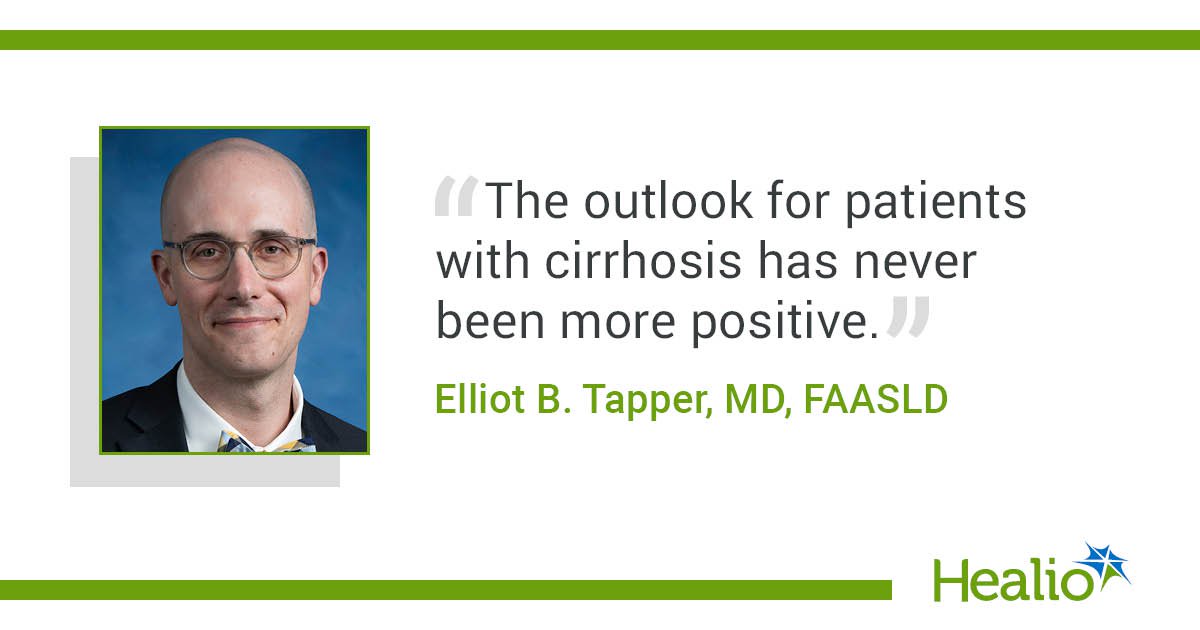
“We have the power to improve quality and quantity of life in cirrhosis,” Tapper told Healio. “The outlook for patients with cirrhosis has never been more positive, and we outline the concrete ways we can all achieve terrific outcomes for our patients.”
For more information:
Elliot B. Tapper, MD, can be reached at gastroenterology@healio.com.
Sources/Disclosures
Source:
Tapper EB, et al. Am J Gastroenterol. 2026;doi:10.14309/ajg.0000000000004186.
Disclosures:
Tapper reports consulting roles with Allergan, Axcella Health and Novartis; advisory board roles with Bausch Health, Kaleido Biosciences, Mallinckrodt and Novo Nordisk; and unrestricted research grants from Gilead Sciences and Valeant Pharmaceuticals. Please see the study for all other authors’ relevant financial disclosures.

Ask a clinical question and tap into Healio AI’s knowledge base.
- PubMed, enrolling/recruiting trials, guidelines
- Clinical Guidance, Healio CME, FDA news
- Healio’s exclusive daily news coverage of clinical data