
Add topic to email alerts Receive an email when new articles are posted on Please provide your email address to receive an email when new articles are posted on . “ data-action=”subscribe”> Subscribe We were unable to process your request. Please try again later. If you continue to have this issue please contact customerservice@slackinc.com. Back to Healio Key takeaways: At its annual meeting, the AMA adopted new policies stressing the need for physician oversight. They also advocate for more transparency when AI is used in both clinical and in health insurance decision-making. The AMA adopted new AI policies in a bid to ensure that the technology supports evidence-based medicine, bolsters patient care and serves under a physician’s oversight, instead of replacing their discernment. According to an AMA press release, AI technologies could help with efficiency and synthesizing information, but there are still important concerns for bias, long-term impact on both physicians and patient outcomes, explainability and transparency. At its annual House of Delegates meeting, the AMA adopted new AI-related policies. Image: Adobe Stock These new policies, which address AI’s growing popularity in both the clinical and health insurance decision-making realms, emphasize that AI should only be used as an assistive tool, rather than “an autonomous decision-maker,” according to the release. The policies also call for accountability, transparency and oversight from physicians every time AI is used in patient care. “AI has enormous potential in health care, but it cannot replace physician judgment,” John Whyte, MD, MPH, CEO of the AMA, said in the release. “Patients deserve care decisions that are informed by the latest medical evidence and guided by a physician who understands their individual needs. Whether AI is helping a physician make a clinical decision or assisting with an insurance review, there must always be transparency, accountability and meaningful physician oversight. Technology should support better care — not stand between patients and the care they need.” The AMA has said it will work with key stakeholders — including regulators, medical specialty societies and AI developers — to create standards for evidence transparency, evaluation, attribution, validation and explainability in systems that support clinical decision-making. This is in the hope of ensuring AI tools “reflect the principles of evidence-based medicine and provide physicians with information they can understand, evaluate and trust,” according to the release. Another AMA policy calls for regulations to guarantee that health coverage decisions — which are increasingly based on AI, according to the release — are reviewed by physicians in appropriate fields with a foundation of evidence-based, up-to-date medical information. The policy additionally called for safeguards requiring AI technologies be integrated into a physician-led process and increased transparency when AI is involved in prior authorization decisions, including the disclosure of any guidelines, data sources or clinical logic used in adverse decisions. In this vein, the AMA is advocating for regular audits of clinical review tools driven by AI to help strengthen accountability. That also includes audits triggered by “significant changes to” training data, clinical guidelines or AI models themselves, “as well as comprehensive annual reviews to ensure continued alignment with standards of care,” according to the release. “When health plans use AI-driven tools to deny or delay care without explaining how those decisions were reached, physicians and patients are left in the dark,” Whyte said in the release. “AI should never function as an unaccountable black box. Health plans must be transparent about how these tools work, what evidence and data sources they rely on, and whether a qualified physician reviewed the decision.” Perspective Back to Top The idea that AI should “support, not replace” physician judgment is not controversial. It’s obvious. The real issue is that, across health systems today, we are already drifting in the opposite direction — quietly, incrementally and often without enough oversight. AI tools are being embedded into workflows, influencing decisions and shaping clinical behavior faster than governance models can keep up. How many physicians are actually aware that they are using AI? The greatest risk is not that AI will replace physicians overnight. It’s that it will subtly erode clinical judgment through automation bias, opaque recommendations and overreliance on systems that clinicians neither fully understand nor control. In that sense, the danger is not disruption, it’s complacency. What the AMA policy stops short of saying explicitly is this: physician oversight alone is not enough. Oversight without infrastructure, governance and accountability is performative. Health systems need enterprise-level AI operating models — clear standards for validation, monitoring and lifecycle management — because fragmented, point-solution AI adoption is already creating measurable clinical and operational risk. Deepti Pandita, MD, FACP, FAMIA University of California Irvine Health Disclosures: Pandita reports no relevant financial disclosures. Sources/Disclosures Source: Press Release Disclosures: Whyte reports being CEO of the AMA. Ask a clinical question and tap into Healio AI’s knowledge base. PubMed, enrolling/recruiting trials, guidelines Clinical Guidance, Healio CME, FDA news Healio’s exclusive daily news coverage of clinical data Learn more Add topic to email alerts Receive an email when new articles are posted on Please provide your email address to receive an email when new articles are posted on . “ data-action=”subscribe”> Subscribe We were unable to process your request. Please try again later. If you continue to have this issue please contact customerservice@slackinc.com. Back to Healio Source link

How Long Does an Epidural Steroid Injection Last?
If your doctor has recommended an epidural steroid injection to treat your back pain or another chronic pain condition, you probably have questions — especially about how long the relief will actually last. The honest answer is that it depends on the person, but understanding what affects duration can help you set realistic expectations and get the most out of your treatment. What Is an Epidural Steroid Injection? An epidural steroid injection (ESI) is a minimally invasive procedure used to relieve pain caused by inflamed spinal nerves. A physician injects a corticosteroid — sometimes combined with a local anesthetic — directly into the epidural space of the spine, which is the area surrounding the spinal cord and nerve roots. These injections are commonly used to treat conditions like herniated discs, spinal stenosis, degenerative disc disease, and sciatica. They’re one of the most widely used pain injections for back problems because they can reduce inflammation at the source, rather than just masking discomfort systemically the way oral medications do. How Long Does an Epidural Steroid Injection Last? This is the question most patients ask first, and the answer varies more than people expect. For some patients, relief lasts a few weeks. For others, a single injection can provide significant improvement for three to six months — or even longer. A smaller group of patients experience only minimal or temporary relief. Several factors influence how long the effects last: The underlying condition. Acute flare-ups of a chronic condition tend to respond better than long-standing, severe degeneration. How inflamed the nerve root is. The more targeted the inflammation, the more precisely the steroid can work. Your overall health. Factors like weight, activity level, and whether you smoke can all affect outcomes. The type and location of the injection. There are different approaches — interlaminar, transforaminal, and caudal — and the right technique depends on your specific anatomy and diagnosis. It’s also worth noting that the local anesthetic included in many injections provides immediate but short-lived relief — typically a few hours — while the steroid takes a few days to reach its full anti-inflammatory effect. So don’t be discouraged if you don’t feel dramatically better the same day. How Many Injections Will I Need? Most physicians recommend a series of up to three epidural steroid injections per year at any given spinal level. This isn’t arbitrary — repeated steroid use can have side effects, including thinning of nearby tissue or temporary changes in blood sugar levels. Some patients need only one injection per treatment cycle. Others benefit from two or three spaced a few weeks apart, especially when the first injection provides partial relief. Your pain specialist will assess your response after the first injection before recommending additional ones. The goal isn’t to keep injecting indefinitely. Epidural steroid injections work best as part of a broader pain management plan that may include physical therapy, lifestyle changes, and other treatments. What to Expect After the Injection Most patients go home the same day and can resume light activity within 24 hours. Some soreness at the injection site is normal and usually resolves within a day or two. Keep a symptom journal after your injection. Note when you start to feel relief, how significant it is, and how long it lasts. This information is incredibly useful for your care team when deciding whether to repeat the injection or explore other options. You should avoid strenuous activity, driving (on injection day), and submerging in water like pools or hot tubs for at least 24 hours after the procedure. Your provider will give you specific post-procedure instructions based on your situation. Are Epidural Steroid Injections Right for You? Epidural steroid injections are most effective for pain that has a clear inflammatory component — particularly radiating leg or arm pain caused by nerve compression. They tend to be less effective for purely mechanical back pain without nerve involvement. They’re not a permanent cure, and they won’t reverse structural damage like a severely collapsed disc. But for many patients dealing with injections for chronic pain management, ESIs offer a meaningful window of relief that allows them to engage more fully in physical therapy, return to work, or simply get back to daily life. Your pain specialist will review your imaging, medical history, and symptoms to determine whether this approach makes sense — and if so, which injection technique is most appropriate for you. Frequently Asked Questions How quickly does an epidural steroid injection start working? The local anesthetic may provide same-day relief, but the steroid component typically takes 3–5 days to reduce inflammation. Most patients notice meaningful improvement within one week. Can I get an epidural steroid injection if I have diabetes? Yes, but with caution. Corticosteroids can temporarily elevate blood sugar, so your care team will need to monitor you closely. Always disclose your full medical history before the procedure. Is the injection painful? Most patients report mild pressure rather than significant pain. A local anesthetic is used to numb the skin and underlying tissue before the injection, and many providers offer light sedation for anxious patients. How often can I get epidural steroid injections? Generally, physicians limit injections to three per year at a single spinal level to minimize steroid-related side effects. The timing between injections typically depends on your response to the previous one. What if the injection doesn’t work? If you receive little to no benefit from an ESI, that’s valuable diagnostic information. Your pain specialist may recommend a different injection approach, additional imaging, or an alternative treatment pathway. Taking the Next Step Toward Relief Living with back pain or chronic pain is exhausting, and it’s easy to feel like you’ve run out of options. Epidural steroid injections aren’t a cure-all, but for the right patient, they can be a genuine turning point — one that creates enough relief to move forward with therapy, regain function, and improve quality of life. If you’re weighing your options, the best next step is a conversation with

My Chronic Hives Kept Coming Back
Español As told to Erica Rimlinger The hives first appeared when I was in my early 20s, following a trip to the laundromat. Putting on my newly clean clothes, a rash perfectly outlining the shape of my bra and underwear formed. Shocked and incredibly itchy, I called my mom, who guessed I used too much detergent in my laundry or was having an allergic reaction. She recommended an antihistamine, which didn’t even take the edge off the never-ending itch. Unable to sit down or tolerate clothing touching my angry, red welts, I called the Ask-a-Nurse hotline my health insurance required. After an hour on hold, I was cleared to go to their urgent care. There, a doctor gave me a steroid shot and wrote me a prescription for several days of steroid pills. He told me to stay on an antihistamine and advised against using that detergent brand again. The angry, red hives quickly cooled to pink, calmer ones, then, nearly a week later, disappeared. I thought this episode was a learning experience and that it was over. But it wasn’t over: The hives returned. Each time, my healthcare providers and I assumed some unknown allergen had irritated me. I’d get a course of steroids, keep taking antihistamines and the hives would disappear like magic over the next week. I didn’t care about any long-term side effects of taking steroids: I just needed them to work when I needed them. I kept detailed notes on what I ate and used on or near my skin. I saw an allergist, who couldn’t find a culprit that was causing the outbreaks. In my 20s and 30s, the outbreaks were relatively short, but I’d have to miss life for a week while I dealt with them. The itch was too intense to allow me to focus on anything for very long, and no cream, pill or treatment provided enough relief. In my 40s, the hives were staying longer and not responding quickly to the steroids or multiple antihistamines. By then, when the outbreaks lasted well over a week and felt unmanageable, I was desperate for relief. If you’re imagining hives as a collection of small, red, itchy bumps like mosquito bites, you’re not quite getting the full sensory experience. My hives erupted in painful swells that couldn’t be touched without angering my body and making the itch even worse. It was as if someone shaved off all my skin with a razor and covered me with wool. During my flares, a light scratch of the fingernail along my skin would turn the line into hives. I could write my name in hives on my skin, a phenomenon called dermatographism. In 2019 I had a hive outbreak that lasted months, meaning my hives met the definition of “chronic.” As I had with shorter outbreaks, I found it nearly impossible to work, sit, function or do simple activities like bathing. I had hives every day and didn’t know which days they might be more severe or where the swelling and itching would move to next. The painful itch was oppressive — and nothing relieved it. During flares, I continued to document all the details of my life, looking for any reason for the outbreak’s appearance, disappearance, worsening or relief. I couldn’t find a pattern, an allergen or any clue why this was happening. During my last flare, I also couldn’t find any form of relief that worked anymore. There are many myths about chronic hives, and one is that simply reducing stress eliminates outbreaks. As a woman experiencing a chronic illness, I found medical staff commonly telling me if I would just be calmer, I wouldn’t be sick. But, my regular notetaking about the circumstances surrounding my outbreaks showed me they were not caused by my emotions. It felt dismissive for people to imply I could control the extreme physical reaction my body was having by simply not being stressed — as if that were even possible. CSU on Kristen’s legs The first week of the 2019 outbreak was the worst agony I’d ever experienced, then the outbreak lost predictability entirely. I could not sit still given how severe the itching was. It prevented me from sleeping, working, being with friends and family, and doing basic activities. After a few days, things improved, but the hives were still present every day: first for weeks, and then months. A while back, I’d been diagnosed with an autoimmune disorder called Graves’ disease. I wondered if my hives could be related. After some research and consulting with my immunologist, I learned about chronic urticaria (CU), or chronic hives. In most people with the condition, its cause is never identified, which is called chronic spontaneous urticaria (CSU) — but the outbreaks are strongly linked to autoimmune issues. I was taking steroids and quadruple doses of antihistamines, and they provided no long-term relief. I finally found an allergist/immunologist who knew that CSU is almost never an allergic reaction — despite common misconceptions. She knew what to do next and that gave me great hope. I continued taking antihistamines and started a treatment that required a shot in the back of each arm each month. By month three, I hadn’t seen improvement. I called a friend who is a pharmacist and asked, “Is this going to be forever? Why can’t I get rid of these?” The friend contacted a trusted colleague in the field who told me to stick with it, so I did. Almost like clockwork, by month six, the hives were completely gone. I could cry just thinking about it today. What an incredible relief. Since that time, I have not had an outbreak. While I’ve had an occasional, isolated hive, I’ve had no flare-ups since. I didn’t intend to become an advocate for people with chronic hives, but I was working for a global patient advocacy organization that included CU in its scope of work. When I mentioned to my CEO that I was a CU patient
Ambient AI in the exam room: Friend or foe for physicians?
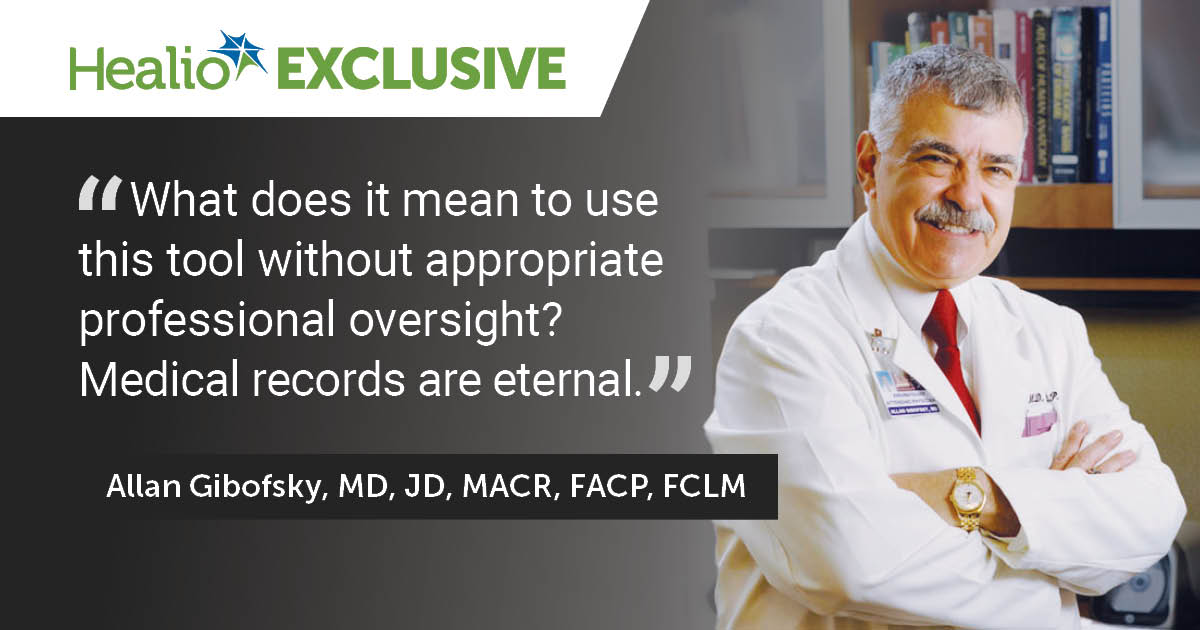
June 12, 2026 11 min read Add topic to email alerts Receive an email when new articles are posted on Please provide your email address to receive an email when new articles are posted on . “ data-action=”subscribe”> Subscribe We were unable to process your request. Please try again later. If you continue to have this issue please contact customerservice@slackinc.com. Back to Healio As the presence of ambient AI scribes to record clinical encounters in the exam room grows increasingly common, experts continue to debate over whether this new technology will ultimately be a friend or foe to physicians. “Ambient AI has the potential to bring about significant changes in what has become the elephant in the room for many physicians: the electronic health record,” Leonard H. Calabrese, DO, chief medical editor of Healio Rheumatology, professor of medicine at the Cleveland Clinic Lerner College of Medicine of Case Western Reserve University, and RJ Fasenmyer chair of clinical immunology at the Cleveland Clinic, said in an interview. Image: Allan Gibofsky, MD, JD, MACR, FACP, FCLM For example, ambient AI can listen to clinical encounters and minimize the time physicians spend on electronic health records, which experts have long cited as a source of bureaucracy-related burnout. However, whether those changes are immediate or universally positive remains to be seen, according to Kenneth G. Saag, MD, MSc, professor of medicine in the division of clinical immunology and rheumatology at the University of Alabama, Birmingham. Kenneth G. Saag “Ambient AI has the potential to alleviate a pretty major challenge, which is that most of the clinical encounter is spent typing,” he said. “But we have to consider whether the AI scribe is capturing salient details and weeding out the chatter.” According to Saag, an ambient AI tool could, in a perfect world, do exactly that and potentially bring back the kinds of doctor-patient encounters he recalls from a generation ago. “It can allow us to look the patient in the eye and return to the interpersonal nature of a doctor visit,” he said. “The hope is that it is not creating more work by requiring a lot of editing.” For Allan Gibofsky, MD, JD, MACR, FACP, FCLM, professor of medicine at Weill Cornell Medicine, and attending rheumatologist and co-director of the Clinic for Inflammatory Arthritis and Biologic Therapy at the Hospital for Special Surgery, the risk for introducing errors into the medical record should be top of mind for any physician. “As with any new technology, we have to temper our enthusiasm for its utilization with caution of how it is going to be utilized,” he said. “For example, what does it mean to use this tool without appropriate professional oversight? Medical records are eternal. If there is an error in a patient’s chart, it gets carried forward and attempts to correct it are, at best, problematic. It is important that the same is not true for the documentation by AI scribes.” Another potential concern is that employers may see the time-saving nature of these products and adjust employee expectations accordingly, said Grace C. Wright, MD, PhD, of Grace C. Wright MD PC. Grace C. Wright “Time is money, and if AI allows you to see patients more efficiently in less time, the patient load may be increased,” she told Healio. “I would prefer to have more issues dealt with in the clinical encounters, such as mental health, life impact and social connectedness, instead of just adding more patients. Undoubtedly, our patients would become healthier if we could spend the extra time managing their overall health.” Additional concerns over the use of ambient AI in the exam room involve potential threats to patient privacy, and the question of when and how to acquire patient consent to use such technologies. However, if these impediments can ever be overcome, the technology could fundamentally alter the way medicine is practiced, according to experts. ‘Redesign the choreography’ In a 2025 paper published in JAMA Network Open, Olson and colleagues surveyed 451 physicians who used an AI scribe in the clinic for 30 days to determine whether use of the technology saved them time and reduced burnout. Among the 272 physicians from multiple specialties who completed both the pre- and post-intervention surveys, results at 30 days showed that the proportion of respondents who reported experiencing burnout decreased significantly from 51.9% to 38.8% (OR = 0.26; 95% CI, 0.13-0.54). Further results showed that use of an ambient AI scribe was associated with significant improvements on a 10-point scale in burnout (mean difference, 0.47 points; standard error, 0.12), note-related cognitive task load (mean difference, 2.64 points; standard error, 0.13), ability to provide undivided attention (mean difference, 2.05 points; standard error, 0.18), patient understandability of their care plans from reading the notes (mean difference, 0.44 points; standard error, 0.17), and time spent documenting after hours (mean difference, 0.90 hours; standard error, 0.19). “This multicenter quality improvement study found that use of an ambient AI scribe platform was associated with a significant reduction in burnout, cognitive task load, and time spent documenting, as well as the perception that it could improve patient access to care and increase attention on patient concerns in an ambulatory environment,” the researchers wrote. Although Calabrese said he is encouraged by such findings, he noted that simply having the tool is insufficient to reshape the clinical experience. Leonard H. Calabrese “This technology has the potential to redesign the choreography of the practitioner-patient dyad that has been with us for 20 years since we have been using the laptop and the EHR,” he said. “However, I have strong doubts that everyone who starts using ambient AI will be on a trajectory to optimize their practitioner-patient interaction spontaneously just because there is a device recording your voices.” According to Calabrese, there is a perception that younger physicians will be more adaptable to the new technology. However, he suggested that practitioners of all ages could experience some discomfort in the way
Bastrop – Dr. Parris Departure Letter
Bastrop – Dr. Parris Departure LetterDownload <p>The post Bastrop – Dr. Parris Departure Letter first appeared on Pain Specialists of America | For Every Pain, We Have a Plan..</p> Source link

5 Foods for Brain Health
June is Alzheimer’s and Brain Awareness Month. If we are what we eat, what happens when you’re equal measure sugar-free coffee creamer and chicken salad (asking for a friend)? Short answer: You may want to rethink your diet. And while you’re thinking, add in some ingredients that can help boost your brain health. Eating plans such as the MIND and DASH diets incorporate anti-inflammatory foods such as leafy greens, fatty fish, nuts and olive oil that have positive effects and may even help slow aging in the brain. One recent study of mostly women found participants who followed the DASH diet were associated with a lower risk of cognitive decline and better cognitive function (thinking, learning, remembering) compared to people who didn’t follow the diet. When it comes to brain-boosting ingredients, produce is usually queen. Studies show foods rich in flavonols — a group of plant-based compounds with anti-inflammatory and antioxidant properties — can help improve cognitive function and reduce the risk of neurodegenerative conditions like Alzheimer’s disease. Keeping your brain as healthy as possible is especially important for women because women are at higher risk for Alzheimer’s disease and worse cognitive aging compared to men. Here are 5 foods to incorporate into your eating plan to help keep your brain sharp. 1. Fatty fish iStock.com/tbralnina There are plenty of fish in the sea, but salmon, sardines, anchovies, mackerel and herring are among the best for brain health. These under-the-sea snacks are rich in omega-3 fatty acids, namely docosahexaenoic acid (DHA), that your brain needs to build and repair brain cells among other important functions. Consuming omega-3 fatty acids also can help protect memory and support cognitive thinking. One study of mostly women found participants who ate fatty fish at least twice a week had a lower risk of developing brain changes linked to dementia compared to the group who didn’t eat the fish. Feed your brain: 8 ounces per week — about the size of two decks of cards lying next to each other 2. Blueberries iStock.com/Maksym Narodenko Blueberries are the Super Woman of the fruit universe when it comes to protecting against neurological decline. Their super power comes from their blue pigment — a flavonoid called anthocyanin — which has antioxidant and anti-inflammatory properties. Research shows consuming blueberries can improve the speed of brain processing, protect memory and improve brain function among other benefits. And you can pair these little blue beauties with other berries for a brain boost. One study found women who consumed two or more servings of blueberries and strawberries a week delayed memory decline by up to 2.5 years. Feed your brain: 1/2 cup to 1 cup per a day 3. Avocados iStock.com/Volodymyr Rozumii Did you know that Audrey II — the plant from Little Shop of Horrors — is a cross between a Venus flytrap and an avocado? Well, it all makes sense considering avocados feed your brain with monounsaturated fats — the “good” fats — and antioxidants like lutein that can help improve blood flow and have a positive effect on memory. One study found people who consumed avocados showed significantly better immediate and delayed recall and overall cognition compared to the group who didn’t eat avocados. Pass the guacamole! Feed your brain: About half of an avocado a day 4. Walnuts iStock.com/Oleh Muslimov Sometimes you feel like a nut, and when it comes to brain health, that nut should be a walnut. Fun fact: Walnuts are the only nuts that have significant amounts of alpha-linolenic acid (ALA) — an omega-3 fatty acid essential for protecting brain health. Walnuts also have antioxidant and anti-inflammatory properties that fight oxidative stress and inflammation in the brain. Studies show adding a daily dose of walnuts can boost memory and delay age-related cognitive decline among other brain benefits. Bonus: The antioxidant effects of walnuts can reduce the risk of other health conditions like cardiovascular disease that are risk factors for Alzheimer’s. Feed your brain: About 1/4 to 1/2 cup (7 to 14 whole walnuts a day) 5. Dark chocolate iStock.com/SherSor We didn’t forget about all the sweet tooths out there. Or, rather, Mother Nature didn’t. Dark chocolate is packed with cocoa flavanols that improve cerebral blood flow and protect against damage to brain cells. One study of midlife adults found that the group who ate five pieces of 72% dark chocolate a day for a month showed improved executive functioning such as problem-solving and focus, memory and increased gray matter volume, which is associated with memory and an important indicator of good brain function. The sweet group also reported less fatigue than the group who did not eat dark chocolate. It’s important to note that all dark chocolate is not the same. You want dark chocolate with at least 70% cacao to get the brain-boosting benefits and the higher the percentage, the more flavanols and antioxidants it has. Feed your brain: About one to three squares of dark chocolate up to six times a week — bonus brain points for dark chocolate with walnuts. From Your Site Articles Related Articles Around the Web Source link
CMS adopts performance-based standards for CRC biomarker tests
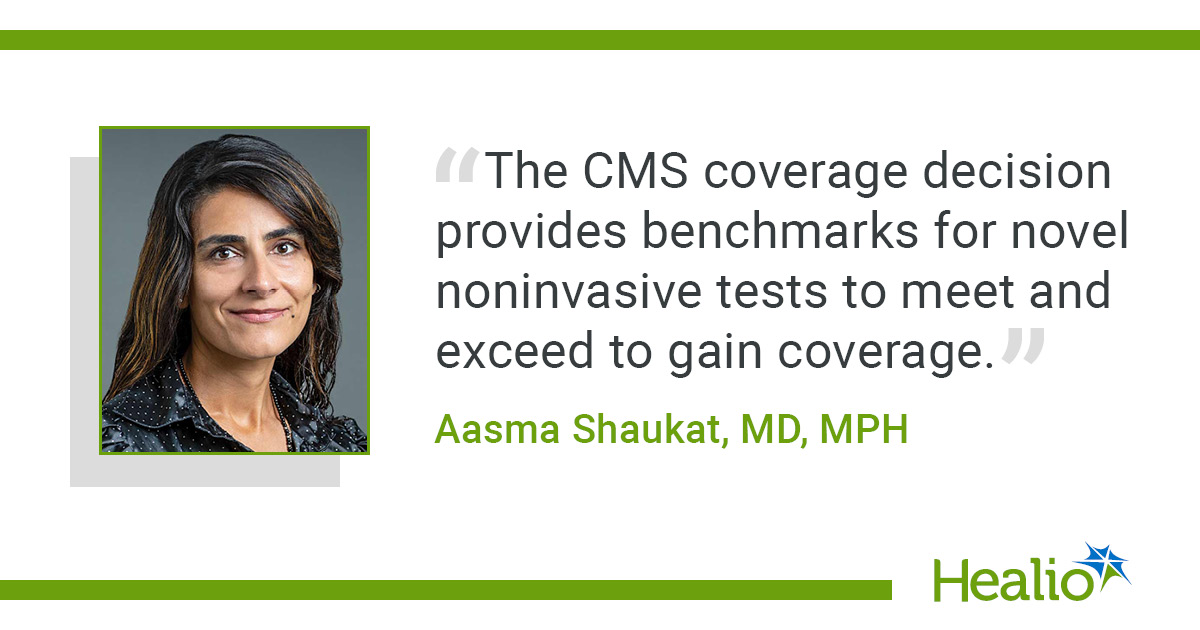
Add topic to email alerts Receive an email when new articles are posted on Please provide your email address to receive an email when new articles are posted on . “ data-action=”subscribe”> Subscribe We were unable to process your request. Please try again later. If you continue to have this issue please contact customerservice@slackinc.com. Back to Healio Key takeaways: CMS will use newly defined criteria to qualify noninvasive biomarker CRC screening tests for coverage. Concerns remain that evidence for thresholds may be retrofitted to current test performance. CMS established a new national framework setting performance thresholds to qualify noninvasive, biomarker-based colorectal cancer screening options — including FDA-approved stool- and blood-based tests — for coverage. “The CMS coverage decision provides benchmarks for novel noninvasive tests to meet and exceed to gain coverage, and learn from the experience of currently approved tests,” Aasma Shaukat, MD, MPH, Robert M. and Mary H. Glickman Professor of Medicine at NYU Grossman School of Medicine, told Healio. “It also allows newer test makers to understand the current performance standards and where improvements are needed.” ColoSense (Geneoscopy), the first FDA-approved multitarget stool RNA test for CRC, is also the first test added to CMS’s national screening policy under the new standards. Though CRC is the third-leading cause of cancer-related deaths in men and the fourth-leading cause in women, 1 in 3 eligible U.S. adults are not up to date on screening, a study in Preventing Chronic Disease found. CMS’s decision to cover ColoSense expands the range of screening tools available to patients reluctant to undergo colonoscopy or traditional stool-based testing, adding an option that removes a common barrier to adherence, the need for patients to handle the stool sample. Under the new decision, CMS will cover noninvasive biomarker-based CRC screening tests — that meet performance standards — every 3 years for adults aged 45 to 85 years at average risk. To qualify for coverage, blood- and stool-based tests must be FDA-approved, processed in a Clinical Laboratory Improvement Amendments-approved lab and meet one of two performance criteria: have a sensitivity greater than or equal to 90% and a specificity greater than or equal to 87%, or a sensitivity greater than or equal to 79% and specificity greater than or equal to 90% in CRC detection compared with colonoscopy, the current standard. Shaukat acknowledged that the new performance thresholds are an improvement over past requirements — CMS used to require a sensitivity of 74% for blood-based tests — but said it is unclear what evidence the new criteria are based on. She expressed concern that the “criteria feel retrofitted to existing performance of stool and blood tests.” “The criteria are missing mention of advanced precursor lesion sensitivity or sensitivity for stage I to II CRC, important measures of any test performance for CRC screening,” she continued. Blood-based biomarker tests underperform other screening options in early detection, missing 1 in 3 early-stage cases of CRC, according to ACG. CMS coverage criteria also stipulates that patients must not have CRC symptoms to qualify for a biomarker-based test, and must be informed about the test’s performance, as well as the need for a follow-up colonoscopy if test results are positive. In a recent statement on updated CRC screening guidance from the American Cancer Society, ACG voiced concern that clinicians may not have the time to inform patients of the performance limitations of each screening test during visits. For more information: Aasma Shaukat, MD, MPH, is an ACG trustee and director of outcomes research in the division of gastroenterology and hepatology at NYU Grossman School of Medicine. She can be reached at gastroenterology@healio.com. Published by: Sources/Disclosures Source: Press Release References: Disclosures: Shaukat reports consulting roles with Freenome, Geneoscopy and Universal Diagnostics. Ask a clinical question and tap into Healio AI’s knowledge base. PubMed, enrolling/recruiting trials, guidelines Clinical Guidance, Healio CME, FDA news Healio’s exclusive daily news coverage of clinical data Learn more Add topic to email alerts Receive an email when new articles are posted on Please provide your email address to receive an email when new articles are posted on . “ data-action=”subscribe”> Subscribe We were unable to process your request. Please try again later. If you continue to have this issue please contact customerservice@slackinc.com. Back to Healio Source link

Storms Bring a Painful Reminder of Our Disability
Living with a progressive, painful condition is a challenge, to say the least. I have learned that if I try to focus on other aspects of my life instead of my health, it helps me better emotionally handle the life I have been given. Don’t get me wrong—I do what needs to be done to help maintain the best quality of life possible, including eating foods and taking medications I can metabolize, doing my core exercises, getting in movement through walking or modified swimming, and filling my days with activities that provide purpose and meaning. But when a large storm is on the horizon, the change of pressure in the atmosphere begins to affect me and reminds me that I am handicapped, even though I am trying not to let that fact define my life. It is heartbreaking to have that intense reminder that my body is far from normal. The change in pressure from an impending storm increases inflammation in my body, which causes headaches, fatigue, and increased pain. Storms also bring added reminders of the struggles that disability can cause in everyday life. Snow on the ground means not being able to walk outside until a path is cleared, or I face a higher risk of having my legs and feet sublux, or of dislocating my hips. Rain, wind, and mud make it harder to get around, too. Slipping, sliding, or falling can create more damage to the body. I know that so many with chronic conditions can relate to this frustration that comes up during storms. To hang on during these changes that are out of our control, what we all need to do is focus on what we can control. Try to eat foods you know you can metabolize. Try to move despite the added discomfort the atmospheric pressure causes. Try to continue with the activities you’re able to take on, even though you feel that added fatigue. When bad weather makes us wish for those sunny, calmer days that allow us to better function with our conditions, may we find the inner strength to remind ourselves of this: We may be disabled, but we are also fighters who will work to find a way to endure these obstacles until the sun peeks out again. May life be kind to you… —by Ellen Lenox Smith Source link

Respuestas de expertos: Preguntas y respuestas sobre la esofagitis eosinofílica (EEo)
English Junio es el Mes de Concientización de la Disfagia. La esofagitis eosinofílica (EEo) es un trastorno que causa una inflamación crónica del esófago. Esta inflamación produce síntomas tales como dificultad para tragar, dolor de pecho e impactación alimentaria (cuando comida se atora en el esófago). Si bien no hay una cura para la EEo, hay tratamientos efectivos para controlar los síntomas y monitorear ese trastorno. Sin tratamiento, la EEo comúnmente empeora. La EEo se está volviendo más frecuente y puede afectar a personas de cualquier edad. Hablamos con Evan S. Dellon, M.D., MPH, gastroenterólogo, profesor de medicina y asistente de cátedra de epidemiología de la Universidad de Carolina del Norte en Chapel Hill, para entender más sobre los síntomas de la EEo, sobre cómo obtener ayuda y sobre las opciones terapéuticas. ¿Qué síntomas de la EEo deberían motivarte a acudir a una consulta médica? Para adultos y adolescentes, el síntoma más común es dificultad para tragar o que se atoren alimentos. Es importante indicar que no es normal que alimentos bajen lentamente o se atoren. Muchas personas que en algún momento reciben el diagnóstico de EEo no prestan atención a este síntoma inicialmente. Podrían simplemente evitar ciertos alimentos o masticar más cuidadosamente hasta que haya un problema importante. No esperes a que eso pase. Deberías someterte a examinaciones si alimentos bajan muy lentamente o si tienes dificultad para tragar. Otros síntomas gastrointestinales (GI), tales como molestias en el pecho o acidez, también se asocian a la EEo. Otros trastornos médicos pueden hacer que los alimentos bajen lentamente o que se atoren. Cuando estos síntomas ocurren junto con asma, eccema o alergias alimentarias, es más posible que sea una señal de EEo. Los niños con EEo tienen otros síntomas completamente diferentes. Podría ser dolor abdominal, vómito, desarrollo deficiente, no hacer transiciones a alimentos con otras consistencias o evitar ciertos alimentos. Muchos trastornos GI pediátricos pueden causar esos síntomas. Pero también podrían ser señales de EEo, especialmente si un niño tiene también eccema, asma o alergias alimentarias. Si tienes EEo, ¿por qué es tan importante que te diagnostiquen? Pensamos que la EEo generalmente empieza como una inflamación alérgica. Con el tiempo, si no se trata, esa inflamación puede producir tejido cicatricial. Entonces el esófago puede volverse estrecho y rígido, lo cual causa más síntomas y complicaciones tales como impactación alimentaria. La impactación alimentaria puede generar una perforación o ruptura del esófago, un problema muy grave. No ocurre frecuentemente, pero debe tomarse en cuenta. Los niños que padecen este trastorno en forma grave podrían tener malnutrición. También hay una afectación en la calidad de vida. Cualquier cosa que afecte tu alimentación tendrá un efecto en los eventos sociales, las reuniones familiares, los eventos laborales y los viajes y puede causar ansiedad en una forma significativa. Los síntomas, el impacto en la calidad de vida y las posibles complicaciones son buenas razones para someterse a examinaciones. ¿Cómo te diagnostican la EEo? El proceso de diagnóstico se hace con una endoscopía para examinar el esófago. No tenemos pruebas de sangre ni otros métodos para diagnosticar la EEo. La endoscopía es un procedimiento con sedación. Una cámara con iluminación se inserta en la boca hasta el esófago y el estómago. Tratamos de detectar señales típicas de la EEo. El esófago puede parecer inflamado. Puede estar cubierto con manchas blancas, lo cual es una señal de inflamación. Puede haber tejido cicatricial en forma anular o estrechamiento. Enviamos una biopsia a un patólogo que examina las células de la alergia, es decir los eosinófilos. Si hay suficientes eosinófilos, y eliminamos la posibilidad de que otras cosas los causen, entonces podemos diagnosticar una EEo formalmente. ¿Por qué es importante recibir atención continuamente si tienes EEo? La EEo es un trastorno crónico que debe controlarse a largo plazo. Si personas reciben un diagnóstico pero no un tratamiento, muchas podrían desarrollar muchas complicaciones graves con el tiempo. Es importante contar con un equipo médico y seguir el tratamiento puntualmente. La gravedad de este trastorno varía. El equipo médico personalizará el tratamiento para la situación de cada persona. Alguien que fue a una sala de emergencia con una impactación, por ejemplo, deberá tener mucho más seguimiento que una persona con síntomas leves. La atención continua es diferente para cada persona, pero es muy importante tenerla para evitar brotes y problemas que empeoren cada vez más. ¿Qué tipos de proveedores de atención médica deberían ser parte de tu equipo médico si tienes EEo? Algunas personas recibirán servicios de seguimiento de doctores GI principalmente. Algunas personas darán seguimiento con alergólogos principalmente. Algunas personas darán seguimiento con ambos tipos de doctores en una forma multidisciplinaria. Niños también podrían requerir terapeutas de alimentación y otros proveedores de varias especializaciones. Trabajamos frecuentemente con dietistas y nutricionistas. ¿Cómo se controla la EEo? Hay dos categorías terapéuticas principales: Restricción alimentaria y medicamentos. Pensamos que la EEo es un trastorno desencadenado por ciertos alimentos para la mayoría de pacientes. A diferencia de una alergia alimentaria típica, con una reacción inmediata, este es un trastorno en el cual comer ciertos alimentos durante un período largo de tiempo desencadena inflamación. Actualmente las pruebas de alergias no son realmente precisas para la EEo, por lo que es un poco difícil. Pero conocemos la mayoría de desencadenantes alimentarios más frecuentes: los lácteos, el trigo, los huevos, la soya, los frutos secos y los mariscos. La restricción alimentaria puede usarse para identificar desencadenantes alimentarios y eliminarlos de la dieta. Es una buena opción, pero realmente depende de cada paciente. Medicamentos antiácidos tales como el omeprazol (Prilosec) o el lansoprazol (Prevacid) suelen ser los primeros medicamentos que probamos. Aproximadamente del 30 al 40% de personas podrían reaccionar bien a estos medicamentos simples. También hay un corticosteroide tópico. Ahora contamos con un medicamento aprobado, la suspensión oral de budesónida (Eohilia), específicamente formulada para adherirse al esófago. Puede ser eficaz para el 50 al 60% de las personas, o más. Otra opción es dupilumab (Dupixent), un medicamento sistémico. Es una inyección semanal que bloquea algunos de

Achieve professional growth through ‘purposeful imbalance’
June 12, 2026 28 min watch Add topic to email alerts Receive an email when new articles are posted on Please provide your email address to receive an email when new articles are posted on . “ data-action=”subscribe”> Subscribe We were unable to process your request. Please try again later. If you continue to have this issue please contact customerservice@slackinc.com. Back to Healio Key takeaways: Mahsaw Mansoor, MD, explains her decision to pursue a second fellowship. Work-life balance is important, but a “season of intensity” can propel professional growth. An unconventional, nonstandard career path in ophthalmology can result in a unique skill set and stronger doctors. In this episode of Steeped Insights, a video blog series produced by Women in Ophthalmology and Healio, host Karen Chen, MD, of Permanente Medical Group, and cohost Cynthia A. Bradford, MD, formerly of Dean McGee Eye Institute, sat down with Mahsaw Mansoor, MD, Masket Foundation fellow at Advanced Vision Care. Over a cup of tea, the physicians discussed how Mansoor’s decision to pursue a second fellowship gave her more clarity on what she wanted out of her career. In this episode of Steeped Insights, host Karen Chen, MD, and cohost Cynthia A. Bradford, MD, sat down with Mahsaw Mansoor, MD, for a cup of tea. “I always knew that something was missing for me,” Mansoor said. “My niche, I hope, will be the management of uveitic patients in a more holistic fashion. … I knew I needed more training. For anyone who is considering two [fellowships], I would say that you should do it but do it with intention. I knew what was going to come of this fellowship and how it would actually add a distinct set of skills to what I had already gone through.” The discussion also highlighted the importance of being a team player and knowing when to pass an opportunity on to someone else. “You don’t want to be the person who always gets the free jobs,” Bradford said. “Anytime I do something, I try to think, ‘What can I get out of this? What can I make better here?’” While striving for proper work-life balance is essential for a sustainable career in medicine, sometimes professional growth requires a bit of imbalance, according to Mansoor. “It’s OK to have a deliberate season of intensity, but it’s not a permanent thing,” she said. “You can have purposeful imbalance for learning, building and creating relationships. Even if it’s busy, that’s sustainable.” For more information: Cynthia A. Bradford, MD, can be reached at cabradfor@gmail.com. Karen Chen, MD, can be reached at karen.willa.chen@gmail.com. Mahsaw Mansoor, MD, can be reached at mahsawm@gmail.com. Published by: Sources/Disclosures Source: Healio Interviews Disclosures: No products or companies that would require financial disclosure are mentioned in this article. Ask a clinical question and tap into Healio AI’s knowledge base. PubMed, enrolling/recruiting trials, guidelines Clinical Guidance, Healio CME, FDA news Healio’s exclusive daily news coverage of clinical data Learn more Add topic to email alerts Receive an email when new articles are posted on Please provide your email address to receive an email when new articles are posted on . “ data-action=”subscribe”> Subscribe We were unable to process your request. Please try again later. If you continue to have this issue please contact customerservice@slackinc.com. Back to Healio Source link