
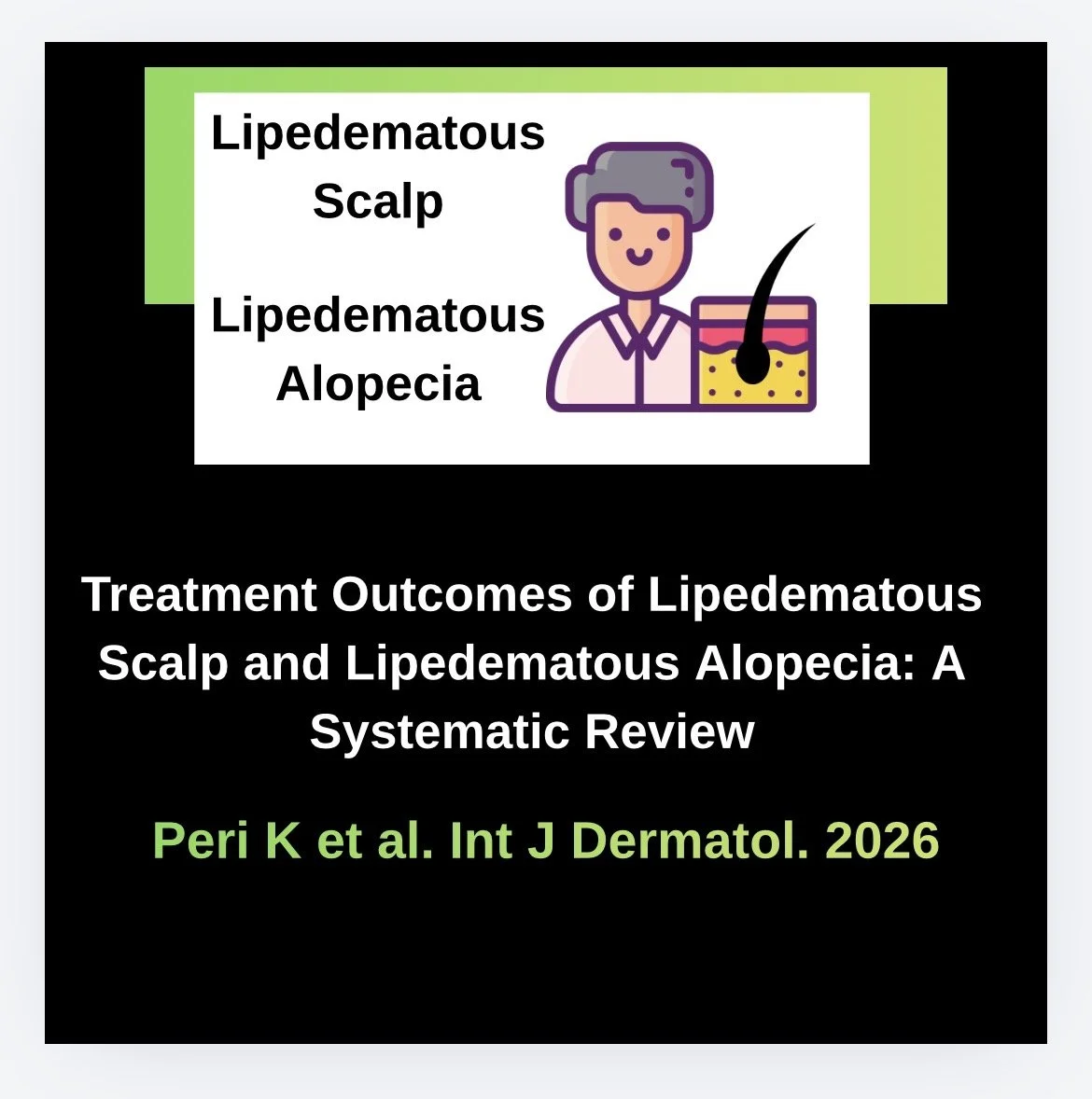
Lipedematous scalp is a rare cutaneous condition characterized by a boggy, thick, and spongy consistency of the scalp due to thickening of the subcutaneous adipose tissue. In these conditions, the overlying skin usually appears normal, though patients often report symptoms of pain, paresthesia, or a localized “pressure” sensation.
When this structural thickening is accompanied by hair loss—the condition is termed lipedematous alopecia. The exact pathogenesis remains unclear, but it is hypothesized that the expanded fat layer may mechanically compress hair follicles or disrupt the dermal microenvironment necessary for healthy hair growth.
Our New Study of Lipedematous Alopecia Highlights Areas of Treatment Success
Our research team performed a systematic review of this challenging condition. We uncovered 33 patients in 23 studies. There were 19 patients with with lipedematous alopecia and 14 with lipedematous scalp. These studies highlight the limited but evolving treatment landscape. Most diagnoses relied on scalp biopsy. This study was led by the great work of the first author, Katya Peri, from McGill University medical school.
Topical and intralesional steroids were among the most effective treatments for lipedematous alopecia, leading to complete responses in about 50 % of patients. The most effective systemic therapies were mycophenolate mofetil with more limited data for other treatments such as hydroxychloroquine and doxycycline.
The full study is published in the International Journal of Dermatology. I congratulate all of our coauthors for their efforts to better understand this fascinating and very much underrecognized condition.
Reference
Peri K et al. Int J Dermatol 2026