

Key takeaways:
- New data suggest benefits beyond weight loss for adults with obesity and autoimmune diseases who use a GLP-1.
- GLP-1 use was also linked to 44% lower risk for all-cause mortality.
NEW ORLEANS — Individuals with obesity and autoimmune diseases who use a GLP-1 receptor agonist may have lower risk for mortality, fewer cardiovascular and thrombotic events and lower health care utilization, researchers reported.
Among adults with obesity and at least one autoimmune disease, those who used a GLP-1 had a 44% lower risk for all-cause mortality, 31% lower risk for pulmonary embolism, 21% lower risk for ED visits and 17% lower risk for venous thromboembolism compared with those who did not use a GLP-1, according to data presented at the American Diabetes Association Scientific Sessions and simultaneously published in the Journal of the American Heart Association.

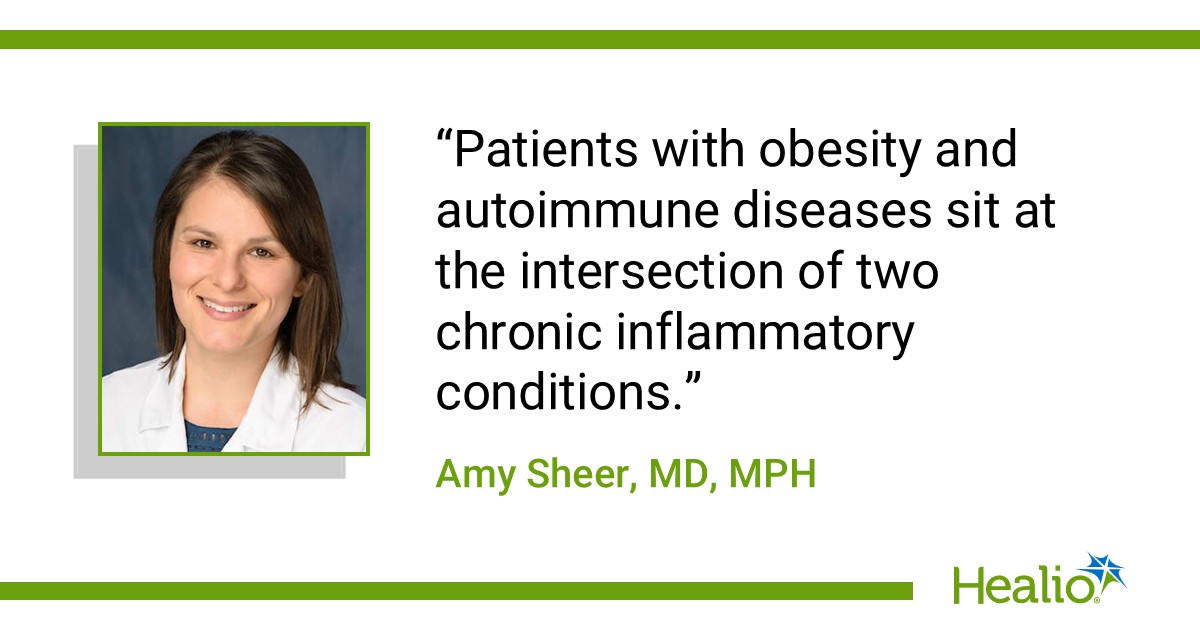
“Patients with obesity and autoimmune diseases sit at the intersection of two chronic inflammatory conditions, placing them at particularly high risk for cardiovascular and thromboembolic complications. Yet these are exactly the types of patients who are often underrepresented or excluded from major clinical trials,” Amy Sheer, MD, MPH, associate professor of medicine and program director of the Obesity Medicine Fellowship at University of Florida in Gainesville, told Healio. “As GLP-1 receptor agonists continue to demonstrate benefits beyond weight loss, including cardiovascular and metabolic benefits, we wanted to know whether those advantages might extend to this higher-risk population.”
Sheer and colleagues conducted a study to look at real-world outcomes in a large, diverse group of patients with obesity and autoimmune diseases who used a GLP-1 compared with those who did not. The researchers used the OneFlorida+ network to identify adults with obesity and autoimmune diseases who were eligible for a GLP-1 from 2014 to 2024. Their search yielded 13,204 GLP-1 users and a matched group of 13,204 nonusers. The mean age of participants was 54.7 years, 73.4% were women and mean BMI was 37 kg/m2.
Participants had at least one diagnosed autoimmune condition. For this study, researchers grouped autoimmune conditions by the primary organ involved. This included skin disease (vitiligo), gastrointestinal disease (inflammatory bowel disease, celiac disease), endocrine disease (type 1 diabetes, hyperthyroidism, hypothyroidism), musculoskeletal disease (rheumatoid arthritis, psoriatic arthritis), systemic disease (lupus, sarcoidosis), nervous system disease (multiple sclerosis, encephalitis), blood disease (immune thrombocytopenia) and cardiovascular disease (endocarditis, myocarditis or vasculitis), according to a press release issued by the American Heart Association.
The primary outcomes were myocardial infarction, stroke or transient ischemic attack, pulmonary embolism, VTE and coronary revascularization. Secondary outcomes were ED visits, any hospitalization and mortality.
GLP-1 use was associated with substantially better clinical outcomes among adults with obesity and autoimmune disease, according to Sheer.
Those who used a GLP-1 had a lower hazard for pulmonary embolism (P = .001), VTE (P = .007) and stroke or transient ischemic attack (P = .039), but the researchers reported a modest difference for MI (HR = 0.86; 95% CI, 0.72-1.02; P = .081) and no difference in coronary revascularization (HR = 1.03; 95% CI, 0.78-1.37; P = .82) between the two groups, according to the results.
For the secondary outcomes, those who used a GLP-1 had a lower hazard for ED visits (P < .001) and all-cause mortality (P < .001) and a comparable hazard for hospitalization (HR = 0.96; 95% CI, 0.92-1; P = .067) between the two groups, according to the results.
“The magnitude of the mortality benefit was striking. A 44% lower risk of all-cause mortality is clinically meaningful and larger than many would expect from an observational study,” Sheer told Healio.
“We were also intrigued by the strong signal for reductions in venous thromboembolic events, or blood clots. GLP-1 receptor agonists are increasingly recognized for their cardiovascular benefits and their ability to reduce inflammatory markers such as C-reactive protein, but less attention has been paid to their potential effects on thromboembolic risk. Given the inflammatory and prothrombotic environment associated with both obesity and autoimmune disease, these findings raise important questions about whether the benefits of GLP-1 therapy extend beyond what has traditionally been measured in clinical trials,” Sheer said.
The researchers concluded that these findings warrant further investigation, including prospective studies, randomized clinical trials and mechanistic investigations in this population.
“The key message is that GLP-1 receptor agonists may offer benefits that extend beyond their current indications and beyond weight loss alone,” Sheer said. “For clinicians caring for patients with obesity and autoimmune disease, these results suggest that effective obesity treatment may be an important strategy for reducing long-term morbidity and potentially improving survival.”
Sources/Disclosures
Source:
Dai H, et al. Poster 2199-P. Presented at: American Diabetes Association Scientific Sessions; June 5-8, 2026; New Orleans.
References:
Disclosures:
Sheer reports no relevant financial disclosures.

Ask a clinical question and tap into Healio AI’s knowledge base.
- PubMed, enrolling/recruiting trials, guidelines
- Clinical Guidance, Healio CME, FDA news
- Healio’s exclusive daily news coverage of clinical data