In the early stages of androgenetic alopecia (AGA), patients often present with increased hair shedding. As a result, many patients are quickly labeled as having telogen effluvium (TE) or chronic TE. While TE certainly causes shedding, early AGA can do the same. The key difference lies in what is happening to the follicles.
As AGA develops, there is a progressive transformation of terminal hairs into finer, shorter, and eventually less pigmented hairs. This process, known as miniaturization, may be obvious in advanced disease but can be remarkably subtle in the early stages..
Another important clue is a gradual shift in follicular unit composition. Healthy scalp regions are rich in follicular units containing two, three and even four hairs. As AGA progresses, there is an increasing predominance of one-hair and two-hair follicular units (or completely empty follicles) as miniaturize and terminal hairs are lost.
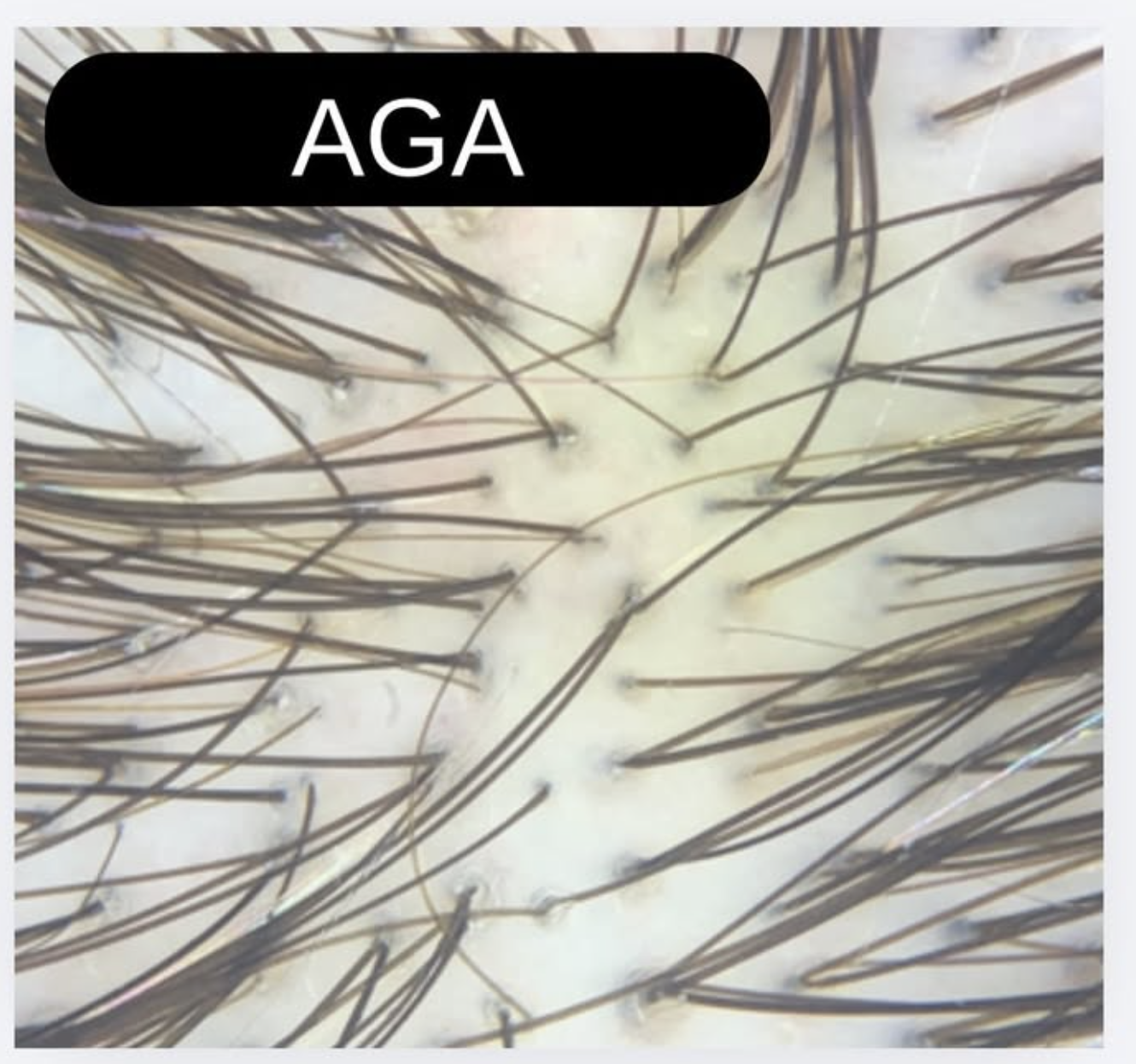
The accompanying image illustrates these challenges perfectly. This 23-year-old woman had experienced six years of persistent hair shedding and had repeatedly been told that she had telogen effluvium. However, close inspection reveals the hallmark features of androgenetic alopecia: increased numbers of single-hair follicular units, reduced numbers of robust multi-hair follicular units, and clear evidence of hair shaft miniaturization. This patient has androgenetic alopecia!
An important principle is this: any individual with chronic hair shedding who has been told they have a diagnosis of telogen effluvium or chronic telogen effluvium should strongly consider a scalp biopsy and expert assessment if a) blood tests are fairly normal (or have normalized after correction of an apparent abnormality) and b) shedding has been going on more than 12 months despite improvement of lab results and c) density continues to decline year after year as captured by standard photos. Another diagnosis besides TE is highly likely in these situations!