The field of hair loss is dynamic! What is amazing to me is how patterns keep repeating! New diseases are recognized. New treatments emerge. New side effects are discovered. New technologies reshape how we practice. If history is any guide, the next few decades will bring a lot of change. So, what can we expect?
First, I suspect science will be communicated differently. Open-access publishing has transformed access to research. Social media, podcasts and online education have changed how clinicians learn. We may see entirely new models of publication, peer review, and scientific discussion. Artificial intelligence will almost certainly play a larger role in how research is reviewed & shared.
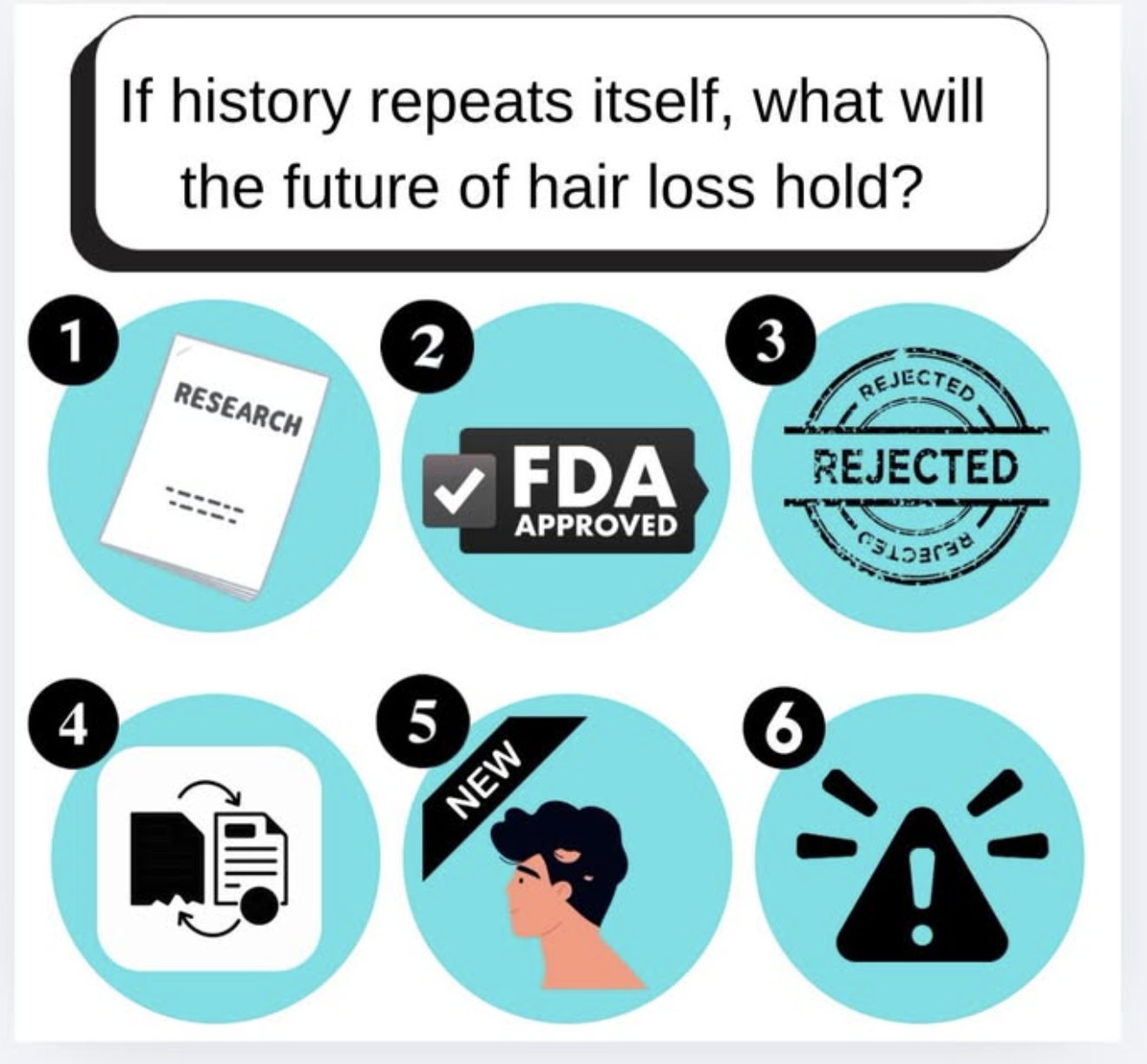
Second, we will certainly see more approved treatments. The approval of JAK inhibitors for alopecia areata marked a major milestone. Additional approvals for AA are 100 % guaranteed, and it’s conceivable that conditions such as frontal fibrosing alopecia, LPP, chemotherapy-induced alopecia, or even certain forms of telogen effluvium could someday become targets for regulatory approval.
Third, some therapies we currently use may be withdrawn from the market. Every era of medicine witnesses the withdrawal of certain drugs as new safety information emerges.
Fourth, many currently approved drugs will likely undergo new label changes. We have seen important label revisions over the years for medications such as finasteride & even topical minoxidil. As larger numbers of patients use newer therapies over longer periods of time, additional warnings, precautions, & recommendations are likely to emerge. It would be shortsighted to assume that today’s labels are the final version!
Fifth, new hair disorders will almost certainly be identified. As trichoscopy, pathology, genetics, and molecular biology continue to advance, clinicians will recognize patterns that were previously overlooked. Some conditions we currently group together may prove to be distinct diseases.
Finally, new causes of hair loss will be discovered. New medications, new infections, new environmental exposures, and perhaps even new technologies will likely introduce triggers that we do not yet recognize today