

In 2017, I wrote a post about how male pattern hair loss and hair graying were both correlated with significantly increased rates of heart disease. This is especially true if someone is balding or graying at an early age, and if they have crown (vertex) area hair loss. Both androgenetic alopecia (AGA) and heart disease also have a strong inflammatory component. Interestingly, hair loss drug Minoxidil likely has brain and heart health benefits due to its making stiff arteries and blood vessels more flexible. Thereby lowering blood pressure, albeit modestly if taking a low dose to fight hair loss.
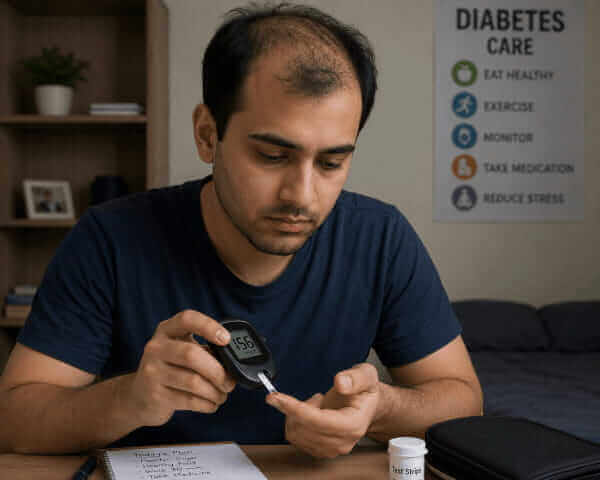
Early-Onset Androgenetic Alopecia Indicates Diabetes Risk
In the July 2026 issue of the Journal of the American Academy of Dermatology, a new study from China concludes that:
“Early-onset androgenetic alopecia may indicate diabetes mellitus (DM) risk in young and middle-aged adults.”
A massive 12,000 participants were analyzed in the study. The AGA prevalence rate was 32.4% in males and 7.1% in females.
Interestingly, while the analysis revealed a significantly higher rate of DM in AGA patients aged between 18-49 years, no such correlation was seen in patients aged over 50 years.
I first heard about this study from dermatologist and hair loss expert Dr. Maryanne Makredes Senna’s recent video on Instagram.
Some past studies have found a connection between AGA and higher rates of both insulin resistance and metabolic syndrome. And a 2019 US study found that Type 2 diabetes was associated with an increased risk of severe central scalp hair loss in African American women.
All of these findings are not necessarily conclusive as yet. But if you are young and have crown hair loss, it is probably worth monitoring your cholesterol, blood pressure and glucose (sugar) levels regularly.
Also make sure to read my past post on the possible connection between diet, lifestyle and hair loss per one reader’s impressive 60-page research.
If only far more homeless people and alcoholics were balding, a lot of people would take this connection more seriously! Humans tend to believe their eyes and real life experiences more than study findings.
Unfortunately, it has probably never been studied as to whether people who go bald at a younger age end up being less likely to take care of their overall health. i.e., they exercise less, eat more fast food, drink more and suffer from higher rates of depression and loneliness. Anecdotal online stories on hair loss forums suggest this as a strong possibility.