
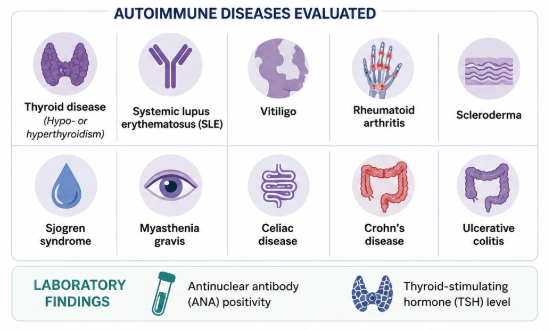
Here is a really interesting study. It suggests that autoimmune diseases are not increased in patients with CCCA. That’s an important finding as researchers worldwide seek to understand what really causes CCCA.
The two key points I’d like everyone to take from this study are:
1. Patients with central centrifugal cicatricial alopecia (CCCA) were not more likely to have autoimmune disease than matched controls with androgenetic alopecia.
This large multi-institutional study found no evidence that patients with biopsy-confirmed CCCA have an increased prevalence of systemic autoimmune diseases.
2. Routine autoimmune laboratory screening (including ANA testing) is probably unnecessary in patients with CCCA unless clinical symptoms suggest an autoimmune disorder.
The findings support a more targeted, clinically driven approach rather than ordering autoimmune blood tests routinely in every patient with CCCA.
OVERVIEW OF STUDY
Central centrifugal cicatricial alopecia (CCCA) is the most common primary scarring alopecia affecting women of African ancestry, but its underlying cause remains incompletely understood. Previous studies suggested that patients with CCCA might have higher rates of autoimmune disease or positive antinuclear antibodies (ANA), leading some clinicians to wonder whether routine autoimmune screening should become standard practice. In this large cross-sectional study, investigators from the University of Pennsylvania and Weill Cornell Medicine evaluated 291 patients with biopsy-confirmed CCCA and compared them with 291 carefully matched patients with androgenetic alopecia. The investigators examined the prevalence of autoimmune diseases, thyroid disease, ANA positivity, and thyroid-stimulating hormone (TSH) levels to determine whether routine autoimmune screening is justified.
STUDY FINDINGS
This study found no increased prevalence of autoimmune disease among patients with biopsy-confirmed CCCA compared with matched controls.
Interestingly, patients with CCCA actually had lower odds of thyroid disease than controls.
ANA positivity and thyroid function (TSH) were similar between groups, providing little evidence that autoimmune laboratory abnormalities are more common in CCCA.
Overall, the results suggest that routine autoimmune laboratory screening is unlikely to provide clinical benefit in patients with CCCA who have no signs or symptoms suggesting an autoimmune disease.
AUTOIMMUNE DISEASE STUDIED