Key takeaways:
- The Sunshine Protection Act passed 308-117.
- But some medical experts argue that making standard time a permanent fixture would be more beneficial for circadian rhythm alignment.
The House of Representatives passed a bill to make daylight saving time permanent nationwide.
The Sunshine Protection Act, which passed 308-117 on July 14, would make the time most Americans spring forward — from March to November — the new, permanent time, according to the bill. However, “states with areas exempt from daylight saving time may choose the standard time for those areas.”

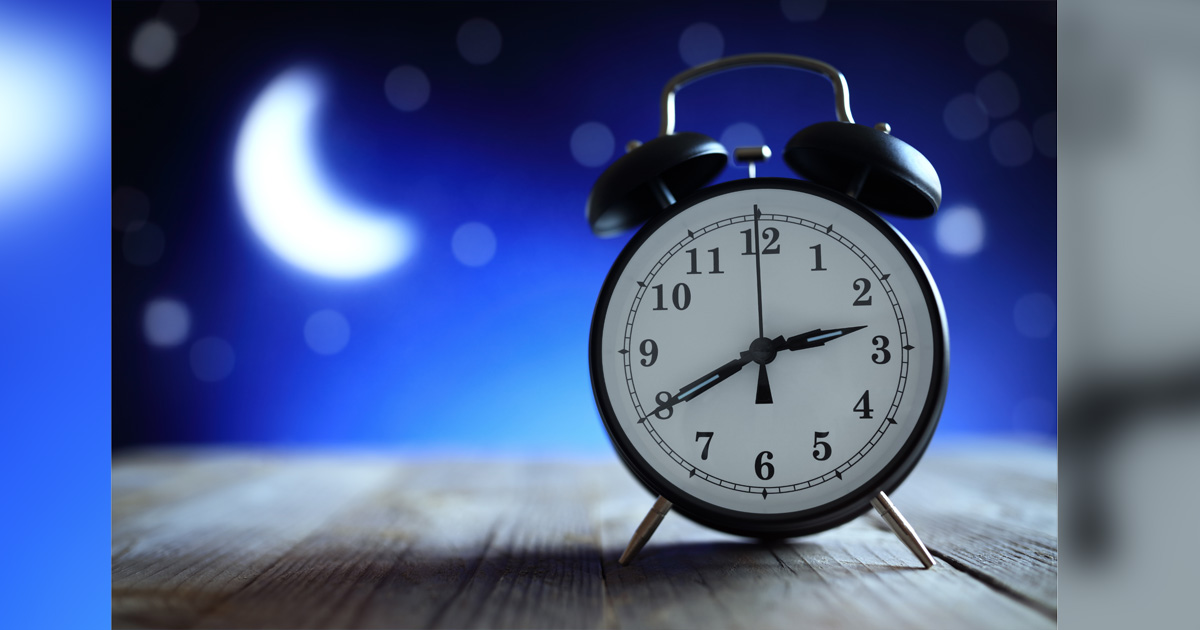
The United States House of Representatives passed the Sunshine Protection Act 308-117. Source: Adobe Stock
President Donald J. Trump has previously voiced his support of the bill, which will now go to the Senate. In a post on Truth Social, Trump wrote that he is “going to work very hard to see The Sunshine Protection Act signed into Law. It’s time that people can stop worrying about the ‘Clock,’ not to mention all of the work and money that is spent on this ridiculous, twice yearly production,” Trump wrote. “We are going with the far more popular alternative, Saving Daylight, which gives you a longer, brighter Day — And who can be against that — This is an easy one!”
However, some medical experts disagree.
Insight from sleep experts
Jennifer L. Martin, PhD, a spokesperson for the American Academy of Sleep Medicine (AASM) and a professor at the Herbert Werithim College of Medicine at Florida International University, told Healio that “talking about ending seasonal time change is important,” but the law headed to the Senate “gets it wrong.” Making daylight saving time permanent “is not the healthiest solution,” she said — instead, “the AASM supports eliminating seasonal time changes with year-round standard time,” when most of America “falls back.”
“There is extensive evidence that permanent standard time is the better choice for public health and safety,” Martin said. “Standard time aligns more closely with our body’s natural circadian rhythms by providing more morning light, which is the strongest environmental cue for regulating the sleep-wake cycle. The more hours of daylight before noon on the clock, the better people function overall. Permanent daylight saving time would delay sunrises during much of the year, leading to multiple negative outcomes. For example, this would make it harder to wake up in the morning, which is especially hard for children and teenagers.”
The AASM has publicly supported a different bill, the Sunshine for Our Kids Act, which would make standard time permanent — a move that “reflects the scientific consensus that morning light is essential for aligning the body’s internal clock and promoting alertness during the school day.”
“The goal should not simply be to stop changing the clocks; it should be to adopt the time system that best supports health and safety,” Martin said. “The scientific evidence consistently shows that permanent standard time better aligns with our natural circadian rhythms, supports healthier sleep, and promotes improved daytime functioning. Time policy should be guided by biology and public health, not convenience alone.”
Healio coverage
Healio has spoken with several experts on the subject over the years. Here are some key components of our coverage:
Q&A: ‘Don’t toggle with the clock’ for better sleep, cognitive health
Hanul Bhandari, MD, told Healio that “clock transitions, especially the ‘spring forward,’ come with real and immediate risks: fatal traffic crashes rise by about 6% in U.S. data following the change, and even the fall shift shows an uptick in crash risk in some studies.” Read more.
Q&A: Should the US continue twice-yearly clock changes?
One expert, José María Martín-Olalla, PhD, suggested shortening the current period of daylight saving time to create a better balance. He said that “in a battle of early risers and late risers, I prefer a compromise. Keeping in mind that seasons will continue to exist, the current alternating clocks provide a smart synchronizing mechanism to adapt human activity to seasons, to prevent early risers from becoming too early in winter, and to prevent late risers from becoming too late in summer.” Read more.
Q&A: US ‘should end seasonal clock change’ by adopting permanent standard time
Karin Johnson, MD, FAAN, FAASM, said that permanent daylight saving time has been tried “twice before — the last time in 1974 — and even though people thought it would be a great idea, it quickly became unpopular because winter sunrises are after 8 a.m. for 2 to 4 months in different locations,” which also impacts the economy, as “places with later sunrises and sunsets are more likely to have people miss work, be later for work, call out for health care problems and be less productive. This is especially the case for anyone with work start times at 8 a.m. or earlier.” Read more.
Q&A: How to prepare patients for daylight saving time
Emily Manoogian, PhD, said that patients who are at high cardiovascular risk are most vulnerable to the impacts of the time change: “One of the scarier things that happens, and that there’s the most evidence for, is that you see an increase in heart attacks and strokes among individuals who are already at high cardiovascular risk for almost a full week following” daylight saving time. Read more.
Strategies can make adjustment to daylight saving time easier, mitigate health impacts
Krista Kezbers, PhD, ACSM-EIM, ACSM-CPT, DipACLM, offered advice for when the time change “sneaks up on us”: “My biggest recommendation is to try to keep your sleep duration the same in the week leading up to daylight saving time. That should help make the adjustment a little bit easier.” Read more.
For more information:
Jennifer L. Martin, PhD, can be reached at jlmartin@fiu.edu.
Sources/Disclosures
Source:
Healio Interviews
References:
Disclosures:
Martin reports no relevant financial disclosures.

Ask a clinical question and tap into Healio AI’s knowledge base.
- PubMed, enrolling/recruiting trials, guidelines
- Clinical Guidance, Healio CME, FDA news
- Healio’s exclusive daily news coverage of clinical data