
Key takeaways:
- Erica Schwartz, MD, JD, MPH, and Sean G. Kaufman, MPH, appeared in front of the Senate HELP Committee.
- Senators pressed both nominees about vaccine policy and misinformation.
Vaccine policy and misinformation were the main topics of discussion Wednesday during a nomination hearing for two top federal public health positions.
Erica Schwartz, MD, JD, MPH, President Donald J. Trump’s nominee for CDC director, and Sean G. Kaufman, MPH, nominee for assistant secretary for preparedness and response at HHS, testified in front of the Senate’s Health, Education, Labor and Pension committee.

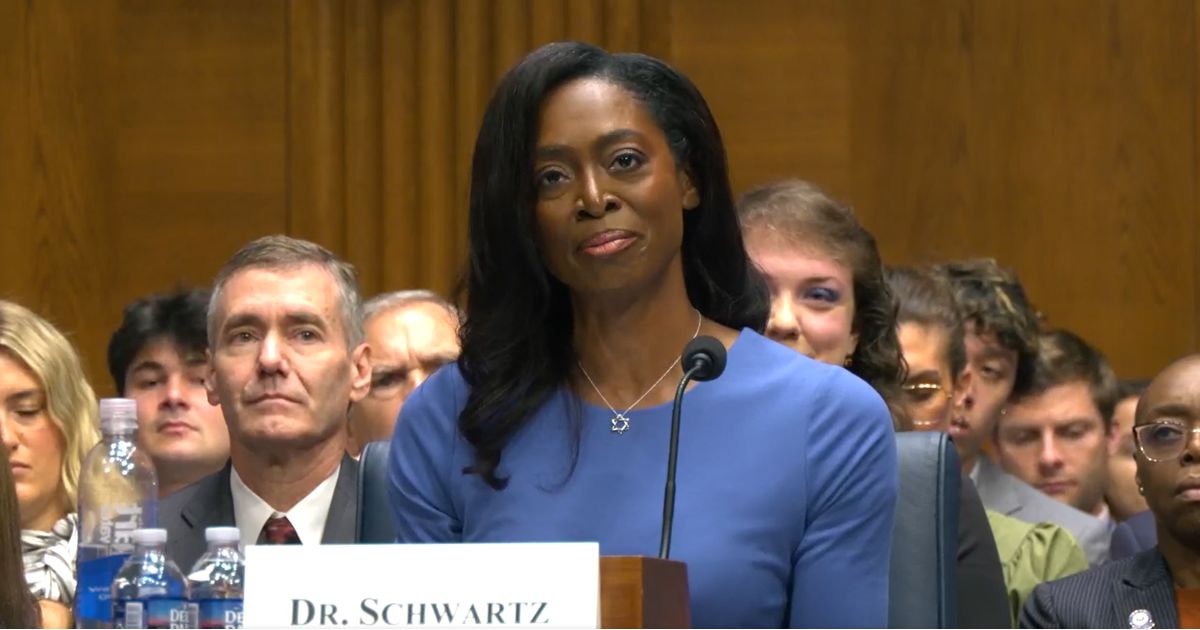
Erica Schwartz, MD, JD, MPH, introduces herself to senators during her nomination hearing before the Senate HELP Committee. Image: senate.gov.
Schwartz served as deputy surgeon general during Trump’s first presidential term. She spent 24 years as an occupational medicine physician in the U.S. Navy and Coast Guard and was the U.S. Coast Guard’s chief medical officer and director of health, safety and work life from 2015 to 2019.
Kaufman currently serves as a senior advisor for Global Affairs at the CDC. From 2011 through 2025, he was a founding partner and CEO of Safer Behaviors, a consultancy that assists with management of infectious disease outbreaks.
Key moments:
- During her opening statement, Schwartz said her main priority as CDC director would be restoring public trust in public health institutions. She also wants to modernize the CDC to improve its response to infectious disease outbreaks and empower states and communities to respond to outbreaks the way they see fit.
- Schwartz said she was unaware of major funding cuts at the CDC and had to be pushed into saying she would not blindly follow orders from political leaders.
- Committee chairman Sen. Bill Cassidy, MD, R-La., pressed Schwartz on whether she would adhere to policies she does not agree with, to which she repeatedly replied that she would “lead with integrity.” After he reiterated his question several times, she said, “I will never betray the science, ever […] I will make sure that the CDC is focused on scientific rigor, that the CDC is focused on radical transparency.” Cassidy, a vocal vaccine supporter who recently lost his bid for reelection, came under scrutiny from fellow physicians last year for casting the deciding vote that eventually led to the confirmation of Robert F. Kennedy Jr. as HHS secretary.
- Ranking Member Bernie Sanders, I-Vt., and Maggie Hassan, D-N.H., also asked if she would stand up against political pressure from the president or HHS secretary. She responded to both senators that she did not believe that Trump or Kennedy would ask her to make decisions that break the law or jeopardize public health. They reminded her that the previous CDC director, Susan Monarez, PhD, was fired after just a month on the job after refusing requests made by Kennedy.
- Sanders asked Schwartz if she accepts the evidence that vaccines do not cause autism, and she replied that she did. He followed up asking if she would remove language from the CDC website suggesting that vaccines do cause autism. Schwartz said she was unaware of the webpage he was referring to, but she would look into it if confirmed.
- Patty Murray, D-Wash., brought up the cyclosporiasis outbreak that is rapidly spreading across the country. She asked Schwartz if there was a scientific or medical justification for the federal government eliminating mandatory reporting of the parasite to FoodNet. Schwartz said she was unaware of that change, and if confirmed, she would ask staff at the CDC why it ended and explore options to move forward.
- Lisa Murkowski, R-Alaska, asked Kaufman how he would envision partnering with Indian Health Services to assist tribal communities, like those in her home state of Alaska. “One of my greatest worries is that emergency responders come in like seagulls — they fly in and then fly out — and they leave the community with all the issues it had before,” Kaufman said. “When something goes wrong, the community knows best, and it’s always a great strategy to let the community lead during emergency situations.”
- Senators grilled Kaufman about his views on messenger RNA vaccines. Kaufman said several times throughout the hearing that he believed research should focus on people who had adverse outcomes after receiving COVID-19 mRNA vaccines instead of developing new mRNA vaccines. Cassidy said he was “flabbergasted” that Kaufman would not support researching new mRNA applications while leading the agency that is in charge of developing countermeasures for emerging diseases.
- Cassidy also grilled Kaufman about a deleted LinkedIn post in which Kaufman reportedly implied that the hepatitis B vaccine birth dose was associated with an increase in autism and allergy diagnoses among children, which has been disproven. Kaufman said the post was mischaracterized and that he was trying to say that scientists owe it to the public to understand why there is an increase in autism and allergies. He added that he believes in vaccines and that his children are vaccinated.
Next steps
The committee will vote on whether to advance the nominations of Schwartz and Kaufman to the entire Senate for a confirmation vote. Cassidy gave committee members until 5 p.m. ET on Thursday to submit questions for the record.
Republicans control the Senate and have a one-seat majority on each of the committees. Nominees need only a simple majority to be approved by the committees or confirmed by the Senate.

Ask a clinical question and tap into Healio AI’s knowledge base.
- PubMed, enrolling/recruiting trials, guidelines
- Clinical Guidance, Healio CME, FDA news
- Healio’s exclusive daily news coverage of clinical data