

Key takeaways:
- The FDA said a test linking Taylor Farms lettuce to the cyclosporiasis outbreak was a false positive.
- Still, the link between Taylor Farms lettuce and the outbreak remains strong, an official said.
The evidence remains strong that contaminated iceberg lettuce sourced by Taylor Farms in Mexico is to blame for the ongoing cyclosporiasis outbreak that has sickened thousands of people in the United States, FDA officials said Monday.
The officials cleared up some confusion that developed over the weekend after the FDA announced that a test linking the company’s lettuce to the outbreak was a false positive. Taylor Farms said the FDA had apologized for the false positive, although an FDA official said Monday that was not true.

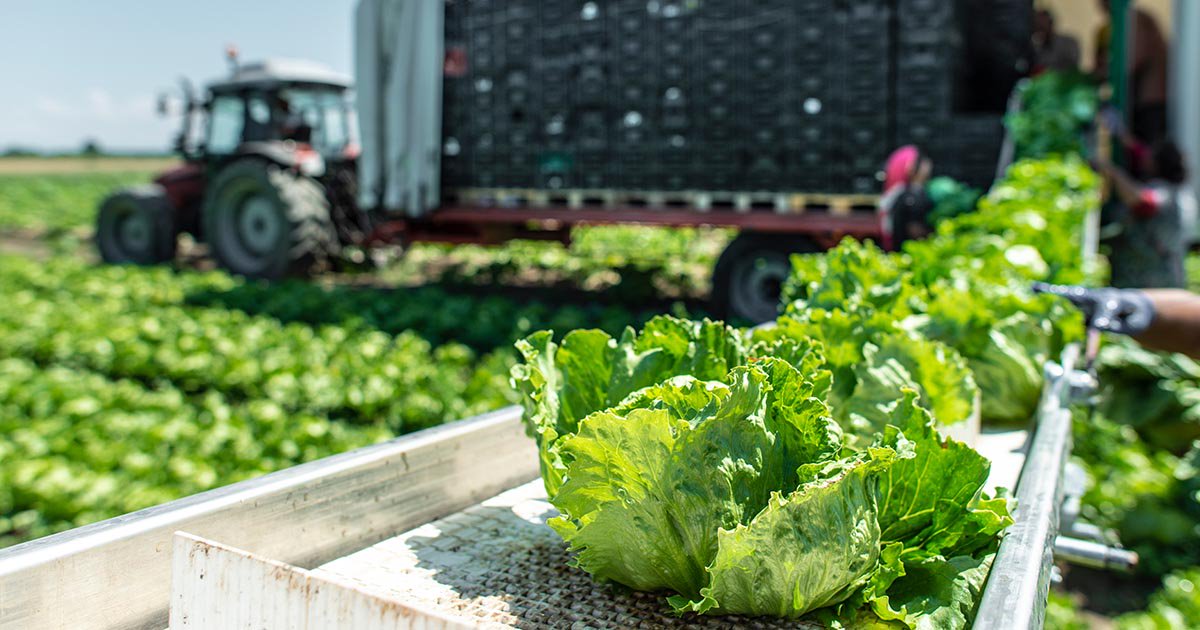
The FDA continues to say people should not eat iceberg lettuce from Taylor Farms that was grown in Mexico. Image: Adobe Stock
“Mostly, we were providing factual information,” the official said.
The false positive means that no product tested by federal agencies has turned up positive for Cyclospora, the parasite that causes cyclosporiasis, which spreads to people through food or water that has been contaminated with feces, frequently causing bouts of watery diarrhea.
But the false positive test was not the only aspect of the investigation that linked the outbreak to Taylor Farms. The FDA also uses traceback investigations to identify the source of foodborne outbreaks, tracing foods commonly reported by people involved in outbreaks back to the source. The traceback investigation in this case led investigators to lettuce from Taylor Farms, according to the FDA.
Acting FDA Commissioner Kyle Diamantas, JD, said Monday that three of the five cyclosporiasis clusters being tracked in the U.S. are over, but that new cases in one of the largest clusters were reported as recently as last week. Although other possibilities are being investigated, Diamantas said lettuce from Taylor Farms remains the focus.
“Our weekend communications around the false positive test result do not change the basis for FDA’s ongoing outbreak investigation or the epidemiologic data supporting the current voluntary recall by Taylor Farms,” Diamantas told reporters on a call.
The false positive was detected during a quality check by lab support personnel, according to FDA Acting Deputy Commissioner for Food Donald Prater, DVM.
The FDA issued a correction and removed the test result from its previous update but continued to recommend that people not eat any of the recalled lettuce from Taylor Farms.
There are several reasons Cyclospora is difficult to identify with testing, Prater said. For one, unlike bacteria, Cyclospora does not show up easily in routine testing. Contaminated food is also likely to be gone by the time people get sick, he said.
“It is a little bit of a chasing game when it comes to testing, but the data from an epidemiologic and traceback standpoint (in this outbreak) we believe is very strong,” an FDA official said.
On Friday, health officials identified shredded iceberg lettuce served at Taco Bell locations in five states as the source of the outbreak, although Taylor Farms recalled lettuce sold in 27 states that originated from its operation in central Mexico.
According to the CDC, there have been more than 1,644 cases of cyclosporiasis linked to the outbreak in the five states, including 94 hospitalizations and no deaths.
The CDC noted that its case count includes only illnesses that have been confirmed by laboratory testing to be linked to the outbreak, not all cases of cyclospora that have been reported to the agency during that time.
The actual case count is likely even larger. Michigan itself had reported more than 6,100 cases as of Monday, including 102 hospitalizations.
Past outbreaks of cyclosporiasis have been linked to lettuce, raspberries, basil, cilantro and snow peas. The current outbreak has unfolded months after the CDC partially dismantled a foodborne illness surveillance system originally implemented in the 1990s, removing six pathogens from the program’s core monitoring list, including Cyclospora.
The program, called FoodNet, is a collaboration between federal health agencies and 10 states that monitors laboratory-confirmed foodborne pathogens to help officials track and prevent food-related illnesses.
A CDC official said this week that the agency was still receiving relevant outbreak data from states, even though FoodNet no longer requires the reporting of Cyclospora. An expert told Healio that the changes to the decades-old system are likely having an impact on surveillance.
Sources/Disclosures
Source:
Press Conference
References:
- Cyclosporiasis. https://www.cdc.gov/cyclosporiasis/index.html. Accessed July 17, 2026.
- FDA Investigation of 5-state outbreak of Cyclospora illnesses: Iceberg lettuce (July 2026). https://www.fda.gov/food/outbreaks-foodborne-illness/investigation-5-state-outbreak-cyclospora-illnesses-iceberg-lettuce-july-2026. Updated July 19, 2026. Accessed July 20, 2026.
- How the FDA uses traceback to respond to foodborne illness outbreaks. https://www.fda.gov/food/outbreaks-foodborne-illness/how-fda-uses-traceback-respond-foodborne-illness-outbreaks. Updated Oct. 12, 2023. Accessed July 20, 2026.
- Michigan Department of Health and Human Services. Infectious disease outbreaks. https://www.michigan.gov/mdhhs/keep-mi-healthy/infectious-diseases/infectious-disease-outbreaks. Updated July 20, 2026. Accessed July 20, 2026.
- Shredded iceberg lettuce served at Taco Bell locations is source of cyclosporiasis infections in five states. https://www.cdc.gov/media/releases/2026/shredded-iceberg-lettuce-served-at-taco-bell-locations-is-source-of-cyclosporiasis-infections.html. Published July 17, 2026. Accessed July 20, 2026.
- Taylor Farms product recall information. https://www.taylorfarms.com/recall/. Published July 17, 2026. Accessed July 20, 2026.
- Taco Bell statement. https://www.tacobell.com/newsroom/taco-bell-statement. Published July 16, 2026. Accessed July 17, 2026.

Ask a clinical question and tap into Healio AI’s knowledge base.
- PubMed, enrolling/recruiting trials, guidelines
- Clinical Guidance, Healio CME, FDA news
- Healio’s exclusive daily news coverage of clinical data