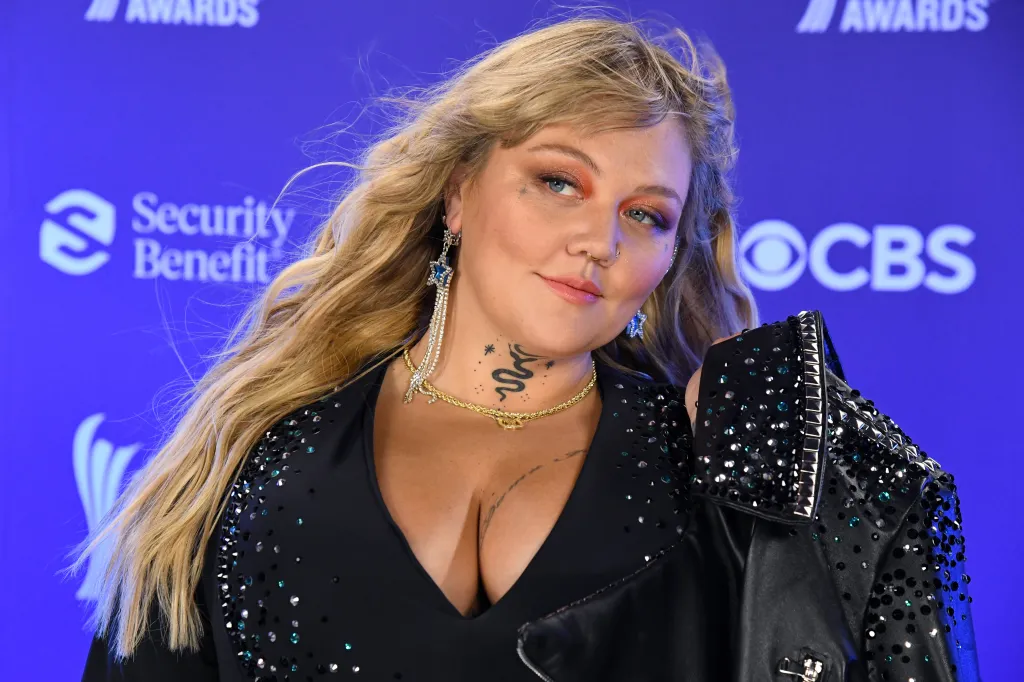
At 37, Elle King is embarking on a new chapter of self-discovery. After sharing her autism diagnosis on Instagram in May, the Grammy-nominated singer decided to give fans a closer look at what being neurodivergent has taught her about life and mental health.
The diagnosis came under slightly unusual circumstances: right before filming the new Fox reality competition Nation’s Dumbest. King admitted she started to panic that she might actually earn the title, so she took two different online IQ tests to ease her anxiety. She scored a 132 (well above average), but the self-reflection following the show brought an even bigger revelation.

Related story
RHOC’s Jeana Keough’s Daughter Shares the Subtle First Symptom of Her Mom’s Tongue Cancer: ‘Confirmed Our Worst Fear’
“I love games. I love game shows. I’m extremely competitive, and I love puzzles and everything,” King told Us Weekly. “I actually found out right after the show that I’m autistic, and so I was like, ‘Everything makes so much sense now.’ But I didn’t even know.”
King’s experience of living undiagnosed for decades isn’t uncommon, especially for women. Autism spectrum disorder (ASD) is a lifelong neurodevelopmental condition that affects brain development, social communication, and interaction. Since it’s a spectrum, the condition looks different from one person to the next.
Even though ASD is usually diagnosed in early childhood, women are frequently misdiagnosed or missed altogether. This is largely due to outdated diagnostic criteria — historically, medical benchmarks were based on how ASD presents in young boys. According to the Mayo Clinic, boys are about four times more likely to be diagnosed with autism than girls.
It’s also driven by “masking,” where young girls learn to internalize their challenges and mimic social cues to blend in. When they do look for help, clinicians often focus on overlapping struggles like anxiety, panic issues, or depression instead.
King isn’t the only public figure opening up about an adult diagnosis; R&B singer SZA also recently confirmed her own ASD on social media, noting how it plays into her pattern recognition.
For King, who’s also a mom of two, getting these answers has given her a roadmap for prioritizing self-care and shifting how she moves through the world.
“I’ve had a lot of not my proudest moments, and so especially with my autism diagnosis, I am putting new kinds of safety barricades,” King explained. “And I just want to be around people that I feel safe around, and I just want to do things that bring me joy.”
In her original post, King shared a clip of an unreleased track where she sings about feeling misunderstood and carrying the weight of past failures. Moving forward, she’s taking that self-awareness and using it to find a better balance between her music and her home life.
“I keep telling myself whatever this next chapter is, I really want to be present and enjoy it,” she said. “That’s what I’m trying to do.”
King’s transparency shows that finding answers about your own mind doesn’t have an expiration date. It’s never too late to advocate for yourself, drop the mask, and set up the boundaries you need to thrive.