

Key takeaways:
- Adults with severe obesity lost more weight with bariatric surgery than semaglutide or tirzepatide at 1 and 2 years.
- HbA1c decrease was greater with medical therapy than bariatric surgery.
Bariatric surgery may confer greater long-term weight loss than semaglutide or tirzepatide for adults with obesity, according to data from a real-world study published in Obesity.
Karan R. Chhabra, MD, MSc, assistant professor of surgery and population health at NYU Grossman School of Medicine, said prior studies comparing weight loss with GLP-1 receptor agonists to bariatric surgery tend to be indirect comparisons or include older GLP-1s. Additionally, Chhabra said, weight loss in clinical trials for obesity drugs tends to be much higher than what health care professionals see from patients in a real-world setting. In a retrospective analysis conducted at two health centers in the New York City region, researchers compared weight loss for adults with obesity (BMI 35 kg/m2) receiving medical therapy with injectable semaglutide (Ozempic/Wegovy, Novo Nordisk) or tirzepatide (Mounjaro/Zepbound, Eli Lilly) vs. bariatric surgery.

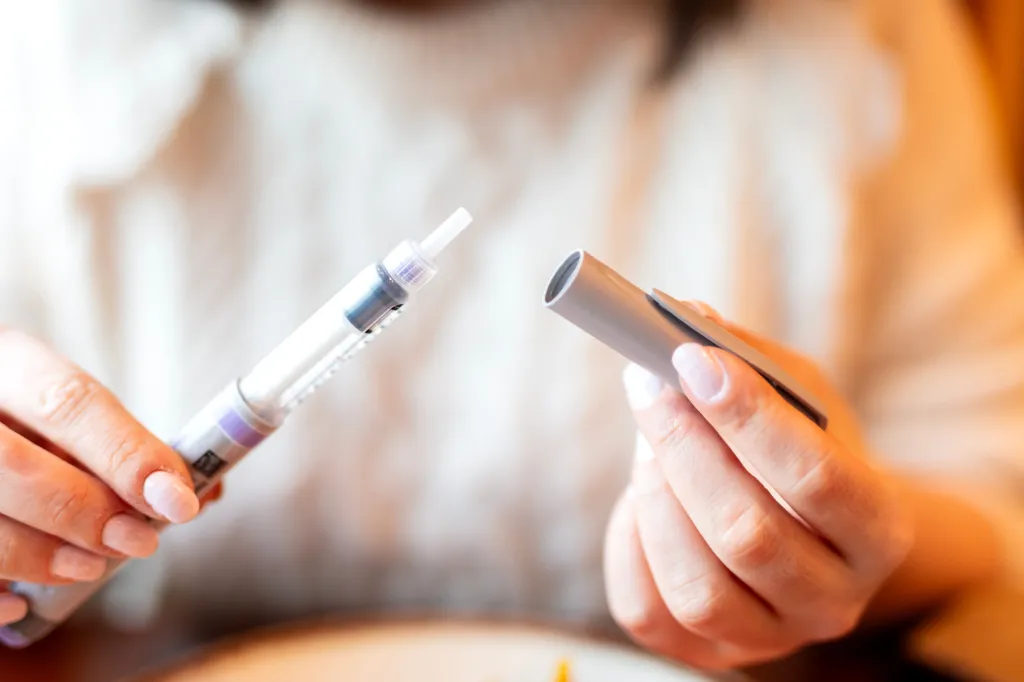
Adults with obesity undergoing bariatric surgery achieve higher weight loss than those receiving semaglutide or tirzepatide. Image: Adobe Stock
“Real-world weight loss from GLP-1s fell well short of both the clinical trial results and surgery,” Chhabra told Healio. “After 2 years, patients lost about 6.5% of their body weight on semaglutide and 10.8% on tirzepatide … vs. roughly 22% after sleeve gastrectomy and 28% after gastric bypass. In everyday practice, these drugs delivered only about one-third to one-half of what patients achieved with surgery. The real story isn’t drugs vs. surgery; it’s trial vs. reality.”
Adults who used an obesity drug had to use it continuously for at least 1 year to be included in the study. Weight loss was assessed at 1, 2 and 3 years.
From 2018 to 2024, there were 10,913 adults who underwent bariatric surgery and 33,112 adults who started using semaglutide or tirzepatide. Those who underwent surgery were younger (P < .001) and had a higher mean BMI (43 kg/m2 vs. 40 kg/m2) than the medication group.
Weight loss
In weighted analysis, weight loss at 1 year was 25.6% for adults undergoing bariatric surgery and 6% for those receiving medication. At 2 years, the bariatric surgery group had 23.6% weight loss compared with 6.9% weight loss with medication. Weight loss at 3 years with bariatric surgery was 23.5% compared with 7.8% with semaglutide or tirzepatide.

Karan R. Chhabra
Gastric bypass was linked to the largest weight loss at 29.8% at 1 year, 28.1% at 2 years and 28.4% at 3 years. Sleeve gastrectomy conferred a 24.4% weight loss at 1 year, 22.4% at 2 years and 22% at 3 years. Weight loss with tirzepatide was 9.1% at 1 year and 10.8% at 2 years. Semaglutide was linked to the lowest weight loss at 7.2% at 1 year, 8% at 2 years and 8.8% at 3 years.
The higher amount of weight loss with bariatric surgery compared with medications was observed both in adults with diabetes and those without diabetes.
HbA1c change
In weighted analysis, medical therapy conferred a larger decrease in HbA1c than bariatric surgery. Change in HbA1c at 1 year was –0.64 percentage points with semaglutide and –0.88 percentage points with tirzepatide compared with –0.56 percentage points with sleeve gastrectomy and –0.52 percentage points with gastric bypass. At 2 years, HbA1c decreased by 0.76 percentage points from baseline with semaglutide, 0.67 percentage points with tirzepatide, 0.69 percentage points with sleeve gastrectomy and 0.52 percentage points with gastric bypass.
Chhabra said the findings show it is important for health care professionals to discuss real-world weight-loss expectations with patients and consider both surgery and medications as options for those with severe obesity.
“These findings don’t argue against GLP-1s; they argue for transparent discussions and for keeping surgery on the table as a highly effective option for eligible patients rather than treating medications as a default,” Chhabra said.
Chhabra added that it was noteworthy to see the large difference in weight loss between the trials and real-world settings, and future studies should examine how to improve care and reduce that gap.
“We also need longer-term follow-up on the safety profile of each treatment strategy, which we couldn’t do in this study,” Chhabra said.
For more information:
Karan R. Chhabra, MD, MS, is assistant professor of surgery and population health at NYU Grossman School of Medicine; and bariatric and minimally invasive surgeon at NYC Health + Hospitals/Bellevue. Chhabra can be reached at karan.chhabra@nyulangone.org; LinkedIn @krchhabra; X @krchhabra.

Ask a clinical question and tap into Healio AI’s knowledge base.
- PubMed, enrolling/recruiting trials, guidelines
- Clinical Guidance, Healio CME, FDA news
- Healio’s exclusive daily news coverage of clinical data